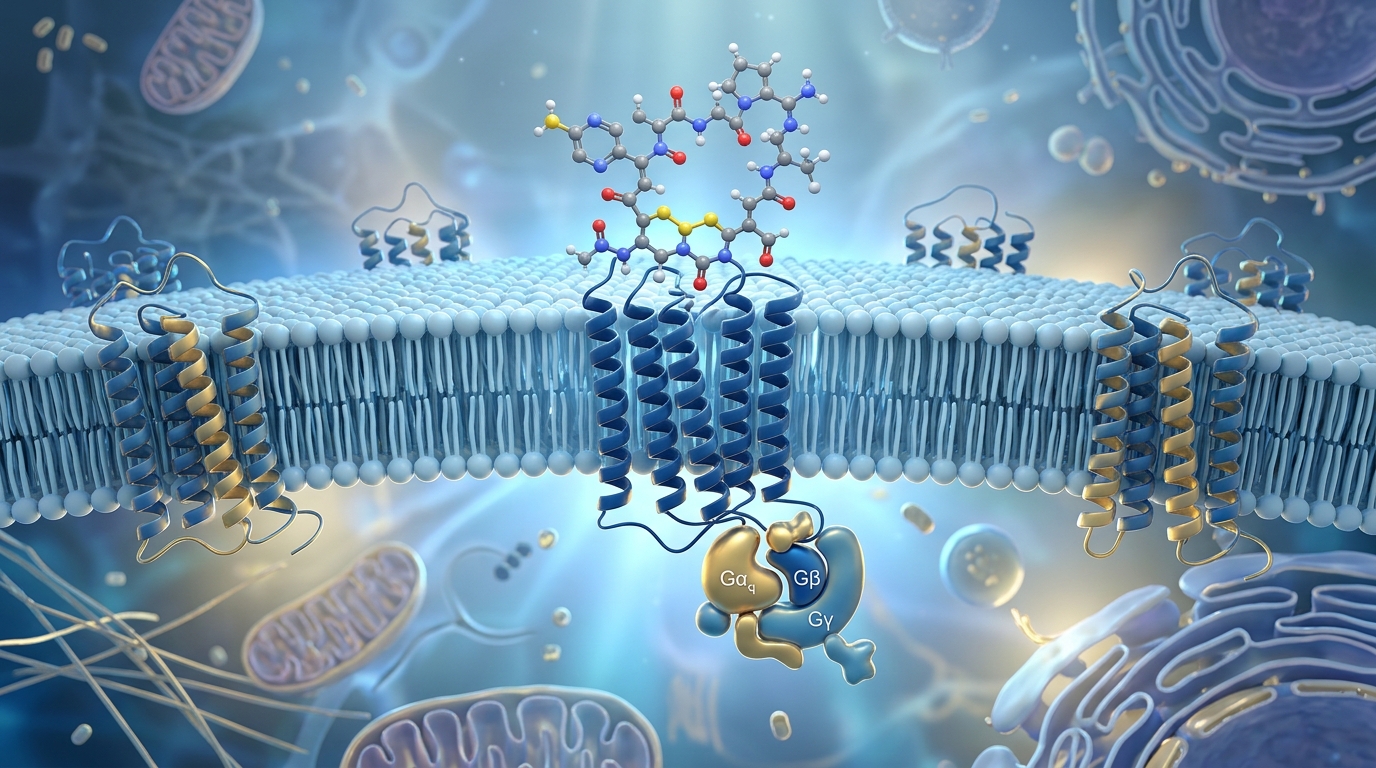
Executive Summary
Main Conclusion: Oxytocin is a pleiotropic nonapeptide that functions far beyond its classical endocrine roles in parturition and lactation, serving as a potent central and peripheral regulator of socio-emotional neurocircuitry, systemic metabolic homeostasis, and cardiovascular tissue protection.
This core conclusion is established by three primary scientific pillars:
- Central Neurocircuitry Modulation: Oxytocin orchestrates social cognition, fear extinction, and stress resilience by fine-tuning limbic and amygdalar signaling pathways.
- Metabolic and Energy Balance Regulation: Oxytocin governs appetite suppression, lipid utilization, and glucose sensitivity through central hypothalamic and peripheral receptor targets.
- Cardiovascular and Anti-Inflammatory Cytoprotection: Oxytocin mediates cardioprotective, angiogenic, and anti-inflammatory cascades via vascular endothelial nitric oxide and atrial natriuretic peptide pathways.
1. Central Neurocircuitry Modulation
Oxytocin acts centrally as a neuromodulator that alters synaptic plasticity, sensory processing, and neuroendocrine stress reactivity across interconnected brain regions.
Human Clinical Evidence
Double-blind, placebo-controlled human trials utilizing intranasal oxytocin administration have demonstrated significant attenuation of amygdala hyperactivity in response to threat-related social stimuli, alongside enhanced resting-state functional connectivity between the amygdala and the medial prefrontal cortex. Clinical trials exploring intranasal oxytocin in populations with social anxiety and autism spectrum disorders show selective improvements in facial emotion recognition, eye gaze fixation, and trust-related economic decision-making tasks.
Animal & Preclinical Evidence
Rodent models, particularly prairie voles (Microtus ochrogaster), establish that oxytocin receptor (OXTR) activation within the nucleus accumbens and ventral tegmental area is necessary and sufficient for pair bonding, selective maternal behaviors, and social reward processing. Knockout models (OXTR -/-) exhibit marked deficits in social memory and heightened anxiety-like behavior in open-field and elevated plus-maze tests.
In-Vitro & Mechanistic Evidence
In-vitro electrophysiological patch-clamp studies in rodent brain slices reveal that oxytocin enhances fast-spiking inhibitory GABAergic interneuron transmission in the central amygdala, selectively suppressing projection neurons that drive conditioned fear responses.
Scientific Hypotheses
Researchers hypothesize that intranasal oxytocin reaches central target structures primarily via the olfactory and trigeminal perineural pathways, bypassing the blood-brain barrier to modulate deep limbic architecture directly.
2. Metabolic and Energy Balance Regulation
Beyond behavioral biology, the oxytocin research peptide functions as an anorexigenic and insulin-sensitizing signaling molecule.
Human Clinical Evidence
Human translational studies indicate that acute intranasal oxytocin administration reduces postprandial glycemic excursions, enhances insulin sensitivity, and selectively decreases the consumption of palatable, energy-dense carbohydrates and sweet snacks in both lean and obese male volunteers.
Animal & Preclinical Evidence
Chronic peripheral and central administration of oxytocin in diet-induced obese (DIO) rodent and non-human primate models consistently induces sustained body weight reduction. This reduction is driven by a dual mechanism: suppression of caloric intake via the hypothalamic arcuate and paraventricular nuclei, and increased energy expenditure via the stimulation of uncoupling protein-1 (UCP-1) expression in brown adipose tissue (BAT).
In-Vitro & Cellular Evidence
Cell culture studies using 3T3-L1 adipocytes and primary rodent myocytes demonstrate that oxytocin stimulation increases glucose uptake via glucose transporter type 4 (GLUT4) translocation independent of insulin, mediated through the protein kinase C (PKC) and calcium/calmodulin-dependent protein kinase kinase (CaMKK) pathways.
Hypotheses & Anecdotal Observations
Anecdotal claims regarding rapid fat loss from unregulated self-administration remain unvalidated in uncontrolled settings; preclinical hypotheses suggest oxytocin-induced weight loss relies heavily on functional leptin-melanocortin neurocircuitry.
3. Cardiovascular and Anti-Inflammatory Cytoprotection
The oxytocin research peptide system exhibits broad distribution throughout cardiomyocytes and vascular endothelial structures, exerting direct tissue-protective and regenerative effects.
Human Clinical Evidence
Clinical observations demonstrate that systemic oxytocin infusion induces transient peripheral vasodilation and mild reductions in systemic vascular resistance. Observational studies have correlated elevated endogenous oxytocin levels with reduced inflammatory biomarkers (such as TNF-alpha and IL-6) in patients experiencing acute psychological stressors.
Animal & Preclinical Evidence
In preclinical rodent models of myocardial infarction and ischemia-reperfusion injury, continuous oxytocin administration reduces infarct size, attenuates cardiomyocyte apoptosis, decreases post-infarction myocardial fibrosis, and stimulates the release of atrial natriuretic peptide (ANP), lowering systemic blood pressure and ventricular wall stress.
In-Vitro & Mechanistic Evidence
In-vitro assays using human umbilical vein endothelial cells (HUVECs) and embryonic stem cell-derived cardiomyocytes show that OXTR signaling triggers the endothelial nitric oxide synthase (eNOS) phosphorylation cascade, leading to nitric oxide (NO) generation, cell survival signaling via Akt/ERK1/2 pathways, and enhanced differentiation of cardiac progenitor cells.
Scientific Hypotheses
Investigators hypothesize that localized oxytocin receptor upregulation after acute cardiac injury acts as an innate repair mechanism that can be leveraged therapeutically via targeted peptide analogues to stimulate angiogenesis and cellular survival.