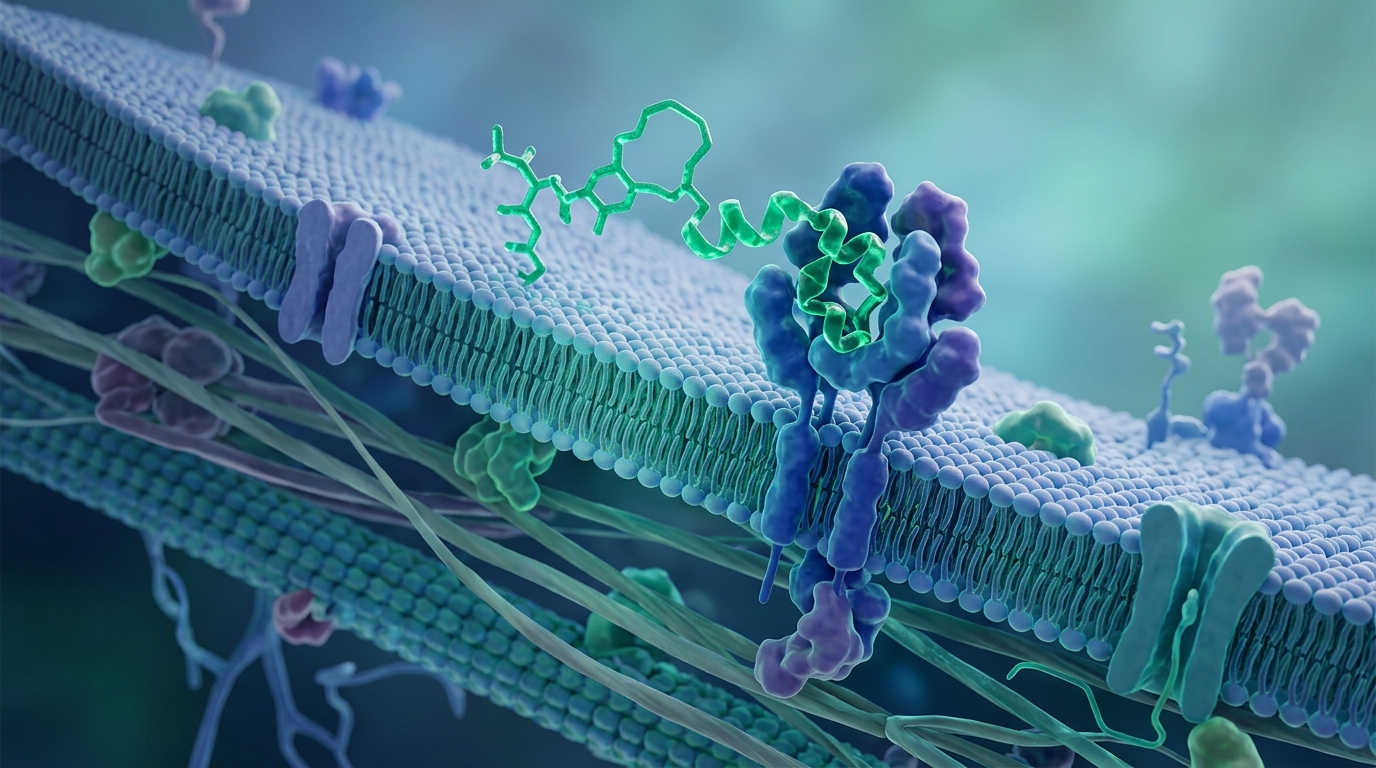
ARA-290 (cibinetide) is a synthetic 11-amino-acid peptide that selectively activates the Innate Repair Receptor (IRR) to resolve inflammation, prevent tissue apoptosis, and promote small nerve fiber regeneration without stimulating erythropoiesis.
This conclusion is supported by three primary pillars of scientific evidence:
- Selective molecular targeting: ARA-290 binds specifically to the heteromeric tissue-protective receptor while completely avoiding classical erythropoietin homodimer activation.
- Neuroregenerative and analgesic efficacy: Clinical and preclinical studies show measurable structural regrowth of small nerve fibers and meaningful reductions in neuropathic pain.
- Broad cytoprotection and immunomodulation: Animal and in-vitro models demonstrate robust protection against ischemia-reperfusion injury, metabolic dysfunction, and inflammatory tissue degradation.
1. Selective Molecular Targeting of the Innate Repair Receptor
Erythropoietin (EPO) exhibits potent cytoprotective actions, but its clinical utility outside hematology is limited by dangerous increases in red cell mass, thrombosis risk, and hypertension. ARA-290 was derived from the non-hematopoietic aqueous surface of EPO’s helix B to eliminate these risks.
In-Vitro Evidence
- Receptor Binding Profile: Surface plasmon resonance and binding assays confirm ARA-290 selectively binds the heteroreceptor complex composed of the erythropoietin receptor monomer and the CD131 (common beta chain, βc) receptor subunit.
- Non-Erythroid Action: In cell culture assays utilizing erythroid progenitor cells (e.g., UT-7/EPO, TF-1), ARA-290 does not stimulate proliferation or intracellular phosphorylation cascades typical of classical EPOR homodimer activation (such as intense JAK2/STAT5 phosphorylation).
Human Clinical Evidence
- Hematologic Safety: Phase 1 and Phase 2 trials involving healthy volunteers and patients with sarcoidosis or type 2 diabetes consistently demonstrated that repeated daily dosing of ARA-290 (typically 1 to 4 mg subcutaneously or intravenously) produced no elevation in hematocrit, hemoglobin, or reticulocyte count.
Hypotheses
- Researchers hypothesize that the transient binding kinetics of ARA-290 are sufficient to initiate downstream anti-apoptotic signaling cascades (PI3K/Akt and MAPK/ERK) while preventing long-term desensitization of the CD131 receptor.
2. Neuroregenerative and Analgesic Efficacy in Neuropathy
The primary translational focus of ARA-290 is the management of small fiber neuropathy (SFN), a condition characterized by distal axonal loss, autonomic dysfunction, and intractable neuropathic pain.
Human Clinical Evidence
- Corneal Nerve Fiber Regeneration: In randomized, double-blind, placebo-controlled Phase 2 trials in patients with sarcoidosis-associated SFN (e.g., Dahan et al., Heij et al.), 28 days of daily subcutaneous ARA-290 (4 mg) resulted in a statistically significant increase in corneal nerve fiber density (CNFD) measured via corneal confocal microscopy compared to placebo.
- Neuropathic Symptom and Functional Improvement: Clinical trials observed parallel improvements in small fiber symptom inventory scores, cold perception thresholds, and exercise tolerance (6-minute walk distance) in patients receiving active peptide treatment.
- Epidermal Nerve Fiber Density (ENFD): In a Phase 2 study in type 2 diabetic patients with neuropathy, ARA-290 induced a trend toward distal intraepidermal nerve fiber regrowth, alongside significant improvements in neuropathic pain scores.
Animal Evidence
- Rodent Neuropathy Models: In rodent models of diabetic neuropathy (streptozotocin-induced) and chemotherapy-induced peripheral neuropathy (CIPN with paclitaxel or cisplatin), ARA-290 administration reversed mechanical allodynia, restored thermal sensitivity thresholds, and prevented axonal degeneration.
- Spinal Microglial Inactivation: Histological evaluations of spinal cord dorsal horns in neuropathic mice showed that ARA-290 significantly suppressed microglial and astrocytic activation, dampening central sensitization.
Anecdotal and Observational Claims
- Off-label research peptide communities frequently report rapid relief from burning dysesthesias; however, clinical data suggest that structural structural reinnervation and sustained pain relief require a minimum of 28 to 84 continuous days of administration.
3. Broad Cytoprotection and Immunomodulation Across Organs
Beyond peripheral nerves, the Innate Repair Receptor is upregulated in response to metabolic stress, hypoxia, and pro-inflammatory cytokines across multiple organ systems.
Animal Evidence
- Ischemia-Reperfusion Injury (IRI): In murine and porcine models of renal and myocardial ischemia-reperfusion, ARA-290 administered prior to or immediately following reperfusion reduced infarct size, decreased tubular necrosis, and improved glomerular filtration rates.
- Islet Cell Transplantation: In diabetic mouse models undergoing pancreatic islet transplantation, ARA-290 co-treatment enhanced islet survival, minimized early macrophage infiltration, and improved long-term glycemic control.
- Wound Healing: In diabetic rodent wound models, topical or systemic ARA-290 accelerated wound closure and re-epithelialization by reducing local oxidative stress and stimulating angiogenesis without oncogenic signaling.
In-Vitro Evidence
- Cytokine Suppression: In cultured primary macrophages, human endothelial cells, and microglial cell lines, pre-treatment with ARA-290 significantly attenuates LPS- or TNF-α-induced secretion of IL-6, TNF-α, and IL-1β via suppression of the NF-κB pathway.
- Endothelial Barrier Integrity: ARA-290 preserves tight junction protein expression (ZO-1 and occludin) under hypoxic stress, reducing vascular hyperpermeability.
Hypotheses
- It is hypothesized that ARA-290 acts as an emergency biological switch, converting pro-inflammatory M1 macrophages into the pro-resolving M2 phenotype specifically within compromised microenvironments.