Key Takeaways
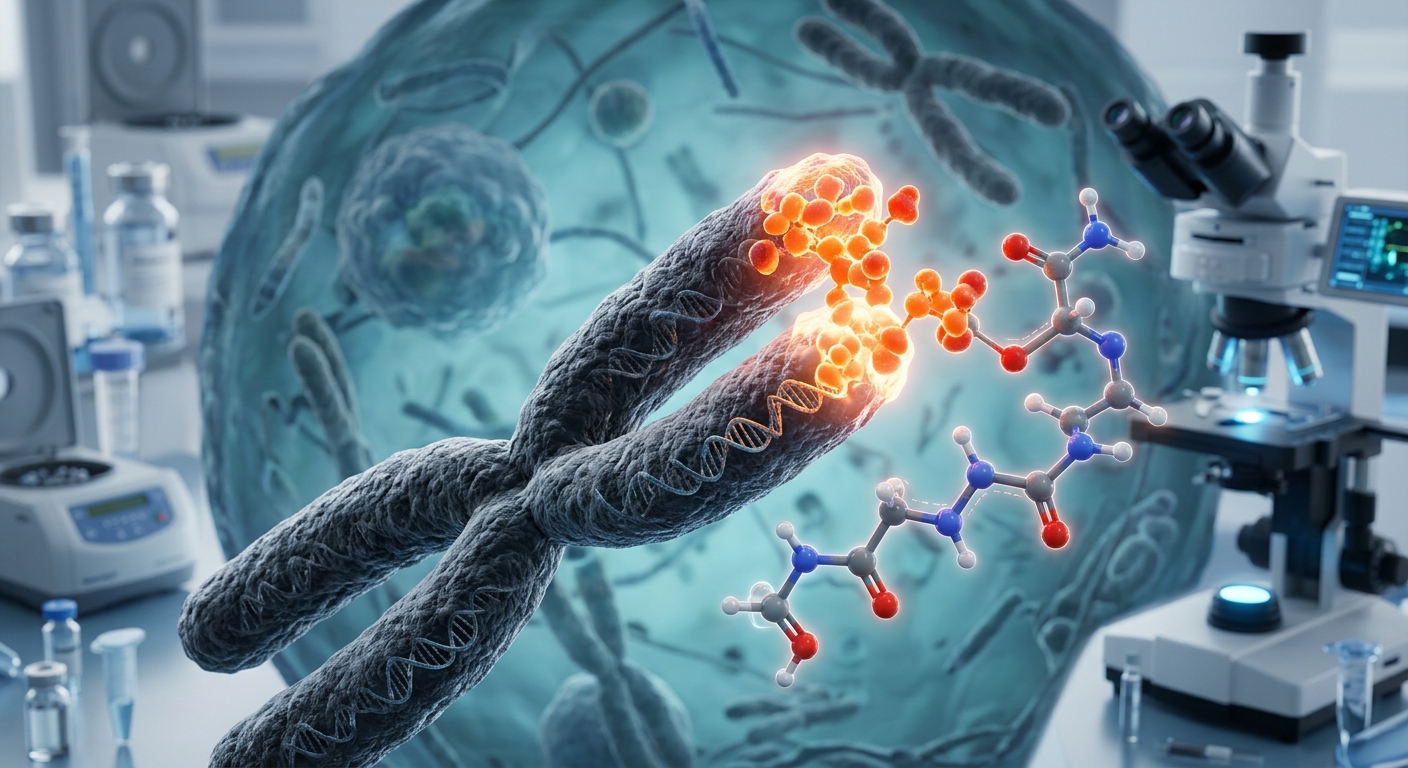
- Synthetic Tetrapeptide: Epitalon (also spelled Epithalon; sequence Ala-Glu-Asp-Gly or AEDG) is a synthetic peptide modeled on epithalamin, an extract of the bovine pineal gland.
- Preclinical Strength: Robust in vitro and animal studies demonstrate telomerase activation, telomere elongation, reduced chromosomal aberrations, and lifespan extension in rodents and fruit flies.
- Human Evidence Gap: Published human data are limited to small exploratory cohorts, ex vivo lymphocyte assays, and older studies that frequently evaluated crude pineal extracts rather than purified synthetic Epitalon.
- Regulatory Status: Epitalon is an unapproved research peptide; it has not received approval from the U.S. Food and Drug Administration (FDA) for any medical condition.
What Is Epitalon?
Epitalon is an ultra-short synthetic tetrapeptide composed of four amino acids: L-alanyl-L-glutamyl-L-aspartyl-glycine (AEDG). Developed by Vladimir Khavinson and colleagues at the St. Petersburg Institute of Bioregulation and Gerontology, the molecule was designed to mimic the putative active bioregulatory component of epithalamin, a crude peptide complex extracted from bovine pineal glands.
In gerontological research, Epitalon is investigated primarily for its potential to modulate cellular aging, stimulate endogenous melatonin secretion, regulate neuroendocrine function, and activate telomerase reverse transcriptase.
Preclinical Evidence: In Vitro and Animal Studies
The vast majority of published literature on Epitalon consists of laboratory cell cultures and animal models. These studies focus on three primary mechanisms: telomere maintenance, gene expression, and organismal lifespan.
1. Telomerase Activation and Cellular Senescence
In human somatic cell cultures, normal cells undergo a finite number of divisions before reaching the Hayflick limit—a state of permanent growth arrest driven largely by progressive telomere shortening. A seminal study published in the Bulletin of Experimental Biology and Medicine demonstrated that adding Epitalon to cultured human fetal fibroblasts induced the expression of the catalytic subunit of telomerase (human telomerase reverse transcriptase, or hTERT). This enzymatic reactivation led to measurable telomere elongation and allowed cells to surpass their standard replicative limit by several population doublings without showing signs of malignant transformation.
2. Epigenetic and Transcriptional Regulation
Subsequent molecular investigations have shown that ultra-short peptides such as AEDG can interact directly with histone proteins and specific DNA sequences. In vitro models utilizing human stem cells and neurogenesis assays indicate that Epitalon modulates gene expression profiles related to differentiation, antioxidant enzyme synthesis (such as superoxide dismutase), and structural integrity. In immune cell cultures, Epitalon reduced pro-inflammatory signaling markers, including interleukin-6 (IL-6) and tumor necrosis factor-alpha (TNF-α).
3. Lifespan and Neoplasm Studies in Animal Models
Preclinical in vivo studies have evaluated Epitalon across diverse species:
- Fruit Flies (Drosophila melanogaster): Administration of Epitalon during larval and adult stages extended mean lifespan by up to 11–16%, accompanied by reduced lipid peroxidation.
- Rodents: Long-term administration in female Swiss mice, SHR mice, and rats resulted in mean lifespan increases ranging between 12% and 24%. In several rodent models, treatment was associated with a decrease in spontaneous tumor incidence and a reduction in chromosomal aberrations in bone marrow cells.
- Non-Human Primates: In aged rhesus monkeys (Macaca mulatta), administration of pineal peptides restored circadian evening surges in endogenous melatonin secretion toward levels observed in younger animals.
Human Evidence: Clinical Reality vs. Research Claims
While preclinical findings are extensive, the clinical evidence base for Epitalon in humans is comparatively thin and presents significant translational limitations.
Epithalamin vs. Synthetic Epitalon
A frequent point of confusion in the longevity literature is the conflation of epithalamin and Epitalon. Many of the long-term human geriatric studies conducted in Russia between 1980 and 2005 utilized epithalamin—a complex biological extract containing a heterogeneous mixture of pineal proteins and peptides—rather than isolated synthetic AEDG. While these trials reported improved immune parameters, stabilized endocrine rhythms, and decreased all-cause cardiovascular mortality over long follow-up intervals, they do not constitute direct pharmacokinetic or clinical proof for the purified tetrapeptide Epitalon.
Human Ex Vivo and Pilot Cohort Studies
Direct human studies on Epitalon itself are limited to small, specialized investigations:
- Ex Vivo Lymphocyte Studies: Blood samples taken from elderly human donors and treated ex vivo with Epitalon demonstrated decondensation of heterochromatin and activation of ribosomal gene expression, suggesting that chromatin remodeling can occur in aged human cells outside the body.
- Ophthalmology and Retinal Disease: Early pilot clinical studies examined Epitalon in patients with degenerative eye disorders, such as retinitis pigmentosa. Investigators reported qualitative improvements in visual fields and electrical retinal activity, though these studies lacked modern randomized, double-blind controls.
- Melatonin and Circadian Rhythms: Small exploratory trials in elderly human subjects noted modest increases in nighttime melatonin output following peptide administration, mirroring observations seen in rhesus monkeys.
Methodological Limitations of Human Data
Modern clinical standards require randomized, double-blind, placebo-controlled trials (RCTs) with predefined endpoints, validated biomarkers, and adequate statistical power. The existing human literature for Epitalon lacks large-scale Phase II or Phase III trials conducted according to international Good Clinical Practice (GCP) standards. Furthermore, dose-finding studies remain sparse, leaving unresolved discrepancies between empirical high-dose regimens reported in experimental protocols and predicted biological receptor-saturation thresholds.
Safety Considerations and Research Uncertainties
Because comprehensive toxicology and formal Phase I clinical safety studies have not been published in Western peer-reviewed channels, the safety profile of Epitalon remains incomplete.
- Oncogenic Concerns: Telomerase reactivation is a hallmark of more than 85–90% of human malignancies. While rodent longevity studies did not show an increase in tumor frequency with Epitalon administration, long-term human safety regarding systemic telomerase stimulation is unknown.
- Lack of Pharmacokinetic Characterization: In vivo absorption, distribution, metabolism, and excretion (ADME) parameters in humans have not been established in standardized pharmacology trials.
Regulatory Status
Epitalon is not approved as a prescription drug or therapeutic agent by the FDA, the European Medicines Agency (EMA), or Health Canada. In July 2026, the FDA Pharmacy Compounding Advisory Committee (PCAC) reviewed nominated bulk drug substances, including Epitalon, for potential eligibility under Section 503A compounding pathways. While the advisory committee issued a non-binding recommendation, the FDA has not approved Epitalon for clinical use, and it remains classified as an investigational research compound.
Frequently Asked Questions
Is Epitalon proven to reverse biological aging in humans?
No. While Epitalon extends telomeres in cultured human cells and increases median lifespan in rodents, controlled clinical trials demonstrating reversal of human biological aging or extension of human lifespan have never been conducted.
What is the difference between Epitalon and Epithalamin?
Epithalamin is an older, crude bovine pineal extract containing multiple peptides. Epitalon is a single, chemically synthesized tetrapeptide (Ala-Glu-Asp-Gly) modeled after the proposed active component of that extract. Many older clinical claims stem from epithalamin research rather than synthetic Epitalon.
Can Epitalon be prescribed by physicians for anti-aging?
No. Epitalon is not an FDA-approved drug for anti-aging, insomnia, or any other indication. It is distributed strictly for laboratory and preclinical research purposes.
Does telomerase activation carry health risks?
In basic oncology, uncontrolled telomerase activation allows immortalized cancer cells to avoid senescence. Although preclinical studies in rodents did not demonstrate increased tumor rates with Epitalon, the theoretical oncogenic risk of exogenous telomerase stimulation in humans remains an unanswered safety question.
Research Summary
Epitalon (AEDG) is a synthetic tetrapeptide supported by significant preclinical research demonstrating in vitro telomerase upregulation, telomere elongation, and lifespan extension across several non-human model organisms. However, human evidence is preliminary, methodologically constrained, and frequently conflated with older studies on crude pineal extracts. Large-scale, randomized, placebo-controlled human clinical trials are absent. Epitalon is not FDA-approved, and its clinical efficacy and long-term safety profile in humans remain unproven.
References
- Khavinson VK, Bondarev IE, Butyugov AA. Epithalon peptide induces telomerase activity and telomere elongation in human somatic cells. Bull Exp Biol Med. 2003;135(6):590-592.
- Khavinson VK, Izmaylov DM, Obukhova LK, Malinin VV. Effect of epitalon on the lifespan increase in Drosophila melanogaster. Mech Ageing Dev. 2000;120(1):141-149.
- Khavinson V, Diomede F, Mironova E, et al. AEDG Peptide (Epitalon) Stimulates Gene Expression and Protein Synthesis during Neurogenesis: Possible Epigenetic Mechanism. Molecules. 2020;25(3):609.
- Khavinson VK, Linkova NS, Kvetnoy IM, et al. Molecular cellular mechanisms of peptide regulation of melatonin synthesis in pinealocyte culture. Bull Exp Biol Med. 2012;153(2):255-258.
- U.S. Food and Drug Administration. Pharmacy Compounding Advisory Committee (PCAC) Meeting Briefing Information. 2026.