Key Takeaways
- Investigational GHRH Analogue: CJC-1295 (also known as DAC:GRF) is a synthetic 30-amino-acid derivative of growth hormone-releasing hormone (GHRH) designed to stimulate endogenous growth hormone (GH) secretion.
- DAC Bioconjugation: The inclusion of Drug Affinity Complex (DAC) technology enables covalent binding to circulating serum albumin, extending the peptide’s elimination half-life to approximately 6 to 8 days in humans.
- Phase 1 Evidence: Controlled Phase 1 human trials demonstrated dose-dependent, sustained increases in plasma GH and insulin-like growth factor 1 (IGF-1) while preserving episodic GH pulsatility.
- Trial Halt and Discontinuation: Clinical development was terminated during Phase 2 trials for HIV-associated lipodystrophy following a fatal cardiovascular event in a trial participant.
- Regulatory Status: CJC-1295 is not approved by the U.S. Food and Drug Administration (FDA) or international regulatory agencies for any clinical indication.
What Is CJC-1295 and How Does DAC Technology Work?
In endocrine pharmacology, CJC-1295 clinical research originated from efforts to develop stable, long-acting secretagogues capable of mimicking endogenous hypothalamic GHRH. Native GHRH(1–44) and its truncated active fragment GHRH(1–29) stimulate somatotroph cells in the anterior pituitary to synthesize and release GH. However, native peptides are rapidly degraded by circulating proteolytic enzymes—primarily dipeptidyl peptidase-4 (DPP-4)—resulting in an elimination half-life of only a few minutes.
To overcome this pharmacokinetic limitation, ConjuChem Biotechnologies developed CJC-1295 by incorporating specific amino acid substitutions and proprietary Drug Affinity Complex (DAC) technology. The compound consists of a modified 29-amino-acid GHRH sequence containing four protective amino acid substitutions (D-Ala2, Gln8, Ala15, and Leu27) attached via a linker to a reactive maleimidopropionic acid group at its C-terminal lysine residue.
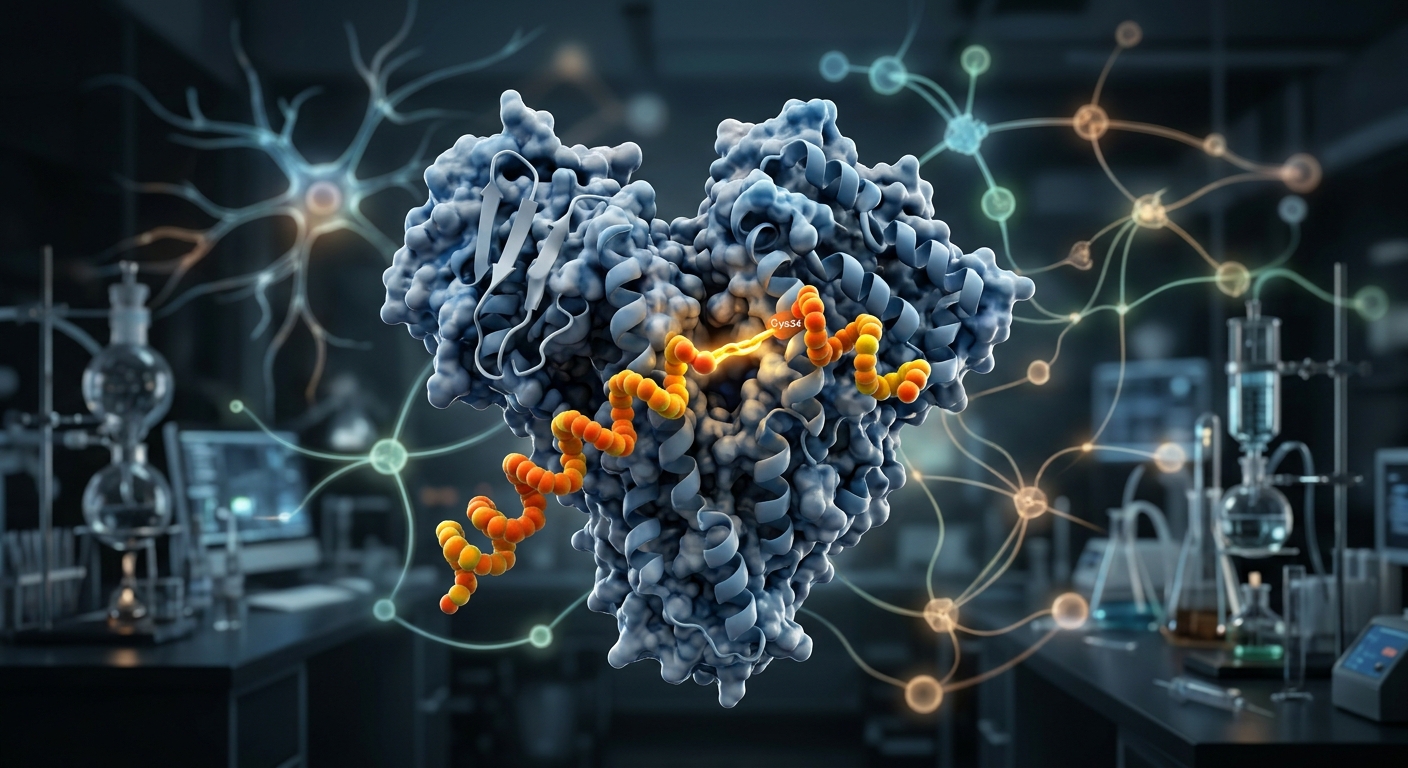
Upon subcutaneous administration, the maleimide moiety reacts specifically and covalently with the free thiol group on cysteine-34 of circulating human serum albumin. This in vivo bioconjugation anchors the peptide to the long-lived albumin molecule, shielding it from rapid enzymatic cleavage and renal filtration without obstructing its capacity to bind and activate pituitary GHRH receptors.
Phase 1 Human Clinical Trials: Pharmacokinetics and Endocrine Dynamics
Human clinical evidence for CJC-1295 derives primarily from Phase 1 ascending-dose trials published by Teichman et al. (2006) in The Journal of Clinical Endocrinology & Metabolism. The investigators conducted two randomized, double-blind, placebo-controlled trials in healthy adults aged 21 to 61 years to evaluate the pharmacokinetic, pharmacodynamic, and preliminary safety profile of single and multiple subcutaneous doses.
Key findings from the Phase 1 program include:
- Extended Half-Life: CJC-1295 exhibited an elimination half-life ranging from 5.8 to 8.1 days, confirming the functional persistence of the albumin-conjugated peptide.
- Sustained GH Elevation: Single doses produced dose-dependent, 2- to 10-fold increases in mean plasma GH concentrations that persisted for 6 or more days.
- Prolonged IGF-1 Release: Single doses elevated mean plasma IGF-1 concentrations by 1.5- to 3-fold, with elevations maintained for 9 to 11 days. Multiple weekly doses resulted in cumulative, sustained IGF-1 increases.
- Preservation of GH Pulsatility: Frequent blood sampling confirmed that despite sustained baseline elevations, the physiological pulsatile pattern of GH secretion remained intact, demonstrating that pituitary responsiveness to hypothalamic feedback mechanisms was preserved.
- Hormonal Selectivity: CJC-1295 administration did not significantly alter circulating concentrations of other anterior pituitary hormones, such as prolactin, thyroid-stimulating hormone (TSH), luteinizing hormone (LH), or follicle-stimulating hormone (FSH).
Phase 2 Clinical Development and Program Discontinuation
Following Phase 1 evaluation, CJC-1295 progressed to Phase 2 clinical trials designed to assess its efficacy in treating visceral adiposity in patients with HIV-associated lipodystrophy. The multicenter, randomized, double-blind, placebo-controlled trial enrolled 192 participants who received escalating weekly doses of the compound or placebo.
Development was abruptly halted in July 2006 after a trial participant experienced acute chest discomfort and suffered a fatal myocardial infarction approximately two hours following an eleventh weekly injection. While attending investigators noted that the patient possessed pre-existing, undiagnosed coronary artery disease and plaque rupture, the pharmaceutical sponsor terminated the clinical development program, and formal Phase 2 data were never published in peer-reviewed literature. Clinical research into CJC-1295 as an approved therapeutic candidate ceased following this event.
Safety Findings, Adverse Events, and Preclinical Toxicology
Data regarding the safety profile of CJC-1295 are derived from early-phase human trials and regulatory review documents:
- Short-Term Human Observations: In Phase 1 healthy volunteer studies, reported adverse events were predominantly mild to moderate and transient. The most common included injection-site reactions (erythema, pain, induration), transient facial flushing, headache, and mild gastrointestinal symptoms. Transient peripheral fluid retention was also observed, consistent with known pharmacodynamic effects of sustained GH and IGF-1 elevation.
- Cardiovascular Concerns: The occurrence of a fatal ischemic cardiac event during Phase 2 testing highlighted the absence of robust long-term cardiovascular safety data for sustained GHRH stimulation in populations with underlying metabolic or vascular risk factors.
- Preclinical Toxicology: Nonclinical regulatory evaluations reviewed by the FDA Pharmacy Compounding Advisory Committee (PCAC) identified nonclinical findings in animal models, including altered food intake, reduced hemoglobin, injection site tissue changes, and theoretical risks regarding prolonged pituitary somatotroph stimulation.
Distinction Between CJC-1295 With DAC and Modified GRF(1–29)
A persistent source of confusion in scientific and wellness literature is the distinction between true CJC-1295 (CJC-1295 with DAC) and Modified GRF(1–29) (often erroneously labeled “CJC-1295 without DAC”). While both share a similar modified peptide backbone, their pharmacological behaviors are fundamentally different:
- CJC-1295 (DAC:GRF): Contains the maleimide linker enabling albumin bioconjugation. Half-life is 6 to 8 days, producing continuous, prolonged elevation of baseline GH and IGF-1.
- Modified GRF(1–29): Lacks the reactive DAC linker. Half-life is approximately 30 minutes, producing brief, pulsatile GH release without forming stable macromolecular complexes.
Published human clinical trials (such as the Teichman et al. studies) evaluated exclusively the DAC-conjugated formulation.
Regulatory Status and Research Limitations
CJC-1295 has never received marketing approval from the FDA, European Medicines Agency (EMA), or Health Canada. Following the discontinuation of its clinical program in 2006, the compound remains classified strictly as an unapproved investigational chemical.
In December 2024, the FDA Pharmacy Compounding Advisory Committee evaluated CJC-1295 bulk drug substances, voting against their inclusion on the 503A Bulks List due to significant safety questions, inadequate long-term clinical safety data, and peptide immunogenicity risks. Furthermore, CJC-1295 and related GHRH analogues are prohibited at all times under the World Anti-Doping Agency (WADA) Prohibited List (Class S2: Peptide Hormones, Growth Factors, Related Substances, and Mimetics).
Frequently Asked Questions
Is CJC-1295 FDA-approved for medical use?
No. CJC-1295 has never received FDA approval for any medical condition. Commercial development was terminated during Phase 2 trials in 2006, and it remains an investigational compound.
How does the DAC modification change the behavior of the peptide?
The Drug Affinity Complex (DAC) includes a reactive linker that binds covalently to circulating albumin in the bloodstream. This prevents rapid enzymatic degradation and extends the elimination half-life from approximately 30 minutes to over 6 days.
Why was the Phase 2 trial of CJC-1295 halted?
The trial was discontinued by the sponsor in 2006 following the death of an enrolled subject from an acute myocardial infarction. Although underlying cardiovascular disease was considered the likely primary factor, clinical development of the drug was terminated.
Did human trials show that CJC-1295 increases growth hormone?
Yes. Phase 1 controlled human studies showed that single doses produced dose-dependent, 2- to 10-fold elevations in growth hormone and 1.5- to 3-fold increases in IGF-1, while maintaining natural pulsatile secretory patterns.
References
- Teichman SL, Neale A, Lawrence B, Gagnon C, Castaigne JP, Frohman LA. Prolonged stimulation of growth hormone (GH) and insulin-like growth factor I secretion by CJC-1295, a long-acting analog of GH-releasing hormone, in healthy adults. J Clin Endocrinol Metab. 2006;91(3):799-805. doi:10.1210/jc.2005-1536
- Alba M, Fintini D, Saggese G, et al. Once-daily administration of CJC-1295, a long-acting growth hormone-releasing hormone (GHRH) analog, normalizes growth in the GHRH knockout mouse. Endocrinology. 2006;147(9):4197-4203. doi:10.1210/en.2006-0279
- U.S. Food and Drug Administration. Evaluation of CJC-1295-Related Bulk Drug Substances for Inclusion on the 503A Bulk Drug Substances List. Pharmacy Compounding Advisory Committee Briefing Document; December 2024.
Research Summary
Peer-reviewed human evidence for CJC-1295 confirms that its Drug Affinity Complex allows covalent albumin bioconjugation, extending circulating half-life and producing sustained, pulsatile elevations in GH and IGF-1 secretion. However, human evidence is strictly limited to short-term Phase 1 trials and an incomplete Phase 2 study halted after a fatal cardiovascular event. CJC-1295 is not FDA-approved, has no established long-term efficacy or safety data in human populations, and remains an unapproved research peptide.