Key Takeaways
- Structural Heritage: Adamax is a synthetic derivative of Semax, an adrenocorticotropic hormone (ACTH 4–10) analog fused to a Pro-Gly-Pro tripeptide backbone.
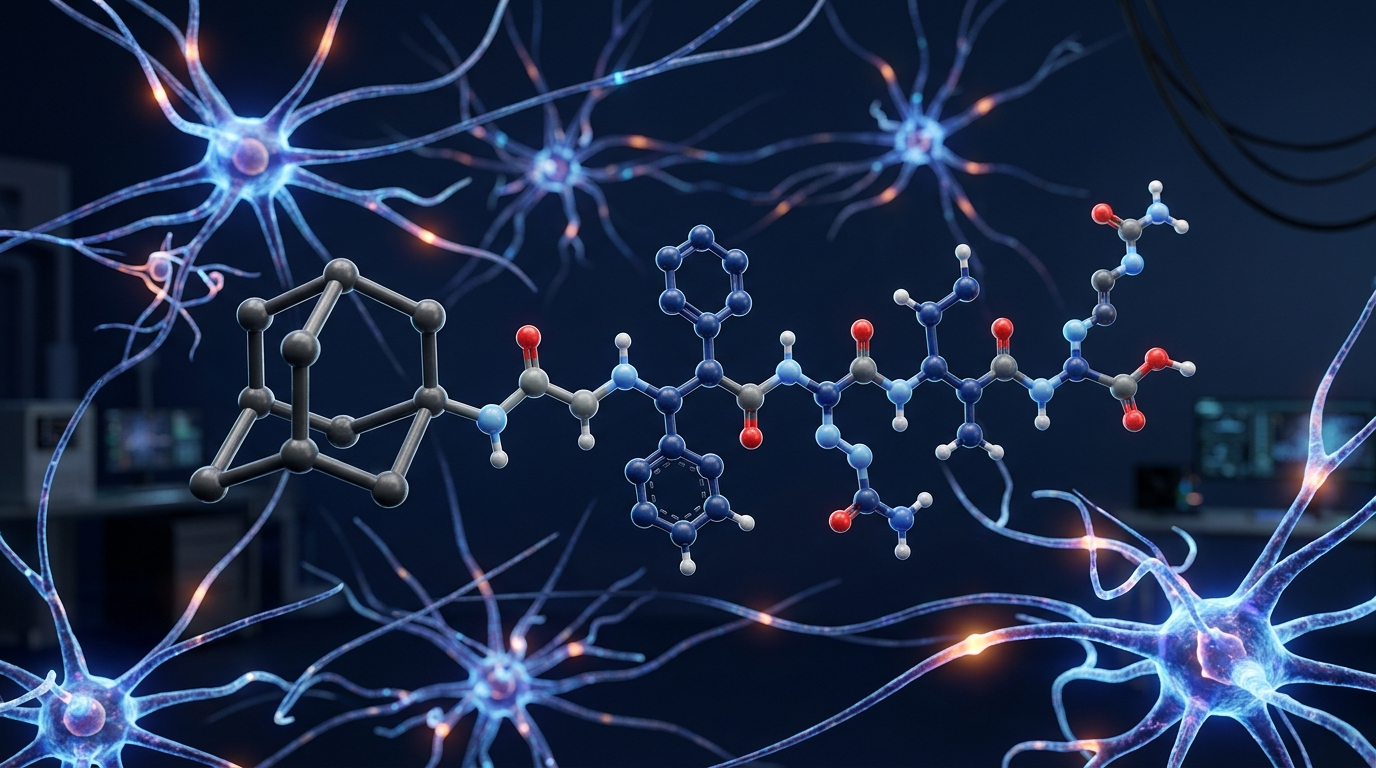
- Chemical Modifications: Adamax incorporates an N-terminal acetyl group and a C-terminal lipophilic adamantyl cage designed to improve enzymatic stability and membrane permeability.
- Mechanistic Hypothesis: In vitro and cellular models suggest both peptides interact with central neurotrophin cascades, specifically brain-derived neurotrophic factor (BDNF) and TrkB receptor signaling.
- Evidence Asymmetry: Semax possesses decades of peer-reviewed animal and human research in Eastern Europe, whereas Adamax lacks published human clinical trials, validated pharmacokinetic profiles, and regulatory approval.
The Scientific Lineage: From ACTH(4–10) to Adamax
Neuropeptide engineering often begins with naturally occurring hormone sequences that exhibit potent central signaling but suffer from rapid enzymatic degradation and poor blood-brain barrier permeability. In the late 20th century, researchers developed Semax as a synthetic heptapeptide with the sequence Met-Glu-His-Phe-Pro-Gly-Pro (MEHFPGP). Semax combines the active non-corticotrophic fragment of adrenocorticotropic hormone (ACTH 4–10) with the stabilizing tripeptide Pro-Gly-Pro at its C-terminus. This structural configuration was designed to resist aminopeptidase and carboxypeptidase cleavage while maintaining central nervous system neuromodulatory effects.
Adamax represents a modern synthetic extension of this scaffold. Developed as a customized analog, Adamax couples the core Semax heptapeptide sequence to additional chemical modifications borrowed from synthetic medicinal chemistry, notably N-terminal acetylation and conjugation with a bulky, lipophilic adamantane hydrocarbon moiety. While online research communities frequently discuss Adamax alongside Semax, the scientific baseline for each compound differs substantially.
Chemical Modifications: Deconstructing the Adamax Molecule
To understand the pharmacological hypotheses surrounding Adamax, it is necessary to examine how each specific modification alters the biophysical properties of the peptide chain.
1. The Heptapeptide Core
Both Semax and Adamax share the core amino acid sequence Met-Glu-His-Phe derived from ACTH, coupled to the Pro-Gly-Pro sequence. This core domain is responsible for activating central melanocortin receptors and downstream neurotrophic pathways without triggering systemic glucocorticoid release from the adrenal cortex.
2. N-Terminal Acetylation
Adamax features an acetyl group attached to the N-terminal methionine residue (Ac-Met...). In peptide chemistry, N-terminal capping removes the positive charge of the free alpha-amino group. This alteration increases resistance against aminopeptidases, enzymes ubiquitous in serum and mucosal tissues that degrade linear peptides by cleaving residues from the amino terminus.
3. C-Terminal Adamantane Conjugation
The defining structural feature of Adamax is the inclusion of an adamantyl group at or near the C-terminus (frequently conjugated as an adamantane-modified amide or via an extended amino acid spacer). Adamantane is a symmetrical, tricyclic alkane (diamondoid) structure with the chemical formula C10H16. In drug design, adamantane is utilized for two primary purposes:
- Steric Proteolytic Shielding: The bulky, rigid hydrocarbon cage acts as a physical barrier that restricts carboxypeptidase access to the peptide backbone.
- Lipophilicity and Membrane Partitioning: Peptides typically suffer from poor passive diffusion across lipid membranes due to high hydrophilicity. The addition of the hydrophobic adamantane cage increases the compound’s overall octanol-water partition coefficient (logP), theoretically enhancing passive transit across endothelial membranes and the blood-brain barrier.
Proposed Biological Mechanisms
Because Adamax preserves the primary pharmacophore of Semax, its proposed biological targets mirror those observed in preclinical Semax literature:
- BDNF and TrkB Modulation: In cellular and rodent models, ACTH(4–10) analogs stimulate the transcription of brain-derived neurotrophic factor (BDNF) and nerve growth factor (NGF) within hippocampal and cortical structures. This cascade leads to enhanced phosphorylation of the Tropomyosin receptor kinase B (TrkB), which supports synaptic plasticity and dendritic arborization.
- Monoaminergic Neurotransmitter Systems: Semax has been shown in microdialysis studies to modulate dopamine and serotonin turnover in striatal and prefrontal regions. Adamax is hypothesized to influence similar monoamine synthesis pathways, though direct experimental confirmation is limited.
- Protection Against Excitotoxicity: Synthetic melanocortin analogs demonstrate the ability to attenuate glutamate-induced neurotoxicity, calcium overload, and cellular apoptosis in primary neuronal cultures.
Adamax vs. Semax: Direct Comparison
Although Adamax was engineered to optimize the pharmacokinetic profile of Semax, the two compounds occupy very different tiers of scientific validation:
- Chemical Structure: Semax is an unmodified heptapeptide (
H-Met-Glu-His-Phe-Pro-Gly-Pro-OH). Adamax contains the N-terminal acetyl modification and a C-terminal adamantane-conjugated derivative. - Proteolytic Half-Life: In vitro stability assays demonstrate that while Semax exhibits a serum half-life measured in minutes, N-terminal acetylation and adamantylation significantly delay enzymatic degradation by exopeptidases.
- Lipophilicity: Semax is hydrophilic, whereas Adamax possesses elevated lipophilicity due to its hydrocarbon cage, designed to alter membrane partition dynamics.
- Preclinical Evidence: Semax is supported by hundreds of published, peer-reviewed studies examining gene expression, ischemia models, and electrophysiology. In contrast, Adamax is described in a narrow set of laboratory chemistry and in vitro stability reports.
- Clinical Data: Semax was evaluated in human clinical trials in Russia for acute ischemic stroke and transient ischemic attacks, and was approved as a prescription pharmaceutical by the Russian Ministry of Health in 1994. Adamax has never been evaluated in formal phase I, II, or III human clinical trials in any jurisdiction.
- Regulatory Status: Neither compound is approved by the United States Food and Drug Administration (FDA), the European Medicines Agency (EMA), or the UK Medicines and Healthcare products Regulatory Agency (MHRA). Adamax remains strictly classified as an unapproved research chemical.
Critical Evidence Gaps and Research Limitations
The theoretical advantages of Adamax over Semax are derived largely from structure-activity relationship (SAR) modeling rather than empirical in vivo pharmacology. Several significant evidence gaps must be highlighted:
1. Absence of In Vivo Pharmacokinetic Verification
While adding an adamantyl group increases lipophilicity in computational and in vitro settings, higher lipophilicity does not automatically guarantee superior central nervous system penetration. Conjugating a bulky hydrocarbon cage can alter the compound’s three-dimensional conformation, potentially reducing its binding affinity to target melanocortin or neurotrophic receptor complexes.
2. Unknown Metabolites and Clearance Pathways
When peptides undergo enzymatic breakdown, their individual amino acids are recycled into the metabolic pool. However, synthetic non-proteinogenic conjugates like adamantane-derived fragments require hepatic cytochrome P450 processing or renal clearance. The metabolic fate, accumulation potential, and toxicology of Adamax degradation products have not been systematically characterized in animal or human models.
3. Scarcity of Independent Peer-Reviewed Literature
A significant portion of information regarding Adamax originates from laboratory vendor catalogs, analytical purity assays, and community forums rather than independent academic institutions. Consequently, extrapolating the therapeutic properties or safety margins of Semax directly to Adamax constitutes an unverified assumption.
Frequently Asked Questions
Is Adamax simply a more potent form of Semax?
No. While Adamax was chemically modified with the intention of increasing stability and bioavailability, potency cannot be assumed without formal receptor affinity assays and controlled in vivo pharmacokinetic studies. The adamantyl modification may alter receptor kinetics in ways that differ qualitatively from unmodified Semax.
Is Adamax approved by the FDA for any medical condition?
No. Adamax is not approved by the FDA, EMA, or any other global regulatory authority for the prevention, diagnosis, or treatment of any medical condition. It is synthesized and distributed exclusively for in vitro and preclinical laboratory research.
How does adamantane conjugation affect peptide stability?
Adamantane is a rigid, bulky tricyclic hydrocarbon. When attached to the terminus of a peptide, it creates steric hindrance that prevents proteolytic enzymes (such as carboxypeptidases) from binding and cleaving the peptide bonds, thereby extending the peptide’s structural integrity in biochemical stability assays.
References
- Ashmarin, I. P., et al. (1997). Nootropic analogs of ACTH(4-10) with prolonged action. Neuroscience and Behavioral Physiology, 27(3), 238–244.
- Gusev, E. I., et al. (2018). The efficacy of Semax in the acute period of ischemic stroke: Clinical trial review. Zhurnal Nevrologii i Psikhiatrii Imeni S.S. Korsakova, 118(3), 61–68.
- Lamoureux, G., & Artali, R. (2010). Modern applications of adamantane in medicinal chemistry. Current Medicinal Chemistry, 17(26), 2967–2978.
- Strekalova, T., et al. (2003). ACTH(4-10) peptide analog effects on neurotrophin expression and synaptic plasticity in rodent models. Journal of Molecular Neuroscience, 20(3), 321–326.
Research Summary
Adamax represents an engineered analog within the melanocortin neuropeptide family, combining the foundational ACTH(4–10)/Pro-Gly-Pro sequence of Semax with N-terminal acetylation and a C-terminal adamantane moiety. These modifications are chemically rationalized to increase lipophilicity and resist proteolytic breakdown. However, significant evidence gaps separate the two compounds. While Semax has a history of clinical investigation and foreign regulatory approval, Adamax remains supported only by limited preclinical and chemical stability literature, without published human clinical trials or established safety profiles. It remains an unapproved investigational compound restricted to laboratory research.