Key Takeaways
- Dual receptor pharmacology: Survodutide (BI 456906) simultaneously activates glucagon-like peptide-1 (GLP-1) and glucagon receptors to reduce caloric intake while stimulating hepatic lipid oxidation and energy expenditure.
- Significant weight reduction in trials: Phase 2 dose-finding trials published in The Lancet Diabetes & Endocrinology showed dose-dependent body weight reductions of up to 18.7% over 46 weeks.
- Histological liver improvement: In a landmark Phase 2 trial published in The New England Journal of Medicine, up to 83% of adults with metabolic dysfunction-associated steatohepatitis (MASH) achieved disease resolution without worsening of liver fibrosis.
- Adverse event profile: The primary safety signals involve dose-dependent gastrointestinal symptoms (nausea, vomiting, diarrhea) and modest increases in resting heart rate.
- Regulatory status: Survodutide is an investigational compound with FDA Fast Track and Breakthrough Therapy designations; it is not approved by the FDA or international regulatory bodies for clinical use.
What Is Survodutide?
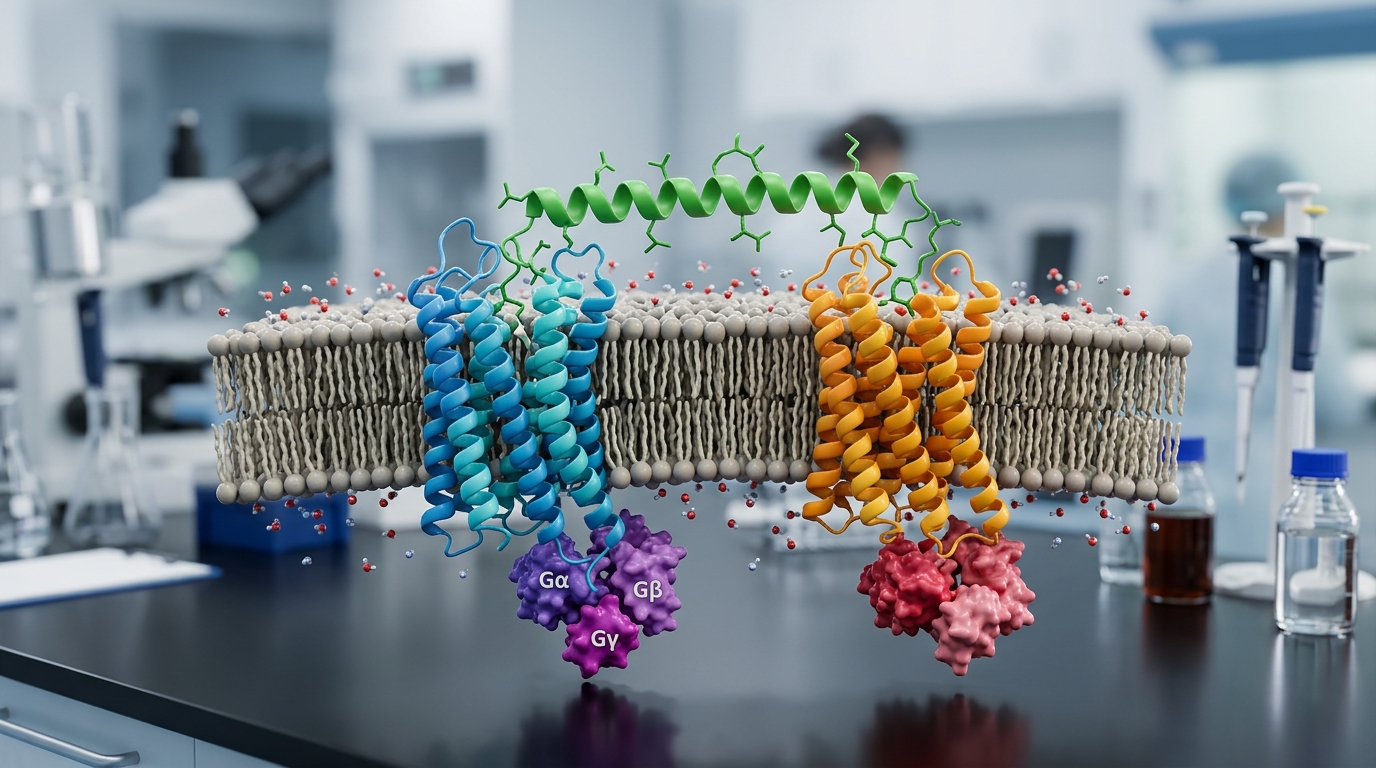
Survodutide (designated in development as BI 456906) is a synthetic, long-acting peptide developed jointly by Boehringer Ingelheim and Zealand Pharma. Structurally derived from the natural gut hormone oxyntomodulin, survodutide acts as a unimolecular dual agonist that binds to and activates two distinct Class B G-protein coupled receptors: the glucagon-like peptide-1 receptor (GLP-1R) and the glucagon receptor (GCGR).
While single-target GLP-1 receptor agonists (such as semaglutide and liraglutide) and dual GLP-1/GIP agonists (such as tirzepatide) have become established clinical strategies, survodutide represents a different pharmacological approach. By incorporating glucagon receptor agonism alongside GLP-1 receptor activation, researchers aim to harness glucagon’s catabolic and thermogenic actions on hepatic and adipose tissue while relying on GLP-1 agonism to curb appetite, protect pancreatic beta cells, and mitigate glucagon-driven hyperglycemia.
Dual GLP-1 and Glucagon Agonism: Mechanism of Action
Survodutide’s therapeutic hypothesis rests on complementary signaling cascades initiated across central and peripheral metabolic tissues:
- GLP-1 Receptor Pathway: Activation of GLP-1 receptors in the hypothalamus and hindbrain stimulates satiety pathways and suppresses hunger signals. Peripherally, GLP-1 receptor agonism enhances glucose-dependent insulin secretion, suppresses inappropriate postprandial glucagon release, and slows gastric emptying to attenuate postprandial glycemic excursions.
- Glucagon Receptor Pathway: Glucagon receptor signaling in hepatocytes stimulates mitochondrial fatty acid oxidation and inhibits lipogenesis. Furthermore, hepatic and brown adipose glucagon receptor activation increases basal metabolic rate and energy expenditure through thermogenic pathways.
- Metabolic Counter-Regulation: Isolated glucagon agonism typically stimulates hepatic glycogenolysis and gluconeogenesis, which could increase fasting blood glucose. However, the co-activation of GLP-1 receptors stimulates insulin secretion in the presence of elevated glucose, effectively neutralizing the diabetogenic risk of glucagon while preserving its lipid-clearing and energy-expending properties.
Clinical Trial Evidence: Weight Management and Glycemic Control
Survodutide has undergone systematic evaluation across several randomized, double-blind, placebo-controlled Phase 2 clinical trials:
Phase 2 Dose-Finding Obesity Trial
In a Phase 2 trial published in The Lancet Diabetes & Endocrinology, researchers enrolled 387 adults with a body mass index (BMI) of 27 kg/m² or greater without diabetes. Participants were randomized to receive weekly subcutaneous doses of survodutide (0.6 mg, 2.4 mg, 3.6 mg, or 4.8 mg) or placebo for 46 weeks, consisting of a 20-week dose-escalation phase and a 26-week maintenance phase.
At week 46, participants in the highest dose cohort (4.8 mg) achieved a mean body weight reduction of up to 14.9% in the planned treatment analysis, with actual treatment compliers reaching mean reductions of nearly 18.7%, compared to 2.8% in the placebo group. Over 82% of individuals in the 4.8 mg group achieved at least a 5% body weight reduction, and substantial proportions achieved reductions exceeding 15% and 20%.
Phase 3 SYNCHRONIZE Program
To substantiate these Phase 2 findings, researchers launched the global Phase 3 SYNCHRONIZE program. The program encompasses multiple multi-center trials:
- SYNCHRONIZE-1 (NCT06066515): Evaluating the efficacy and safety of survodutide in individuals with obesity or overweight without type 2 diabetes over 76 weeks.
- SYNCHRONIZE-2 (NCT06066528): Assessing survodutide in individuals with obesity or overweight and comorbid type 2 diabetes.
- SYNCHRONIZE-CVOT: Investigating long-term major adverse cardiovascular events (MACE) and cardiorenal outcomes in high-risk populations.
Clinical Research in MASH and Hepatic Fibrosis
Because glucagon receptors are densely expressed on hepatocytes, survodutide has been extensively studied for the treatment of metabolic dysfunction-associated steatohepatitis (MASH), formerly known as nonalcoholic steatohepatitis (NASH).
The Phase 2 MASH Trial
A double-blind, randomized Phase 2 trial published in The New England Journal of Medicine evaluated 293 participants with biopsy-confirmed MASH and fibrosis stages F1 to F3. Participants received weekly subcutaneous injections of survodutide (2.4 mg, 4.8 mg, or 6.0 mg) or placebo for 48 weeks.
The primary endpoint—histological improvement in MASH without worsening of fibrosis—was achieved by up to 83.0% of participants receiving survodutide (in the 4.8 mg group), compared to 18.2% in the placebo arm (p < 0.0001). Furthermore, in a prespecified sub-analysis of participants with moderate-to-advanced fibrosis (stages F2 and F3), up to 64.5% demonstrated an improvement in fibrosis stage of at least one level without worsening of MASH, compared to 25.9% in the placebo group (p = 0.0005). These data demonstrate potent direct hepatic defatting and anti-fibrotic activity.
Safety Profile and Tolerability
The safety and tolerability profile of survodutide in clinical trials reflects both GLP-1 receptor-mediated gastrointestinal effects and glucagon-mediated physiological responses:
- Gastrointestinal Adverse Events: Nausea, vomiting, diarrhea, constipation, and dyspepsia represent the most common adverse events. These events are predominantly mild to moderate in severity, occur most frequently during initial dose escalation, and decrease during the maintenance phase.
- Discontinuation Rates: In rapid dose-escalation cohorts, treatment discontinuation due to adverse events was higher than in placebo arms (ranging from 15% to 27% in higher-dose cohorts), underscoring the importance of gradual, individualized dose-titration protocols.
- Hemodynamic Observations: Consistent with other glucagon and incretin-based agonists, survodutide treatment has been associated with modest, dose-dependent increases in resting heart rate (typically 2 to 5 beats per minute) without clinically meaningful blood pressure elevations.
- Hepatic and Pancreatic Monitoring: Clinical trials have demonstrated significant reductions in hepatic transaminases (ALT and AST), reflecting decreased liver injury. As with all incretin mimetics, surveillance for rare events such as pancreatitis and gallbladder-related events remains standard practice in ongoing Phase 3 trials.
Research Limitations and Unanswered Questions
While Phase 2 trials show promising metabolic and histological improvements, several scientific questions remain under investigation:
- Durability and Weight Maintenance: As with other peptide-based metabolic therapies, long-term data are required to assess whether metabolic gains and fibrosis improvements are sustained over multi-year periods or whether chronic continuous therapy is required to prevent rebound steatosis and weight regain.
- Cardiovascular Outcomes: The impact of combined GLP-1 and glucagon receptor agonism on hard cardiovascular endpoints (stroke, myocardial infarction, and cardiovascular death) remains to be confirmed in dedicated cardiovascular outcomes trials (CVOTs).
- Lean Mass Dynamics: Precise magnetic resonance imaging (MRI) substudies within the SYNCHRONIZE trials are currently evaluating the proportion of lean tissue versus adipose tissue loss to determine the quality of weight reduction under dual agonism.
Regulatory Status
Survodutide is an unapproved, investigational compound. The United States Food and Drug Administration (FDA) has granted survodutide Fast Track designation and Breakthrough Therapy designation specifically for the treatment of adult patients with non-cirrhotic MASH and moderate-to-advanced liver fibrosis. These designations expedite development and review pathways but do not constitute marketing authorization. Survodutide cannot be legally prescribed or marketed outside authorized clinical research protocols.
Frequently Asked Questions
How does survodutide differ from GLP-1 monotherapies like semaglutide?
While semaglutide exclusively targets the GLP-1 receptor to suppress appetite and enhance glucose-dependent insulin secretion, survodutide is a dual agonist targeting both GLP-1 and glucagon receptors. Glucagon agonism directly stimulates hepatic fatty acid oxidation and whole-body energy expenditure, creating a dual mechanism of reduced energy intake and increased energy expenditure.
Why is glucagon activation beneficial in MASH research?
Glucagon receptors are heavily concentrated in liver tissue. Direct activation of these receptors triggers hepatic lipid turnover, promotes beta-oxidation of fatty acids, and suppresses de novo lipogenesis. This rapid reduction in intrahepatic lipid accumulation is associated with reduced hepatocellular ballooning, reduced inflammation, and regression of liver fibrosis in clinical trials.
Is survodutide approved by the FDA?
No. Survodutide is an investigational drug currently undergoing Phase 3 clinical evaluation. Although it holds FDA Fast Track and Breakthrough Therapy designations for MASH, it has not received regulatory approval for clinical use, prescribing, or compounding.
What are the most common side effects observed in survodutide studies?
The most frequent adverse events are gastrointestinal, including nausea, vomiting, diarrhea, and constipation, particularly during the dose-escalation phase. Modest increases in resting heart rate have also been observed across clinical study cohorts.
References
- Le Roux CW, Steen O, Lucas KJ, et al. Glucagon and GLP-1 receptor dual agonist survodutide for obesity: a randomised, double-blind, placebo-controlled, dose-finding phase 2 trial. Lancet Diabetes & Endocrinology. 2024;12(3):162-173. doi:10.1016/S2213-8587(23)00356-X
- Sanyal AJ, Bedossa P, Fraessdorf M, et al. A Phase 2 Randomized Trial of Survodutide in MASH and Fibrosis. New England Journal of Medicine. 2024;391(4):311-319. doi:10.1056/NEJMoa2401755
- Wharton S, Blevins T, Connery L, et al. Survodutide for treatment of obesity: Rationale and design of two randomized phase 3 clinical trials (SYNCHRONIZE-1 and -2). Obesity. 2024;32(12):2212-2223. doi:10.1002/oby.24151
- ClinicalTrials.gov. A Study to Test Whether Survodutide Helps People With a Liver Disease Called NASH/MASH Who Have Moderate or Advanced Liver Fibrosis (LIVERAGE). Identifier: NCT06632444. https://clinicaltrials.gov/study/NCT06632444
Research Summary
Survodutide is an investigational dual GLP-1 and glucagon receptor co-agonist demonstrating substantial efficacy in Phase 2 clinical trials for obesity and MASH. By pairing appetite suppression with direct hepatic lipid burning and increased energy expenditure, it addresses both body weight and liver pathology. Human clinical trial evidence is robust at Phase 2, with global Phase 3 trials actively defining long-term safety, cardiovascular outcomes, and tissue composition changes. Survodutide is not FDA-approved and remains restricted to formal clinical investigations.