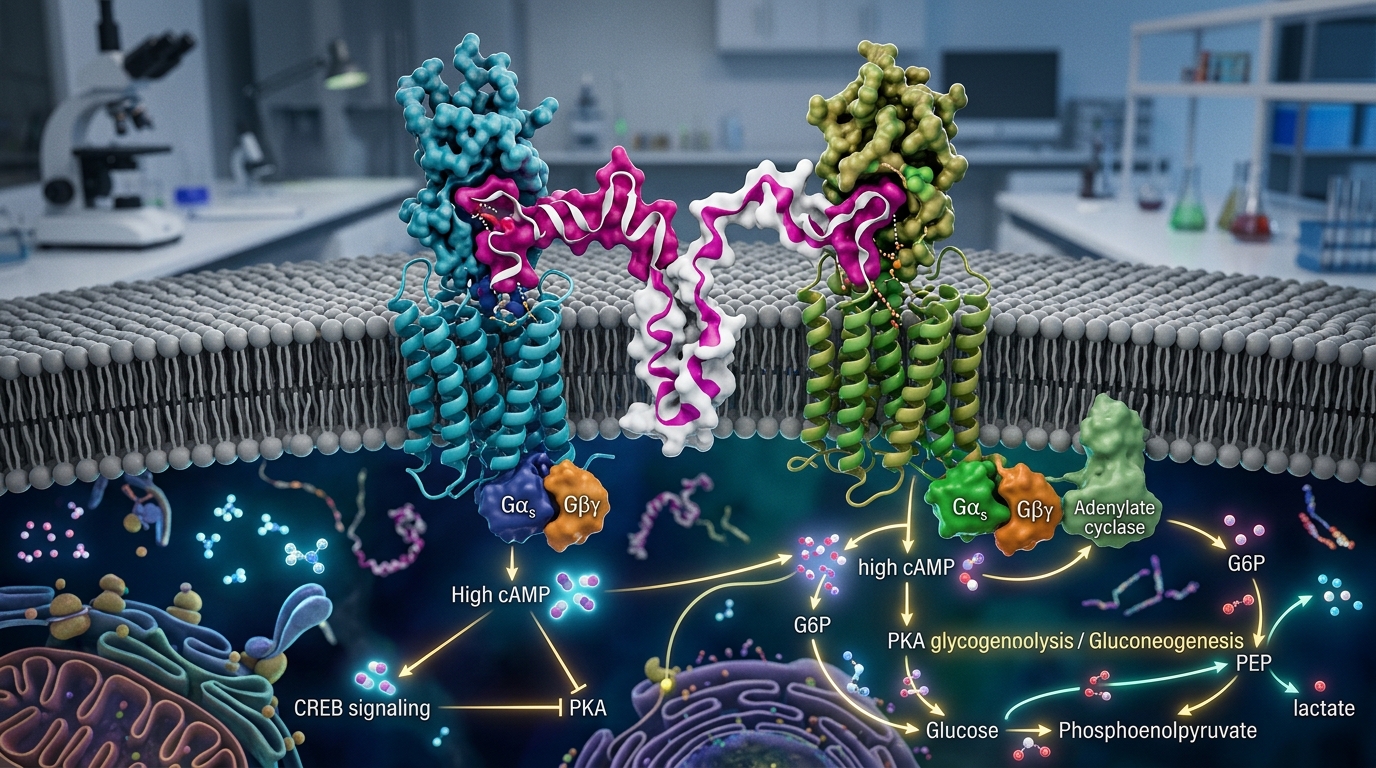
Incretin-based therapeutics have reshaped modern metabolic pharmacology. While single-target glucagon-like peptide-1 receptor (GLP-1R) agonists and dual GLP-1/GIP agonists have demonstrated robust clinical utility, next-generation research has increasingly turned toward dual agonists that engage the glucagon receptor (GCGR). Mazdutide (also designated as IBI362 or LY3305677) is a synthetic oxyntomodulin analogue designed as a once-weekly dual agonist of both GLP-1R and GCGR. Across extensive human clinical evaluations, mazdutide clinical trials have provided critical insights into how simultaneous receptor activation alters body weight, glycemic dynamics, and hepatic metabolism.
Pharmacological Mechanism: Dual GLP-1 and Glucagon Receptor Co-Agonism
To understand the clinical trial endpoints, it is essential to delineate the complementary biological actions of mazdutide’s two target pathways:
- GLP-1 Receptor Activation: Enhances glucose-dependent insulin secretion, suppresses inappropriate postprandial glucagon release, delays gastric emptying, and stimulates central satiety pathways in the hypothalamus and hindbrain to reduce caloric intake.
- Glucagon Receptor Activation: Increases basal energy expenditure, promotes hepatic lipid oxidation and lipolysis, enhances thermogenesis, and facilitates hepatic clearance of triglycerides.
Native oxyntomodulin naturally engages both receptors but exhibits a short biological half-life. Mazdutide is engineered with an acyl side chain that facilitates reversible binding to serum albumin, extending its terminal half-life and enabling convenient once-weekly subcutaneous dosing in human research subjects.
The GLORY Program: Human Evidence in Overweight and Obesity
The therapeutic potential of mazdutide for chronic weight management has been evaluated primarily within the registrational GLORY trial series alongside multicenter Phase 2 trials.
GLORY-1 Phase 3 Trial
The landmark GLORY-1 study was a multicenter, randomized, double-blind, placebo-controlled Phase 3 trial that evaluated the efficacy and safety of mazdutide in 610 Chinese adults with overweight or obesity without type 2 diabetes. Participants were randomized to receive once-weekly subcutaneous injections of mazdutide (4 mg or 6 mg) or placebo over a 48-week period.
Published findings confirmed that mazdutide achieved both primary and secondary endpoints with high statistical significance:
- Weight Reduction: By week 32, participants in the 4 mg and 6 mg cohorts achieved significant dose-dependent, placebo-subtracted reductions in mean body weight, which were sustained through week 48.
- Threshold Response: A large majority of participants treated with mazdutide achieved clinically meaningful weight loss benchmarks of ≥5%, ≥10%, and ≥15% compared to placebo.
- Visceral Adiposity: Reductions in waist circumference accompanied total weight loss, indicating preferential loss of visceral fat mass.
GLORY-2 and High-Dose Studies
To assess whether higher doses could yield greater reductions in patients with moderate-to-severe obesity (BMI ≥30 kg/m²), the GLORY-2 Phase 3 randomized clinical trial investigated a 9 mg maintenance regimen. Building on early Phase 1b ascending-dose studies that established tolerability at 9 mg and 10 mg, GLORY-2 demonstrated substantial weight reduction and marked metabolic improvements in patients requiring more intensive intervention.
US Multicenter Phase 2 Study
A broader dose-ranging Phase 2 trial conducted across clinical centers in the United States evaluated once-weekly mazdutide up to 16 mg in adults with overweight or obesity. This study confirmed dose-dependent weight reduction across varied demographic cohorts, demonstrating that the co-agonism mechanism translates across distinct ethnic and clinical populations.
The DREAMS Program: Human Evidence in Type 2 Diabetes
Because glucagon promotes hepatic gluconeogenesis in isolation, researchers initially questioned whether glucagon receptor agonism might compromise blood sugar control. The DREAMS clinical trial series addressed this directly, establishing how balanced GLP-1R co-activation protects against glycemic excursions while lowering glycated hemoglobin (HbA1c).
DREAMS-1 and DREAMS-2 Trials
The Phase 3 DREAMS-1 trial evaluated mazdutide monotherapy in treatment-naïve adults with type 2 diabetes, demonstrating profound reductions in fasting plasma glucose and HbA1c alongside significant weight loss. DREAMS-2 evaluated mazdutide against active comparators (such as dulaglutide) in participants with inadequate glycemic control on oral antidiabetic agents, confirming superior reductions in both HbA1c and body weight.
DREAMS-3 Head-to-Head Trial vs. Semaglutide
The Phase 3 DREAMS-3 study provided the first head-to-head clinical evidence comparing mazdutide (6 mg) directly with semaglutide (1 mg) in adults with type 2 diabetes and obesity. The primary composite endpoint was achieving both an HbA1c <7.0% and a weight reduction ≥10% at 32 weeks.
Mazdutide demonstrated clear statistical superiority over semaglutide for this composite metabolic target (48.0% vs. 21.0%, respectively), delivering greater absolute reductions in HbA1c and body mass over the 32-week period.
Metabolic and Hepatic Outcomes
Beyond standard glycemic and body weight metrics, clinical investigations of mazdutide highlight several systemic cardiometabolic benefits driven by glucagon-mediated hepatic signaling:
- Hepatic Fat Content: Magnetic resonance imaging proton density fat fraction (MRI-PDFF) analyses in Phase 2 and Phase 3 trials revealed reductions in liver fat content exceeding 60% to 70% in subjects with baseline hepatic steatosis, supporting investigation in metabolic dysfunction-associated steatohepatitis (MASH/MASLD).
- Liver Enzymes: Sustained reductions in alanine aminotransferase (ALT) and aspartate aminotransferase (AST) occurred alongside liver fat loss.
- Cardiovascular Biomarkers: Mazdutide treatment produced consistent decreases in systolic and diastolic blood pressure, serum triglycerides, total cholesterol, and low-density lipoprotein cholesterol (LDL-C).
- Serum Uric Acid: Human trials recorded dose-dependent reductions in serum uric acid levels, an effect unique to glucagon-acting co-agonists.
Safety, Tolerability, and Clinical Considerations
Across completed trials, mazdutide has demonstrated a safety profile generally consistent with the broader incretin therapeutic class:
- Gastrointestinal Events: Mild-to-moderate nausea, diarrhea, vomiting, and decreased appetite are the most frequently reported treatment-emergent adverse events. These occur primarily during dose-escalation and decline over maintenance periods.
- Heart Rate Dynamics: A transient, modest increase in resting heart rate has been observed in clinical cohorts, consistent with known pharmacodynamic effects of both GLP-1 and glucagon receptor agonism.
- Hypoglycemia: The risk of clinically significant hypoglycemia remained low in non-diabetic cohorts and was comparable to other incretin therapies in type 2 diabetes trials when not combined with sulfonylureas or insulin.
Regulatory Status and Research Landscape
Mazdutide was co-developed by Innovent Biologics and Eli Lilly. It has secured marketing approval from China’s National Medical Products Administration (NMPA) for chronic weight management and type 2 diabetes. In the United States and Europe, mazdutide remains an investigational agent without FDA or EMA approval. Active clinical pipelines continue to explore its role in adolescent obesity, obstructive sleep apnea (GLORY-OSA), and heart failure with preserved ejection fraction (HFpEF).
Frequently Asked Questions
How does mazdutide differ from semaglutide or tirzepatide?
Semaglutide is a selective GLP-1 receptor mono-agonist, and tirzepatide is a dual GLP-1/GIP receptor agonist. Mazdutide is a dual GLP-1 and glucagon receptor (GCGR) agonist. The addition of glucagon receptor signaling increases resting energy expenditure and accelerates liver fat reduction.
Does the glucagon action in mazdutide raise blood sugar?
In clinical trials, mazdutide consistently lowered blood glucose and HbA1c. The potent insulinotropic and appetite-suppressing actions of GLP-1 receptor agonism outweigh any intrinsic glycogenolytic tendency of glucagon, resulting in net improvements in glycemic control.
What were the main adverse events seen in mazdutide clinical trials?
The primary adverse events were gastrointestinal symptoms, including nausea, diarrhea, and decreased appetite, which were typically mild to moderate and concentrated during initial dose titration.
Is mazdutide approved by the US FDA?
No. Mazdutide is not approved by the United States Food and Drug Administration (FDA). It holds regulatory approval from the NMPA in China and remains under active investigational research elsewhere.
Research Summary
Human evidence from the GLORY and DREAMS clinical trial programs demonstrates that mazdutide delivers robust, dose-dependent reductions in body weight, marked improvements in HbA1c, and pronounced clearance of hepatic fat. Its safety profile is characterized by manageable gastrointestinal events and modest heart rate increases typical of incretin co-agonists. While approved in China for obesity and type 2 diabetes, mazdutide remains investigational under FDA jurisdiction, with long-term cardiovascular and metabolic outcome studies ongoing.
References
- Efficacy and safety of mazdutide in adults with obesity or overweight: a US-based, multicentre, phase 2, randomised, placebo-controlled clinical trial. Lancet Diabetes & Endocrinology (2026).
- Treatment With 9-mg Mazdutide for Weight Reduction in Chinese Adults With Obesity: The GLORY-2 Randomized Clinical Trial. JAMA (2026).
- Mazdutide versus Semaglutide for the treatment of type 2 diabetes and obesity: Rationale, design and baseline data of DREAMS-3 phase 3 trial. Contemporary Clinical Trials (2025).
- Safety and efficacy of a GLP-1 and glucagon receptor dual agonist mazdutide (IBI362) 9 mg and 10 mg in Chinese adults with overweight or obesity: A randomised, placebo-controlled, multiple-ascending-dose phase 1b trial. EClinicalMedicine (2022).
- A phase 1b randomised controlled trial of a glucagon-like peptide-1 and glucagon receptor dual agonist IBI362 (LY3305677) in Chinese patients with type 2 diabetes. Nature Communications (2022).