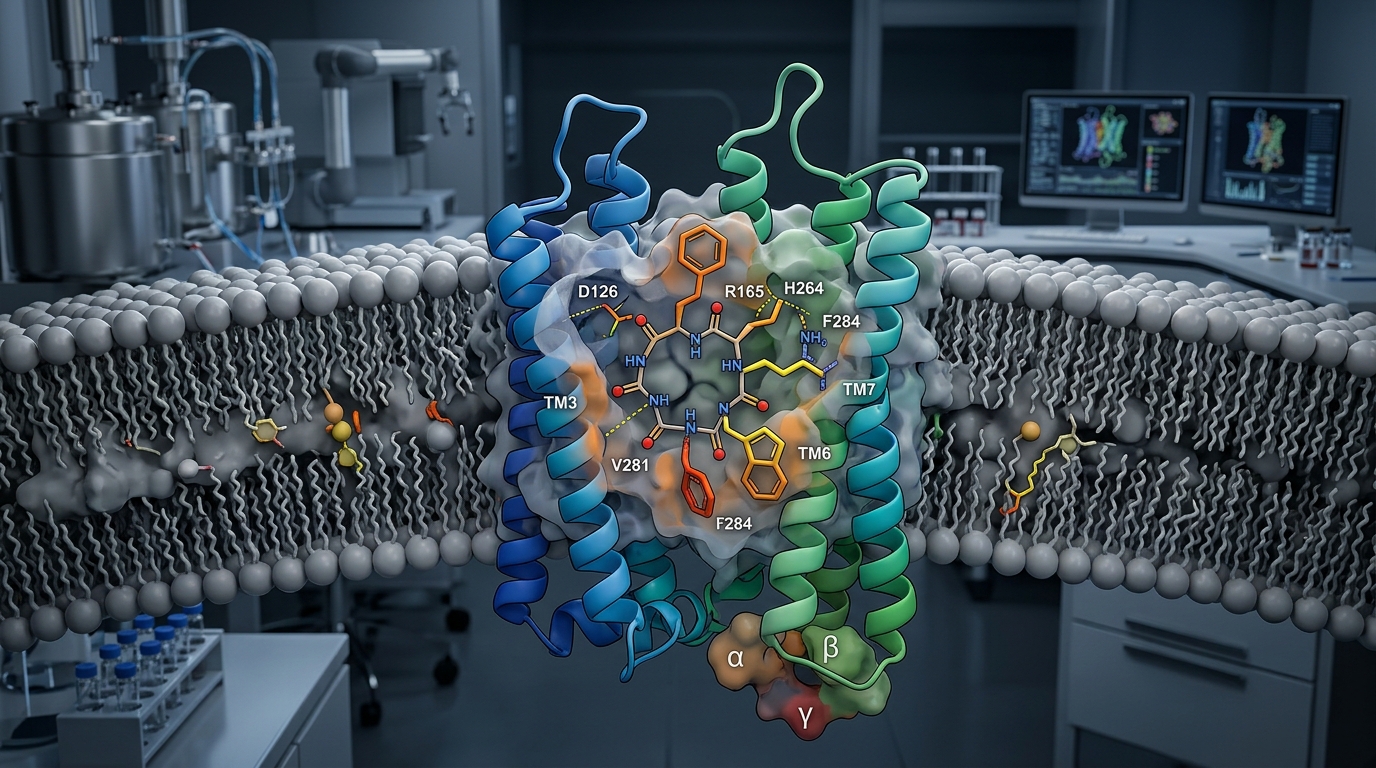
PT-141, known generically as bremelanotide, is a synthetic cyclic heptapeptide analog of alpha-melanocyte-stimulating hormone (α-MSH) that acts as an agonist at central melanocortin receptors. Over two decades of investigation, PT-141 clinical trials have shaped our understanding of how central melanocortin pathways influence sexual desire and arousal. Unlike peripheral vasoactive compounds such as phosphodiesterase type 5 (PDE5) inhibitors, bremelanotide operates centrally within the hypothalamus. This clinical review examines the trial history, pivotal Phase 3 efficacy and safety data, cardiovascular observations, and the complex regulatory trajectory of PT-141.
Key Takeaways
- Central Mechanism: PT-141 is a non-selective melanocortin receptor agonist with primary activity at melanocortin receptors MC3R and MC4R, modulating central neurochemical pathways rather than direct peripheral hemodynamics.
- Regulatory Milestone: The U.S. Food and Drug Administration (FDA) approved subcutaneous bremelanotide (1.75 mg, brand name Vyleesi) in June 2019 for generalized hypoactive sexual desire disorder (HSDD) in premenopausal women.
- Phase 3 Outcomes: In the pivotal RECONNECT trials, bremelanotide produced statistically significant, though clinically modest, improvements in sexual desire scores and reductions in desire-related distress compared to placebo.
- Safety Considerations: The most frequent adverse event across clinical studies is nausea (reported in approximately 40% of trial participants), alongside transient blood pressure elevations and focal skin hyperpigmentation with repeated dosing.
- Investigational Indications: While initially studied for male erectile dysfunction via intranasal delivery, development in male populations was halted due to formulation-related blood pressure variability, leaving male applications off-label or investigational.
Early Clinical Development and the Intranasal Route
PT-141 originated from earlier research on the synthetic peptide Melanotan II at the University of Arizona. When researchers noted erectogenic effects alongside skin pigmentation, Palatin Technologies isolated and developed the active metabolite sequence into bremelanotide (PT-141) to target sexual dysfunction.
Initial Phase 1 and Phase 2 trials explored an intranasal spray formulation for male erectile dysfunction (ED) and female sexual arousal disorder. Early double-blind, placebo-controlled studies demonstrated that intranasal PT-141 could induce penile erection in healthy volunteers and in men who were unresponsive to sildenafil monotherapy. In a crossover trial of men with mild-to-moderate ED, doses exceeding 7 mg produced statistically significant erectile responses compared to placebo within 30 minutes of administration.
However, the intranasal route led to erratic pharmacokinetic absorption profiles. In Phase 2 trials, intranasal dosing was associated with unpredictable systemic peak concentrations and significant transient increases in systolic and diastolic blood pressure. In 2007, these pressor signals led to a clinical hold and the discontinuation of the intranasal development program. The sponsor subsequently reformulated PT-141 as a fixed-dose subcutaneous autoinjector to achieve predictable bioavailability, minimize peak blood pressure fluctuations, and refocus clinical investigations on female hypoactive sexual desire disorder.
The Pivotal RECONNECT Phase 3 PT-141 Clinical Trials
The core evidence supporting the therapeutic utility of subcutaneous bremelanotide rests on the RECONNECT clinical program, which consisted of two identically designed, 24-week, double-blind, randomized, placebo-controlled Phase 3 trials: Study 301 (NCT02333071) and Study 302 (NCT02338960).
Study Design and Endpoints
The trials enrolled 1,267 premenopausal women diagnosed with acquired, generalized HSDD. Participants were randomized 1:1 to self-administer bremelanotide 1.75 mg or a matching placebo subcutaneously via an autoinjector on an as-needed basis roughly 45 minutes before anticipated sexual activity, with use capped at one dose per 24 hours and no more than eight doses per month.
The coprimary efficacy endpoints were measured from baseline to week 24 using validated patient-reported outcome instruments:
- Female Sexual Function Index Desire Domain (FSFI-D): Evaluates the frequency and intensity of sexual desire on a scale of 1.2 to 6.0.
- Female Sexual Distress Scale-Desire/Arousal/Orgasm Item 13 (FSDS-DAO Q13): Measures the specific distress or bother associated with low sexual desire on a scale from 0 to 4.
Efficacy Results
Both trials met their prespecified coprimary endpoints:
- Increased Desire: In the integrated analysis of both studies, participants receiving bremelanotide demonstrated a statistically significant mean increase of 0.35 points on the FSFI-D scale compared to placebo (p < 0.001). Individual trials showed increases of 0.30 in Study 301 and 0.42 in Study 302.
- Decreased Distress: Treatment resulted in a statistically significant reduction in low-desire distress on FSDS-DAO Item 13, with an integrated mean difference of -0.33 points versus placebo (p < 0.001).
- Secondary Endpoints: Bremelanotide did not demonstrate a statistically significant increase in the number of self-reported Satisfying Sexual Events (SSEs) compared to placebo across the 24-week core phase, a key distinction from previous clinical programs in sexual dysfunction.
Subgroup analyses published in the Journal of Women’s Health confirmed that these improvements occurred consistently across varied strata of age, body mass index, and baseline testosterone levels.
Safety Profile and Treatment-Emergent Adverse Events
Clinical data across Phase 1 through Phase 3 trials, covering more than 3,500 subjects, have established the adverse event landscape of subcutaneous bremelanotide. Most adverse events are mild to moderate in severity, though they led to higher rates of discontinuation compared to placebo.
Common Adverse Events
In the integrated Phase 3 core trials and the subsequent 52-week open-label extension study, the most commonly documented adverse events were:
- Nausea: Observed in approximately 40.0% of bremelanotide recipients versus 1.3% of placebo recipients. Severe nausea occurred in roughly 8% of treated participants and served as the primary reason for treatment discontinuation (accounting for ~8% of total dropouts). Nausea typically onset within an hour of injection and subsided over several hours.
- Flushing: Documented in 20.3% of participants, characterized by transient peripheral vasodilatory warmth and erythema.
- Headache: Reported in 11.3% of users.
- Injection Site Reactions: Local erythema, pain, or pruritus occurred in approximately 13.2% of participants.
- Vomiting: Observed in 4.8% of individuals.
Cardiovascular and Blood Pressure Effects
Because melanocortin-4 receptor agonism stimulates central sympathetic outflow, PT-141 exerts measurable hemodynamic actions. In ambulatory blood pressure monitoring studies, subcutaneous administration of 1.75 mg produced a mean transient increase in systolic blood pressure of approximately 2 to 6 mmHg and diastolic blood pressure of 1 to 3 mmHg. These changes typically peaked 2 to 4 hours post-administration and resolved within 12 hours. Heart rate showed a concurrent slight, transient reduction.
Due to these pressor effects, prescribing guidelines contraindicate bremelanotide in individuals with uncontrolled hypertension or known cardiovascular disease, and emphasize limiting dosing frequency to minimize cumulative vascular strain.
Hyperpigmentation
Focal hyperpigmentation—most commonly involving the face, gingiva, and breasts—was identified in clinical trials, particularly among individuals with darker skin phototypes and those administering more than eight doses per month. In some trial subjects, this pigmentation did not completely resolve following drug discontinuation.
Critical Appraisals and Methodological Considerations
The clinical trial outcomes for bremelanotide have attracted notable debate among clinical epidemiologists and sexual medicine specialists. Independent re-analyses, such as those published by Spielmans and colleagues in the Journal of Sex Research, pointed out that while changes in FSFI-D and FSDS-DAO scores were statistically superior to placebo, the absolute difference in mean scores between active drug and control was modest (less than half a point on multi-point scales).
Furthermore, investigators noted that bremelanotide failed to produce a statistically significant increase in the monthly rate of satisfying sexual encounters relative to placebo. Methodological critics have also highlighted the high dropout rate during the trials, driven by nausea and other treatment-emergent side effects, which may introduce attrition bias into long-term open-label observations. Proponents of the drug counter that responder analyses show approximately 25% of treated individuals achieve substantial, clinically meaningful relief from subjective distress compared to 17% on placebo, providing a viable option for a condition with limited pharmacotherapeutic alternatives.
Frequently Asked Questions
Is PT-141 FDA-approved for men?
No. The FDA has approved subcutaneous bremelanotide (Vyleesi) exclusively for acquired, generalized hypoactive sexual desire disorder in premenopausal women. Its use in men for erectile dysfunction or low libido remains unapproved, experimental, or off-label.
Why was the intranasal formulation of PT-141 discontinued?
Early clinical trials utilizing intranasal PT-141 sprays showed high pharmacokinetic variability and significant, unpredictable increases in blood pressure. Development was redirected to a standardized subcutaneous autoinjector to produce more consistent absorption and a more predictable hemodynamic profile.
How does PT-141 differ from PDE5 inhibitors like sildenafil?
PDE5 inhibitors act locally in vascular smooth muscle by inhibiting cyclic GMP degradation, facilitating penile arterial blood flow. PT-141 acts centrally in the brain by binding to melanocortin receptors (MC3R/MC4R) in the hypothalamus to modulate the neurochemical pathways governing sexual desire and subjective arousal.
What is the primary side effect limiting PT-141 tolerability?
Nausea is the most prevalent treatment-emergent adverse event, occurring in roughly 40% of patients across clinical trials. It was the leading cause of study discontinuation during the Phase 3 RECONNECT trials.
Research Summary
PT-141 (bremelanotide) represents a clinically validated, centrally acting melanocortin receptor agonist with extensive human data. Two large, randomized, double-blind Phase 3 trials (the RECONNECT program) demonstrated statistically significant improvements in sexual desire and reductions in low-desire distress in premenopausal women with HSDD, leading to FDA approval for this specific indication in 2019. However, the absolute magnitude of efficacy is modest, satisfying sexual encounters did not significantly increase over placebo, and tolerability is constrained by a high incidence of nausea, potential hyperpigmentation, and transient pressor effects. While preclinical and early clinical studies explored utility in male sexual dysfunction, no regulatory approvals exist for male populations, where the peptide remains under investigational and off-label study.
References
- Kingsberg, S. A., Clayton, A. H., Portman, D., et al. (2019). Bremelanotide for the treatment of hypoactive sexual desire disorder: Two randomized phase 3 trials. Obstetrics & Gynecology, 134(5), 899–908. PMID: 31599840
- Simon, J. A., Kingsberg, S. A., Portman, D., et al. (2019). Long-term safety and efficacy of bremelanotide for hypoactive sexual desire disorder. Obstetrics & Gynecology, 134(5), 909–917. PMID: 31599847
- Clayton, A. H., Kingsberg, S. A., Portman, D., et al. (2022). Safety profile of bremelanotide across the clinical development program. Journal of Women’s Health, 31(2), 171–182. PMID: 35147466
- Spielmans, G. I., & Ellefson, E. M. (2024). Small effects, questionable outcomes: Bremelanotide for hypoactive sexual desire disorder. The Journal of Sex Research, 61(4), 540–561. PMID: 36809187
- Diamond, L. E., Earle, D. C., Rosen, R. C., et al. (2004). Double-blind, placebo-controlled evaluation of the safety, pharmacokinetic properties and pharmacodynamic effects of intranasal PT-141, a melanocortin receptor agonist, in healthy males and patients with mild-to-moderate erectile dysfunction. International Journal of Impotence Research, 16(1), 51–59. PMID: 14963471
- White, W. B., Jordan, R., Lucas, J., et al. (2017). Ambulatory blood pressure monitoring in the evaluation of the central melanocortin receptor agonist bremelanotide in premenopausal women. Journal of Hypertension, 35(4), 761–768. PMID: 28002206