Key Takeaways
- Distinct biological origins: Semax is an analogue of adrenocorticotropic hormone fragment ACTH(4-10), whereas Selank is derived from the endogenous immunomodulatory peptide tuftsin.
- Primary neurochemical pathways: Semax primarily upregulates Brain-Derived Neurotrophic Factor (BDNF) and stimulates monoaminergic pathways, while Selank acts predominantly through allosteric modulation of GABAergic transmission and enkephalin stabilization.
- Research applications: Semax is predominantly investigated for acute ischemic neuroprotection, cognitive function, and synaptic plasticity; Selank is studied primarily for anxiolytic properties, stress modulation, and immune interactions.
- Regulatory standing: Neither compound is approved by the United States Food and Drug Administration (FDA) or the European Medicines Agency (EMA), maintaining investigational status in Western laboratory research.
Introduction: Understanding Semax and Selank in Neuropeptide Research
In modern neuroscience and neuropeptide pharmacology, Semax vs Selank is one of the most frequently examined comparative topics. Both compounds emerged from research conducted at the Institute of Molecular Genetics of the Russian Academy of Sciences. Both are synthetic heptapeptides (seven-amino-acid chains) engineered for enhanced enzymatic resistance, and both utilize an identical terminal modification.
However, their underlying biochemical parentage, receptor interactions, gene expression profiles, and physiological targets differ fundamentally. Semax was engineered as a neuroprotective and nootropic agent designed to harness the central nervous system properties of adrenocorticotropic hormone without triggering hormonal steroidogenesis. In contrast, Selank was designed around the endogenous tetrapeptide tuftsin to evaluate potential anxiolytic and neuroimmune regulatory mechanisms. Understanding how Semax operates in contrast to Selank clarifies the precise neurobiological questions each peptide is equipped to explore.
Molecular Structure and Parent Peptide Origins
The structural divergence between Semax and Selank determines their biological specificity:
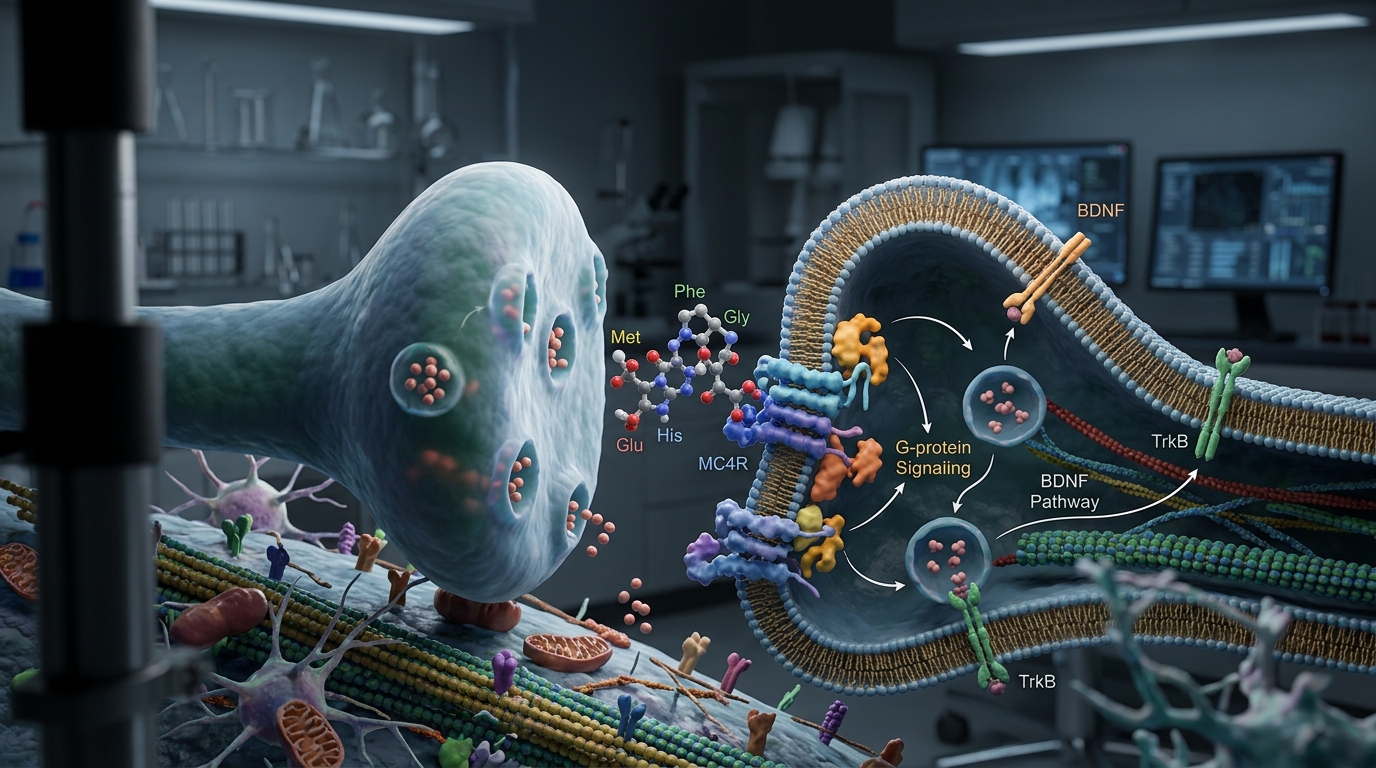
- Semax (Met-Glu-His-Phe-Pro-Gly-Pro): The core sequence begins with an N-terminal tetrapeptide fragment, Met-Glu-His-Phe, corresponding to ACTH(4-7), a sequence shared with alpha-melanocyte-stimulating hormone (α-MSH). To prevent rapid enzymatic cleavage by aminopeptidases, researchers appended the tripeptide Pro-Gly-Pro to the C-terminus. This synthetic design preserves central cognitive and neurotrophic actions while eliminating the systemic endocrine stimulation associated with full-length ACTH.
- Selank (Thr-Lys-Pro-Arg-Pro-Gly-Pro): The sequence incorporates the endogenous human immunoglobulin G-derived peptide tuftsin (Thr-Lys-Pro-Arg) at its N-terminus, similarly stabilized by the C-terminal Pro-Gly-Pro motif. Tuftsin possesses natural immunomodulatory and phagocytosis-stimulating properties, which Selank retains alongside its central nervous system signaling profile.
Comparative Neurochemical Mechanisms
The functional differences between Semax and Selank stem from their distinct molecular targets and downstream intracellular cascades.
Semax: Neurotrophin Upregulation and Monoaminergic Tone
The primary documented mechanism of Semax involves the stimulation of neurotrophic factors. Preclinical studies show that Semax administration leads to a pronounced increase in the expression of Brain-Derived Neurotrophic Factor (BDNF) and its high-affinity receptor, Tropomyosin receptor kinase B (TrkB), within the hippocampus and cerebral cortex. Increased BDNF signaling activates the MAP kinase and CREB pathways, fostering long-term potentiation (LTP), dendritic arborization, and synaptic plasticity.
Additionally, Semax modulates monoamine neurotransmission. Research demonstrates that Semax stimulates dopamine and serotonin turnover in striatal and cortical regions. In cellular and animal models of vascular injury, Semax rapidly alters genome-wide transcriptional responses, suppressing pro-inflammatory cytokine expression while promoting angiogenic and neuroprotective genes.
Selank: GABAergic Allosteric Modulation and Enkephalin Regulation
In contrast to Semax, Selank operates primarily as a neuromodulator of inhibitory and monoaminergic pathways without direct stimulation of classic neurotrophic cascades. Genome-wide expression analyses demonstrate that Selank influences the transcription of multiple subunits of the gamma-aminobutyric acid type A (GABA-A) receptor complex. Through allosteric actions on GABAergic transmission, Selank attenuates excessive neuronal excitability within the amygdala and prefrontal cortex.
Selank also inhibits enkephalin-degrading enzymes in human serum and brain tissue, extending the half-life of endogenous opioid peptides that regulate emotional reactivity and stress adaptation. While Semax exerts minor effects on enkephalinase enzymes as well, Selank exhibits distinct potency in restoring homeostatic balance under conditions of chronic emotional arousal.
Research Evidence: Where Semax and Selank Diverge
Published literature highlights clear divisions in the experimental models and clinical contexts where each compound has been studied.
Semax: Focus on Ischemia, Cognitive Deficits, and Neuroprotection
Semax has generated an extensive clinical and preclinical footprint in the context of acute neuronal damage:
- Acute Ischemic Stroke: Clinical investigations in stroke models and human cohorts demonstrated that Semax administration in the acute phase of hemispheric stroke reduced neurological deficits, accelerated motor recovery, and stabilized inflammatory markers such as interleukin-10 and tumor necrosis factor-alpha.
- Optic Nerve Atrophy and Glaucoma: Russian clinical trials evaluated Semax for optic neuropathy, reporting improvements in visual evoked potentials and functional retinal sensitivity.
- Executive Function and Neural Efficiency: Functional magnetic resonance imaging (fMRI) studies have shown that Semax alters the functional connectivity of the default mode network (DMN) in healthy human subjects, reflecting altered attentional processing and cortical communication.
Selank: Focus on Anxiety, Stress Adaptation, and Immunity
Selank has primarily been explored in psychiatric and immunologic research paradigms:
- Generalized Anxiety and Adjustment Disorders: Human trials in Eastern European centers evaluated Selank as a non-sedating anxiolytic, comparing its efficacy to conventional benzodiazepines like diazepam and phenazepam without the associated muscle relaxation or dependence risks.
- Neuroimmune Modulation: Due to its tuftsin sequence, Selank alters peripheral cytokine release, including interleukin-6 and interferon expression, making it a subject of interest in stress-induced immunosuppression models.
Pharmacokinetics and Laboratory Administration
Because both compounds are susceptible to rapid gastrointestinal degradation by peptidases, neither Semax nor Selank is bioavailable via oral administration. In laboratory models and foreign clinical settings, both peptides are typically delivered intranasally to take advantage of direct transport routes along the olfactory and trigeminal nerve pathways into the cerebrospinal fluid and brain parenchyma. Subcutaneous administration is also used in rodent models. Both peptides demonstrate short systemic half-lives (measured in minutes), but their downstream transcriptional and neurochemical cascades persist for hours.
Research Limitations and Regulatory Status
A major limitation in the literature for both Semax and Selank is the geographic concentration of primary research. The majority of controlled clinical trials and large-scale mechanistic studies were conducted in Russia and published in Russian-language journals. While several molecular findings have been replicated in international peer-reviewed literature, large-scale, multi-center, double-blind randomized clinical trials meeting Western regulatory standards remain absent.
Neither Semax nor Selank is approved by the US FDA, Health Canada, or the EMA for any clinical condition. In Western jurisdictions, both peptides are classified strictly as research chemicals intended for laboratory, in vitro, and preclinical experimentation. They are not approved for human therapeutic use or dietary supplementation.
Frequently Asked Questions
What is the primary difference between Semax and Selank?
The primary difference lies in their origin, neurochemical targets, and research scope. Semax is an ACTH(4-10) analogue that stimulates BDNF expression, monoaminergic signaling, and neuroprotection against ischemic injury. Selank is a tuftsin analogue that modulates GABA-A receptor expression and enkephalin stability to reduce anxiety and stress-induced disruption.
Does Semax affect cortisol or adrenal hormone levels?
No. Although Semax is derived from an adrenocorticotropic hormone sequence, the specific 4-7 fragment (Met-Glu-His-Phe) lacks the steroidogenic sequence required to stimulate the adrenal cortex or elevate systemic cortisol levels.
Can Semax and Selank be used interchangeably in research?
No. Because Semax focuses on neurotrophic pathways, neuronal survival, and synaptic plasticity, while Selank addresses inhibitory GABAergic signaling, anxiolysis, and neuroimmune responses, they represent distinct experimental tools tailored to different neurological hypotheses.
Are Semax or Selank approved by the FDA?
Neither Semax nor Selank is approved by the US FDA. In the United States and most Western jurisdictions, they are unscheduled, unapproved compounds restricted exclusively to scientific and preclinical research.
References
- Dolotov OV, et al. (2006). Semax, an analog of ACTH(4-10) with cognitive effects, regulates BDNF and trkB expression in the rat hippocampus. Brain Research, 1119(1):54-60. [PMID: 16996037]
- Volkova A, et al. (2016). Selank Administration Affects the Expression of Some Genes Involved in GABAergic Neurotransmission. Frontiers in Pharmacology, 7:31. [PMID: 26941648]
- Miasoedova NF, et al. (1999). Investigation of mechanisms of neuro-protective effect of semax in acute period of ischemic stroke. Zhurnal Nevrologii i Psikhiatrii Imeni S.S. Korsakova, 99(5):15-19. [PMID: 10358912]
- Kost NV, et al. (2001). Semax and selank inhibit the enkephalin-degrading enzymes from human serum. Bioorganicheskaia Khimiia, 27(3):180-183. [PMID: 11460395]
- Lebedeva AV, et al. (2018). Effects of Semax on the Default Mode Network of the Brain. Bulletin of Experimental Biology and Medicine, 165(5):653-656. [PMID: 30225715]
Research Summary
Semax is a synthetic heptapeptide derived from ACTH(4-10) that exhibits potent neurotrophic and neuroprotective properties, primarily through the upregulation of BDNF, TrkB, and central monoaminergic signaling. In contrast, its sister compound Selank is derived from the immune peptide tuftsin and acts through allosteric modulation of the GABA-A receptor complex and enkephalin stabilization to produce anxiolytic and stress-mitigating actions. While both peptides possess clinical history in Russian medicine for stroke and anxiety disorders respectively, human evidence in Western peer-reviewed channels remains preliminary. Neither peptide holds FDA approval, and both remain investigational research compounds in contemporary laboratory neuroscience.