Key Takeaways
- Distinct Genetic Loci: MOTS-c is a 16-amino-acid peptide encoded within the mitochondrial 12S ribosomal RNA (MT-RNR1) gene, whereas Humanin is a 24-amino-acid peptide derived from the 16S ribosomal RNA (MT-RNR2) gene.
- Divergent Mechanisms: MOTS-c influences cellular metabolism by perturbing the folate-purine cycle, leading to AICAR accumulation and AMPK activation, and translocates to the nucleus under stress. Humanin acts primarily as a cytoprotective factor, antagonizing pro-apoptotic Bax and signaling through extracellular receptor complexes (gp130/WSX-1/CNTFR and FPRL1).
- Target Tissues and Phenotypes: In animal models, MOTS-c targets skeletal muscle and adipose tissue to enhance glucose disposal, insulin sensitivity, and physical performance. Humanin exerts prominent effects in neurons, cardiovascular tissues, and pancreatic beta cells against oxidative injury and cell death.
- Clinical Status: Neither peptide is approved by the U.S. Food and Drug Administration (FDA) for human medical treatment. Human research remains limited to observational association studies and early-phase testing of modified analogs such as CB4211.
Introduction: Mitochondrial Peptides and Retrograde Signaling
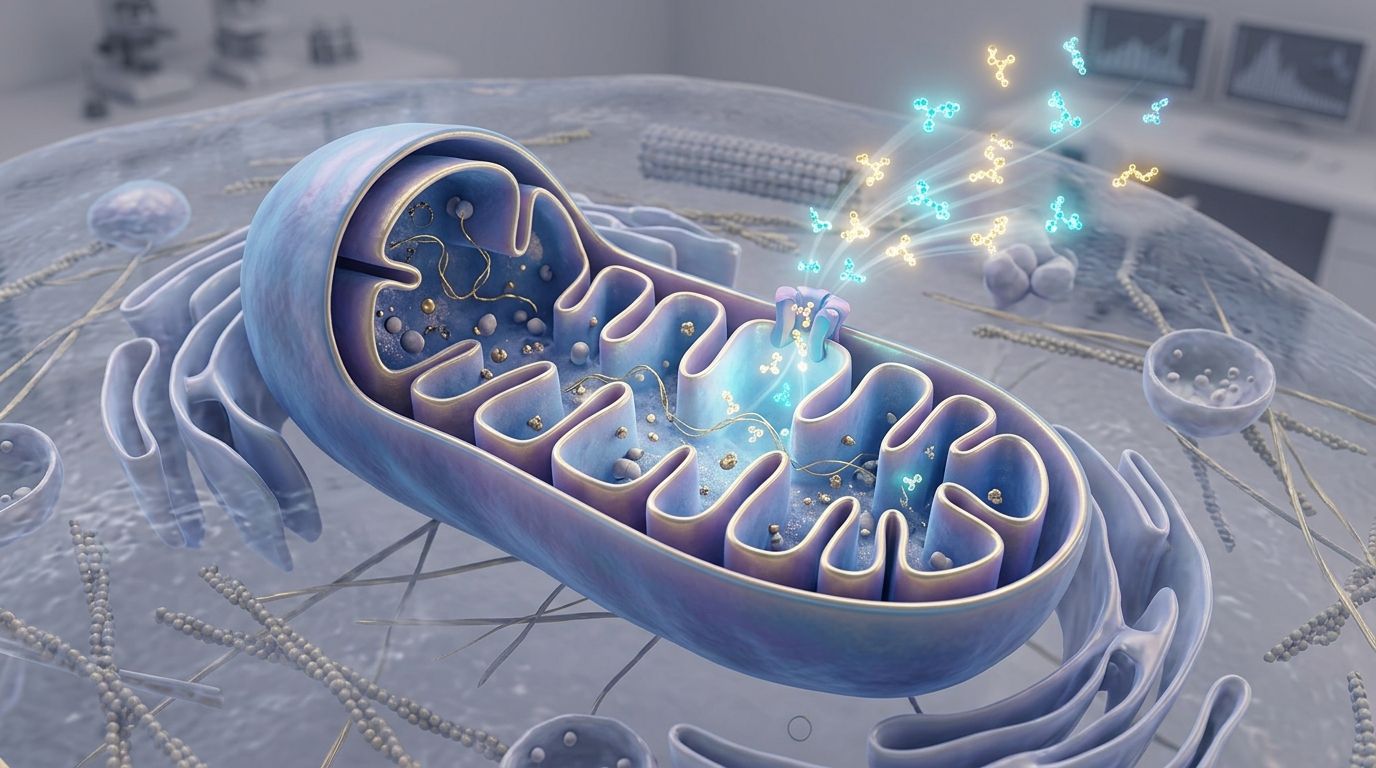
For decades, mammalian mitochondria were considered semi-autonomous organelles whose circular genome exclusively encoded 13 essential electron transport chain proteins, 22 transfer RNAs (tRNAs), and 2 ribosomal RNAs (12S and 16S rRNA). The discovery of short open reading frames (sORFs) nested inside these ribosomal RNA genes overturned this model, revealing an endocrine-like communication system termed mitochondrial retrograde signaling. Peptides produced from these transcripts are classified as mitochondrial-derived peptides (MDPs).
When comparing MOTS-c vs Humanin, researchers evaluate the two most extensively profiled members of this peptide class. Although both originate in the mitochondrial genome and circulate systemically, their primary physiological roles diverge sharply. MOTS-c functions predominantly as an energetic regulator and exercise-responsive factor, whereas Humanin operates as a broad cytoprotective and anti-apoptotic sentinel. Understanding the distinction between MOTS-c and Humanin clarifies how the mitochondrial genome governs cellular resilience across distinct metabolic and structural axes.
Genetic Origins and Structural Differences
The molecular differences between MOTS-c and Humanin begin at the genomic level:
- MOTS-c (Mitochondrial Open Reading Frame of the 12S rRNA type-c): Identified in 2015 by Lee and colleagues, MOTS-c is a 16-amino-acid peptide (sequence: Met-Arg-Trp-Gln-Glu-Met-Gly-Tyr-Ile-Phe-Tyr-Pro-Arg-Lys-Leu-Arg, molecular mass ~2,175 Da). It is encoded within the 12S rRNA gene (MT-RNR1) spanning nucleotide positions 1389 to 1433. The MOTS-c transcript requires cytoplasmic export and translation on cytosolic ribosomes because its initiation and codon usage correspond to the standard cytosolic genetic code rather than the non-standard mitochondrial translation system.
- Humanin: Discovered in 2001 by Hashimoto and colleagues in an unbiased functional screen for survival factors rescuing neurons from amyloid-beta toxicity, Humanin is a 24-amino-acid peptide (or 21 amino acids in certain non-mitochondrial transcripts). It is encoded within the 16S rRNA gene (MT-RNR2) between nucleotide pairs 1671 and 3229. Humanin can be secreted through the endoplasmic reticulum/Golgi pathway and functions both extracellularly and intracellularly.
MOTS-c vs Humanin: Distinct Mechanisms of Action
The core mechanistic profiles of MOTS-c and Humanin illuminate two fundamentally different strategies for maintaining homeostasis.
MOTS-c: Metabolic Reprogramming via Folate, AMPK, and Nuclear Translocation
Unlike classical hormones that act solely through surface receptors, MOTS-c operates through intracellular metabolic pathways. Upon cellular uptake or endogenous synthesis, MOTS-c inhibits the folate-methionine cycle, specifically blocking de novo purine biosynthesis. This inhibition leads to the accumulation of 5-aminoimidazole-4-carboxamide ribonucleotide (AICAR), an endogenous intermediate that directly binds and stimulates 5'-adenosine monophosphate-activated protein kinase (AMPK).
Through AMPK activation, MOTS-c drives skeletal muscle glucose uptake, suppresses fatty acid synthesis, enhances beta-oxidation, and improves peripheral insulin sensitivity. Furthermore, upon exposure to metabolic stress (such as nutrient deprivation or heat shock), MOTS-c rapidly translocates into the cell nucleus in an AMPK-dependent fashion. Inside the nucleus, it binds chromatin and interacts with transcription factors at antioxidant response elements (ARE), altering nuclear gene expression to promote stress adaptation and mitochondrial biogenesis.
Humanin: Receptor Signaling and Apoptosis Suppression
In contrast to MOTS-c's metabolic reconfiguration, Humanin functions primarily through anti-apoptotic and anti-inflammatory signaling cascades. Humanin operates via two principal modes of action:
- Extracellular Receptor Signaling: Circulating Humanin binds a heterotrimeric receptor complex composed of ciliary neurotrophic factor receptor (CNTFR), interleukin 27 receptor subunit alpha (WSX-1), and glycoprotein 130 (gp130). This binding triggers intracellular JAK2/STAT3 and PI3K/Akt phosphorylation cascades, promoting cell survival and dampening inflammatory signaling. Humanin also binds the G-protein coupled formyl peptide receptor-like 1 (FPRL1/FPR2), activating protective ERK1/2 signaling.
- Intracellular Bax and IGFBP-3 Binding: Inside the cell, Humanin directly binds pro-apoptotic Bcl-2 family members—most notably Bax and Bid. By sequestering Bax, Humanin prevents its conformational activation and translocation to the outer mitochondrial membrane, preventing mitochondrial outer membrane permeabilization (MOMP) and blocking cytochrome c release. It also binds insulin-like growth factor-binding protein 3 (IGFBP-3), neutralizing IGFBP-3-mediated apoptotic signaling.
Preclinical Evidence: Comparing Metabolic and Cytoprotective Profiles
The published preclinical literature highlights clear distinctions in experimental indications between the two peptides:
- Glucose Homeostasis and Obesity: In high-fat-diet-induced mouse models of obesity, daily intraperitoneal injection of MOTS-c prevented diet-induced weight gain, reduced visceral adiposity, and normalized fasting glucose and insulin tolerance. While Humanin central infusion in rodents also modulates hepatic glucose production via hypothalamic STAT3 signaling, MOTS-c acts directly on peripheral skeletal muscle tissue to restore insulin sensitivity.
- Physical Performance: MOTS-c exhibits unique exercise-mimetic properties. In rodent endurance paradigms, MOTS-c administration improved running capacity and reversed age-associated skeletal muscle decline, accompanied by enhanced mitochondrial respiration. Humanin administration does not typically alter exercise capacity or physical output directly.
- Neuroprotection: Humanin was isolated explicitly for its ability to rescue primary cortical neurons from death induced by various familial Alzheimer's disease genes and amyloid-beta (Abeta) oligomers. In contrast, MOTS-c lacks direct blood-brain barrier permeability under physiological conditions, and its central nervous system research remains largely restricted to downstream systemic anti-inflammatory markers.
- Cardiovascular Protection: Humanin analogs (such as HNG, a modified variant featuring a Ser14Gly substitution with up to 1,000-fold higher potency) consistently decrease myocardial infarct size in ischemia-reperfusion models by preserving mitochondrial integrity and attenuating cardiomyocyte death. MOTS-c exhibits endothelial benefits in vascular models primarily via metabolic AMPK-endothelial nitric oxide synthase (eNOS) activation.
Human Evidence and Translational Realities
The transition from preclinical research to validated human therapies presents substantial hurdles for both peptides. To date, neither compound has received regulatory clearance.
Human data for native MOTS-c and Humanin are largely observational. Plasma concentrations of both peptides decline progressively with chronological age in human cohorts. Centenarians and their offspring frequently display elevated circulating Humanin levels, correlating with preserved cardiovascular function. Similarly, acute exercise in healthy volunteers transiently elevates circulating MOTS-c and Humanin, reflecting their roles in systemic cellular stress adaptation.
In terms of interventional trials, native unmodified MDPs possess poor pharmacokinetic characteristics, including short half-lives in circulation and vulnerability to rapid proteolytic cleavage. To circumvent this, pharmaceutical development focused on engineered analogs. CohBar developed CB4211, an engineered analog of MOTS-c designed to enhance bioavailability. A Phase 1a/1b trial (NCT03998514) in 88 overweight and obese adults with nonalcoholic fatty liver disease (NAFLD) demonstrated safety, reduction in transaminases, and modest reductions in liver fat. However, development has not advanced to Phase 2, leaving no approved therapeutic regimen for MOTS-c or its derivatives. Humanin clinical translation has faced comparable barriers, with no completed Phase 2 or Phase 3 trials in humans.
Regulatory Status and Research Limitations
MOTS-c and Humanin are classified strictly as investigational research compounds. They are not FDA-approved drugs, dietary supplements, or medical foods for any condition. Marketing claims promoting either peptide for weight loss, longevity, cognitive enhancement, or athletic performance exceed current scientific verification.
Athletes should note that because of its potent AMPK-activating and exercise-mimetic mechanisms, MOTS-c is prohibited in sport by the World Anti-Doping Agency (WADA) under Section S0 / metabolic modulators.
Significant research limitations remain across the MDP literature:
- Preclinical Dominance: The vast majority of mechanistic and efficacy data derives from in vitro cell models and rodent paradigms. Rodent energetic and mitochondrial physiology differs markedly from human systems.
- Assay Variability: Commercial ELISA assays for endogenous MDPs show considerable cross-reactivity and variability across studies, creating discrepancies in human observational literature.
- Oncological Questions: Because Humanin suppresses apoptosis and promotes survival, elevated Humanin signaling could theoretically protect malignant cells from programmed cell death under cellular stress. Similarly, long-term systemic AMPK activation by MOTS-c analogs requires longitudinal safety evaluation.
Frequently Asked Questions
Can MOTS-c and Humanin be taken together?
There are no controlled clinical human trials evaluating the co-administration of MOTS-c and Humanin. While basic science studies explore their separate or complementary biological pathways in laboratory assays, any concurrent human administration is unsupported by clinical safety or efficacy data.
How do the targets of MOTS-c and Humanin differ?
MOTS-c acts primarily inside the cell to inhibit the folate pathway, elevating AICAR, activating AMPK, and translocating into the nucleus to regulate gene transcription. Humanin binds cell-surface receptors (gp130/WSX-1/CNTFR and FPRL1) and binds pro-apoptotic proteins (Bax, Bid) in the cytoplasm to halt apoptosis.
Is either MOTS-c or Humanin FDA-approved?
No. Neither MOTS-c nor Humanin is approved by the FDA or international regulatory bodies for clinical use. Both remain investigational research molecules.
Why is MOTS-c considered an exercise mimetic while Humanin is not?
MOTS-c directly induces downstream signaling cascades typically initiated by physical exertion—namely, AMPK activation, GLUT4 translocation, and enhanced fatty acid oxidation in skeletal muscle. Humanin supports cellular survival and reduces oxidative stress in response to damage but does not stimulate muscle-specific metabolic exertion cascades.
Research Summary
MOTS-c and Humanin represent distinct arms of the mitochondrial-derived peptide network. MOTS-c acts primarily as a metabolic regulator and retrograde transcriptional modulator via the folate-purine-AMPK axis, improving insulin action and physical capacity in rodent models. Humanin functions predominantly as a cytoprotective agent that sequesters pro-apoptotic Bcl-2 proteins and signals via gp130-containing membrane complexes to promote cell survival. While both peptides show consistent age-related declines in observational human studies, current evidence is overwhelmingly preclinical. Neither peptide is approved for human therapy, and substantial pharmacokinetic and clinical validation is required before either can be translated into clinical medicine.
References
- Lee, C., Zeng, J., Drew, B. G., Sallam, T., et al. (2015). The mitochondrial-derived peptide MOTS-c promotes metabolic homeostasis and reduces obesity and insulin resistance. Cell Metabolism, 21(3), 443–454. PubMed: 25738459.
- Hashimoto, Y., Niikura, T., Tajima, H., Yasukawa, T., et al. (2001). A rescue factor abolishing neuronal cell death by a wide spectrum of familial Alzheimer's disease genes and Abeta. Proceedings of the National Academy of Sciences USA, 98(11), 6336–6341. PubMed: 11371646.
- Kim, K. H., Son, J. M., Benayoun, B. A., & Lee, C. (2018). The mitochondrial-encoded peptide MOTS-c translocates to the nucleus to regulate nuclear gene expression in response to metabolic stress. Cell Metabolism, 28(3), 516–524. PubMed: 29983246.
- Guo, B., Zhai, D., Cabezas, E., Welsh, K., et al. (2003). Humanin peptide suppresses apoptosis by interfering with Bax activation. Nature, 423(6938), 456–461. PubMed: 12732850.
- Merry, T. L., Chan, A., Woodhead, J. S. T., Reynolds, J. C., et al. (2020). Mitochondrial-derived peptides in energy metabolism. American Journal of Physiology – Endocrinology and Metabolism, 319(4), E659–E666. PubMed: 32776825.
- ClinicalTrials.gov. (2021). A study of CB4211 in subjects with nonalcoholic fatty liver disease (NAFLD) and obesity. Identifier: NCT03998514. ClinicalTrials.gov: NCT03998514.