Key Takeaways
- 5-Amino-1MQ (5-amino-1-methylquinolinium) is a synthetic small-molecule inhibitor of the enzyme nicotinamide N-methyltransferase (NNMT), not a biological peptide.
- Preclinical rodent models indicate that NNMT inhibition preserves cellular nicotinamide adenine dinucleotide (NAD+) and S-adenosylmethionine (SAM) pools, reducing adipocyte size and improving parameters of muscle performance.
- Translational hurdles include uncharted human pharmacokinetics, species differences in methylation pathways, and the biological consequences of chronic 1-methylnicotinamide suppression.
- There are currently no completed, peer-reviewed human clinical trials validating its efficacy, safety, or oral bioavailability.
- 5-Amino-1MQ is not approved by the U.S. Food and Drug Administration (FDA) for any medical condition and remains restricted to laboratory research.
What Is 5-Amino-1MQ?
5-Amino-1-methylquinolinium, commonly referred to as 5-Amino-1MQ, is a membrane-permeable small molecule developed by researchers exploring cellular metabolism and energy homeostasis. Although it is frequently categorized alongside therapeutic peptides in metabolic discussions, it is chemically a methylquinolinium salt (C10H11N2+) rather than an amino acid sequence.
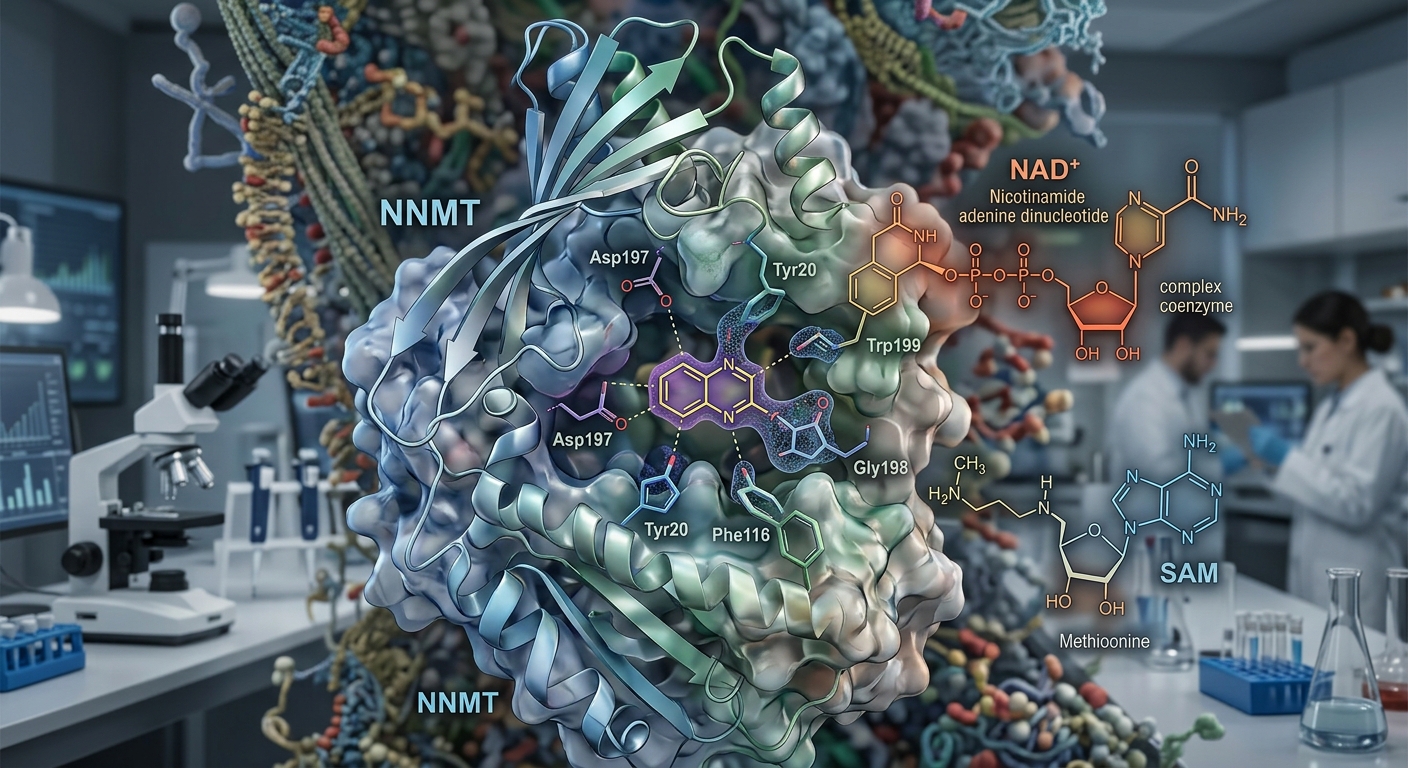
The primary biological target of 5-Amino-1MQ is nicotinamide N-methyltransferase (NNMT), a cytosolic enzyme expressed prominently in adipose tissue and the liver. NNMT transfers a methyl group from the universal donor S-adenosylmethionine (SAM) onto nicotinamide (a form of vitamin B3), yielding 1-methylnicotinamide (1-MNA) and S-adenosylhomocysteine (SAH). By directly inhibiting this enzymatic reaction, 5-Amino-1MQ alters the balance between cellular methylation capacity and NAD+ salvage pathways.
Mechanism of Action and Biological Targets
Under normal metabolic conditions, NNMT acts as a clearance pathway for excess nicotinamide. However, overactivity or elevated expression of NNMT has been correlated with metabolic dysfunction, insulin resistance, and accelerated adipogenesis. The molecular mechanism of 5-Amino-1MQ operates through two interconnected biochemical axes:
- Preservation of the NAD+ Salvage Pathway: When NNMT is inhibited, nicotinamide is redirected into the NAD+ salvage pathway catalyzed by nicotinamide phosphoribosyltransferase (NAMPT). Elevated intracellular NAD+ levels subsequently stimulate sirtuin enzymes (notably SIRT1) and poly(ADP-ribose) polymerases (PARPs), which coordinate mitochondrial biogenesis and oxidative phosphorylation.
- Maintenance of Methyl-Donor Pools: By preventing the transfer of methyl groups from SAM to nicotinamide, NNMT inhibition preserves SAM levels. This maintains the SAM/SAH ratio, an essential metric governing histone methylation, DNA methylation, and overall epigenetic regulation.
Preclinical Research Findings
The experimental foundation for 5-Amino-1MQ rests entirely on cell-culture systems and rodent models. Key areas of preclinical investigation include adipocyte metabolism, diet-induced obesity, and skeletal muscle regeneration.
Adipocyte Biology and Obesity Models
In pioneer studies conducted at the University of Texas Medical Branch, researchers tested 5-Amino-1MQ across cellular assays and high-fat-diet-induced obese (DIO) mice. In differentiated adipocytes, the compound demonstrated selective NNMT inhibition (with an IC50 around 1.2 μM) without inhibiting other methyltransferases. In treated mice, administration of 5-Amino-1MQ led to significant reductions in body weight, white adipose tissue mass, and adipocyte volume without altering daily food intake. The researchers noted that treated animals exhibited lower total plasma cholesterol and improved insulin sensitivity compared to vehicle-treated controls.
Skeletal Muscle Function and Aging
Subsequent preclinical investigations explored the impact of NNMT inhibition on skeletal muscle physiology. In aged mouse models, daily administration of 5-Amino-1MQ over an eight-week span was associated with improved muscle contractility, increased grip strength, and enhanced myofiber cross-sectional area. The investigators observed that NNMT inhibition mirrored several physiological benefits of exercise training and produced additive functional improvements when combined with physical exertion.
Translational Hurdles: Bridging Rodents to Humans
While rodent findings have generated interest in metabolic research circles, several critical translational barriers must be resolved before 5-Amino-1MQ can be evaluated as a viable therapeutic agent.
1. Biological Roles of 1-Methylnicotinamide (1-MNA)
In rodent obesity models, suppressing NNMT activity reduces 1-MNA production, which correlates with reduced adiposity. However, mammalian physiology is complex: 1-MNA is not merely a metabolic waste product. Published literature shows that 1-MNA possesses intrinsic anti-inflammatory, anti-thrombotic, and vasoprotective properties in the cardiovascular system. Prolonged, systemic suppression of 1-MNA in humans might inadvertently impair vascular endothelial function or alter muscular signaling pathways.
2. Unknown Pharmacokinetics and Bioavailability
Preclinical experiments have utilized varied administration methods, including subcutaneous injection and dissolution in drinking water. Robust, peer-reviewed pharmacokinetic data regarding human oral bioavailability, volume of distribution, plasma half-life, and clearance pathways are currently absent. How the compound distributes between adipose tissue, liver, and skeletal muscle in humans remains uncharacterized.
3. Epigenetic and Methylation Complexities
Because NNMT consumes SAM, chronic pharmacological inhibition could alter systemic methylation potential. While preserving SAM can be beneficial in certain metabolic states, uncontrolled perturbation of the SAM/SAH ratio carries theoretical risks for global DNA methylation and gene expression patterns over long periods.
Major Research Gaps and Safety Uncertainties
The gap between laboratory data and clinical application involves fundamental scientific unknowns:
- Absence of Human Trials: No randomized controlled trials, Phase 1 safety evaluations, or pharmacokinetic dose-escalation studies have been published in peer-reviewed journals.
- Long-Term Toxicology: Most published in vivo studies have evaluated exposures lasting from 11 days to 8 weeks. Chronic toxicological evaluations across multiple animal species are required to assess organ toxicity, reproductive safety, and carcinogenic potential.
- Microbiome Interactions: Research has demonstrated that NNMT inhibition alters gut microbial composition in diet-induced obese mice. Whether these microbial shifts are beneficial, neutral, or deleterious in human intestinal environments remains unknown.
Regulatory Status
5-Amino-1MQ is not approved by the FDA or any major international regulatory body for therapeutic use. It is not classified as generally recognized as safe (GRAS) and is not legally marketed as a dietary supplement or finished drug product. In academic and industrial settings, it is restricted to in vitro and preclinical research applications.
Frequently Asked Questions
Is 5-Amino-1MQ considered a peptide?
No. Although commonly discussed in peptide forums, 5-Amino-1MQ is a synthetic small molecule belonging to the methylquinolinium family, lacking peptide bonds or amino acid chains.
How does 5-Amino-1MQ differ from NAD+ precursors like NMN or NR?
Precursors such as nicotinamide mononucleotide (NMN) and nicotinamide riboside (NR) provide direct raw material for NAD+ synthesis. In contrast, 5-Amino-1MQ acts as an enzyme inhibitor, blocking the NNMT-mediated degradation of endogenous nicotinamide to preserve internal NAD+ pools.
Have any human clinical trials evaluated 5-Amino-1MQ?
No. As of current literature records, there are no published, peer-reviewed human clinical trials assessing the safety, pharmacokinetics, or efficacy of 5-Amino-1MQ in humans.
What are the known adverse effects in animal models?
Short-term animal studies did not report overt behavioral toxicity or reductions in food intake, but systematic long-term safety data across diverse species remain unpublished.
References
- Neelakantan et al. (2018). Selective and membrane-permeable small molecule inhibitors of nicotinamide N-methyltransferase reverse high fat diet-induced obesity in mice. Biochem Pharmacol.
- Gao et al. (2021). Roles of Nicotinamide N-Methyltransferase in Obesity and Type 2 Diabetes. Front Nutr.
- Dimet-Wiley et al. (2022). Reduced calorie diet combined with NNMT inhibition establishes a distinct microbiome in DIO mice. Sci Rep.
- Watowich et al. (2024). Nicotinamide N-methyltransferase inhibition mimics and boosts exercise-mediated improvements in muscle function in aged mice. Sci Rep.
- Review (2024). Nicotinamide N-methyltransferase (NNMT): a novel therapeutic target for metabolic syndrome. Front Pharmacol.
Research Summary
5-Amino-1MQ is an experimental small-molecule inhibitor of NNMT that shows biological activity in cell cultures and rodent models of obesity and muscular aging. Current evidence supports its capacity to alter NAD+ salvage and SAM preservation in laboratory settings. However, human evidence is nonexistent, pharmacokinetics remain undefined, and the systemic effects of suppressing 1-MNA are not yet understood. The compound is not FDA-approved and remains strictly an investigational tool for preclinical research.