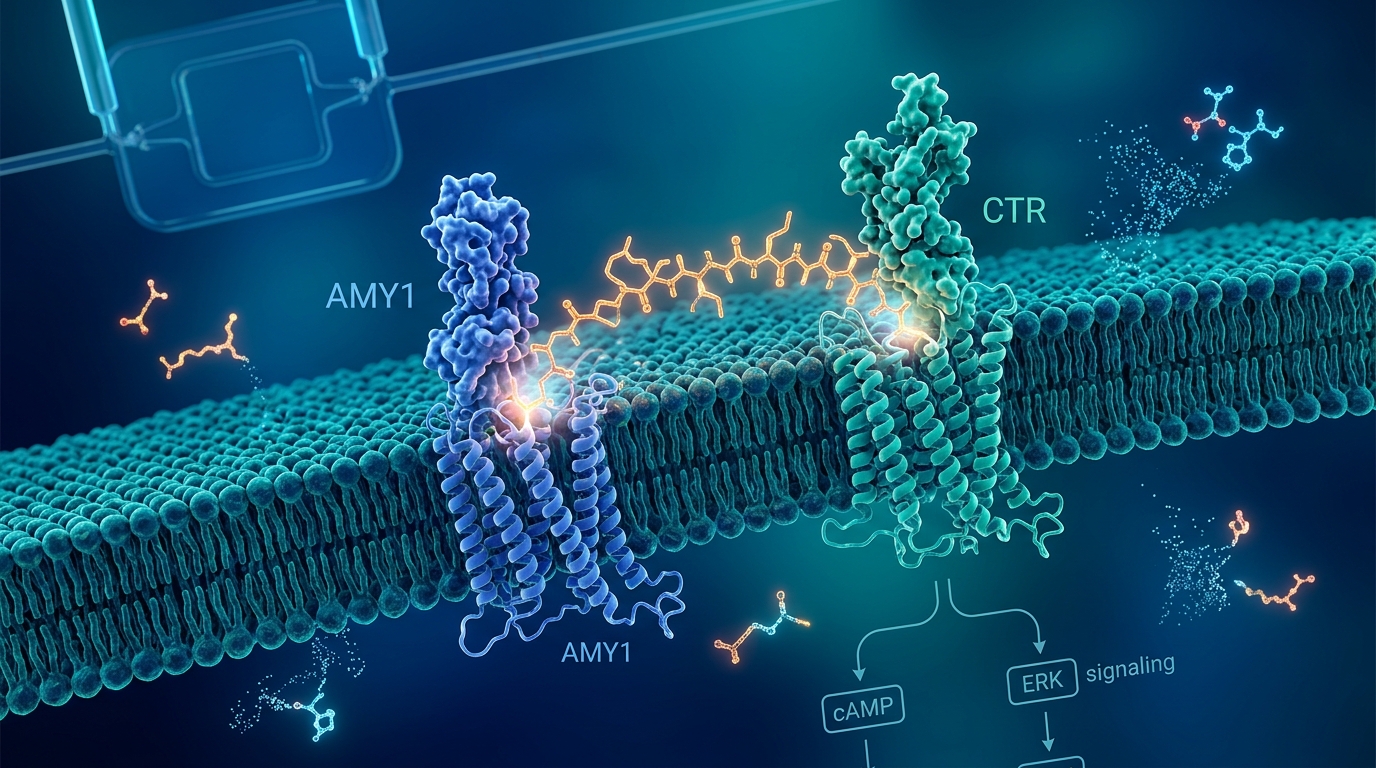
Cagrilintide is an investigational, long-acting dual amylin and calcitonin receptor agonist (DACRA) that drives clinically significant, dose-dependent weight reduction and metabolic improvements through central non-incretin satiety pathways, particularly when paired synergistically with GLP-1 receptor agonists.
This conclusion is supported by three primary scientific rationales:
- Distinct Neuroendocrine Mechanism: Cagrilintide engages central amylin and calcitonin receptors in the hindbrain to mediate satiety, reduce caloric intake, and delay gastric emptying via non-incretin signaling.
- Demonstrated Metabolic Synergy and Efficacy: Preclinical and human clinical trials confirm that cagrilintide achieves substantial weight loss both as monotherapy and through additive, complementary metabolic synergy with GLP-1 receptor agonists.
- Optimized Pharmacokinetics and Defined Tolerability: Lipid-based acylation confers an extended elimination half-life enabling once-weekly dosing, supported by a predictable, gastrointestinal-focused safety profile.
1. Distinct Neuroendocrine Mechanism via Dual Receptor Agonism
Unlike traditional incretin-mimetic peptides (such as GLP-1 or GIP analogs), cagrilintide is an acylated analogue of human amylin engineered to act as a dual amylin and calcitonin receptor agonist (DACRA).
In-Vitro Evidence
- Receptor Binding Potency: Functional cell assays demonstrate that cagrilintide acts as a full agonist at human calcitonin receptors (CTR) and across all three calcitonin receptor-like receptor/receptor activity-modifying protein (RAMP) complexes, designated as amylin receptor subtypes AMYR1, AMYR2, and AMYR3.
- Signal Transduction: In-vitro cellular models show that binding induces intracellular cAMP accumulation and downstream extracellular signal-regulated kinase (ERK) phosphorylation at nanomolar concentrations.
Animal Evidence
- Hindbrain Activation: In diet-induced obese (DIO) rodent models, peripheral administration of cagrilintide markedly increases c-Fos activation in the area postrema (AP) and the nucleus of the solitary tract (NTS), confirming direct central nervous system signaling to primary appetite-regulating circuits.
- Motility and Feeding Suppression: Rodent studies confirm that cagrilintide reduces acute meal size and delays gastric emptying rates without inducing compensatory hyperphagia upon dose cessation.
Hypotheses and Mechanistic Theories
- Non-Redundant Pathway Activation: Researchers hypothesize that DACRAs engage homeostatic energy balance nodes that complement, rather than duplicate, pro-opiomelanocortin (POMC) and neuropeptide Y (NPY) hypothalamic pathways targeted by GLP-1 agonists.
2. Demonstrated Metabolic Synergy and Efficacy
Cagrilintide has demonstrated robust body weight reduction in monotherapy paradigms, with amplified therapeutic outcomes when evaluated in combination therapies.
Human Clinical Evidence
- Phase 2 Monotherapy (NCT03856047): In a 26-week, double-blind, randomized controlled trial involving 706 participants with overweight or obesity, once-weekly cagrilintide (0.16 to 4.5 mg) induced dose-dependent mean weight loss ranging from 6.0% to 10.8%, compared to 3.0% for placebo and 9.0% for liraglutide 3.0 mg.
- Phase 2 Combination with Semaglutide (CagriSema, NCT04982575): In individuals with type 2 diabetes, the co-formulation of cagrilintide 2.4 mg and semaglutide 2.4 mg achieved a mean weight reduction of 15.6% and an HbA1c reduction of 2.2 percentage points at 32 weeks, significantly outperforming either cagrilintide monotherapy (8.1% weight loss) or semaglutide monotherapy (5.1% weight loss).
- Phase 3 Pipeline (REDEFINE Program): Ongoing Phase 3 trials are actively evaluating fixed-dose CagriSema across broad non-diabetic and diabetic cohorts with primary endpoints targeting long-term total body mass reduction exceeding 20%.
Animal Evidence
- Additive Weight Reduction: Co-administration of cagrilintide and semaglutide in DIO mice led to greater fat mass depletion and preserved lean-to-fat mass ratios relative to equimolar mono-components.
Anecdotal and Research Chemical Community Claims
- Unverified Observations: Anecdotal reports from unregulated research chemical forums claim accelerated body fat loss and distinct appetite-blunting sensations compared to GLP-1 monotherapies; however, these self-reported accounts lack standardized dosing, purity validation, and clinical oversight.
3. Optimized Pharmacokinetics and Defined Tolerability
Engineered structural modifications permit sustained target engagement with a half-life optimized for weekly therapeutic regimens.
In-Vitro and Structural Evidence
- Peptide Engineering: Cagrilintide is synthesized by modifying the native human amylin amino acid sequence and attaching a C20 fatty diacid moiety via a hydrophilic spacer. This molecular architecture facilitates reversible binding to human serum albumin, protecting the peptide from rapid enzymatic clearance.
- Physical Stability: Unlike native human amylin, which is notoriously prone to toxic fibril formation and amyloid aggregation in solution, cagrilintide exhibits enhanced solubility and structural stability across physiological pH ranges.
Human Clinical Evidence
- Pharmacokinetic Profile: Clinical pharmacokinetic analyses reveal a time to maximum concentration (Tmax) of approximately 24 to 48 hours and a terminal elimination half-life of 159 to 180 hours (7–8 days) following subcutaneous administration, supporting once-weekly dosing.
- Adverse Event Profile: Human clinical trials report that the most common adverse events are gastrointestinal (nausea, constipation, diarrhea, and vomiting). These events are predominantly mild to moderate in severity, transient, and mitigated through standard stepwise dose escalation.