Main Conclusion
Tirzepatide is a transformative unimolecular dual GIP and GLP-1 receptor agonist that significantly outperforms selective single-incretin mimetics across preclinical and clinical research models by synergistically enhancing glucose homeostasis, driving profound fat mass reduction, and reversing multi-organ cardiometabolic dysfunction.
Supporting Reason 1: Dual Incretin Receptor Agonism Synergistically Maximizes Glycemic Regulation and Insulin Sensitivity Beyond Single-Target Pathways
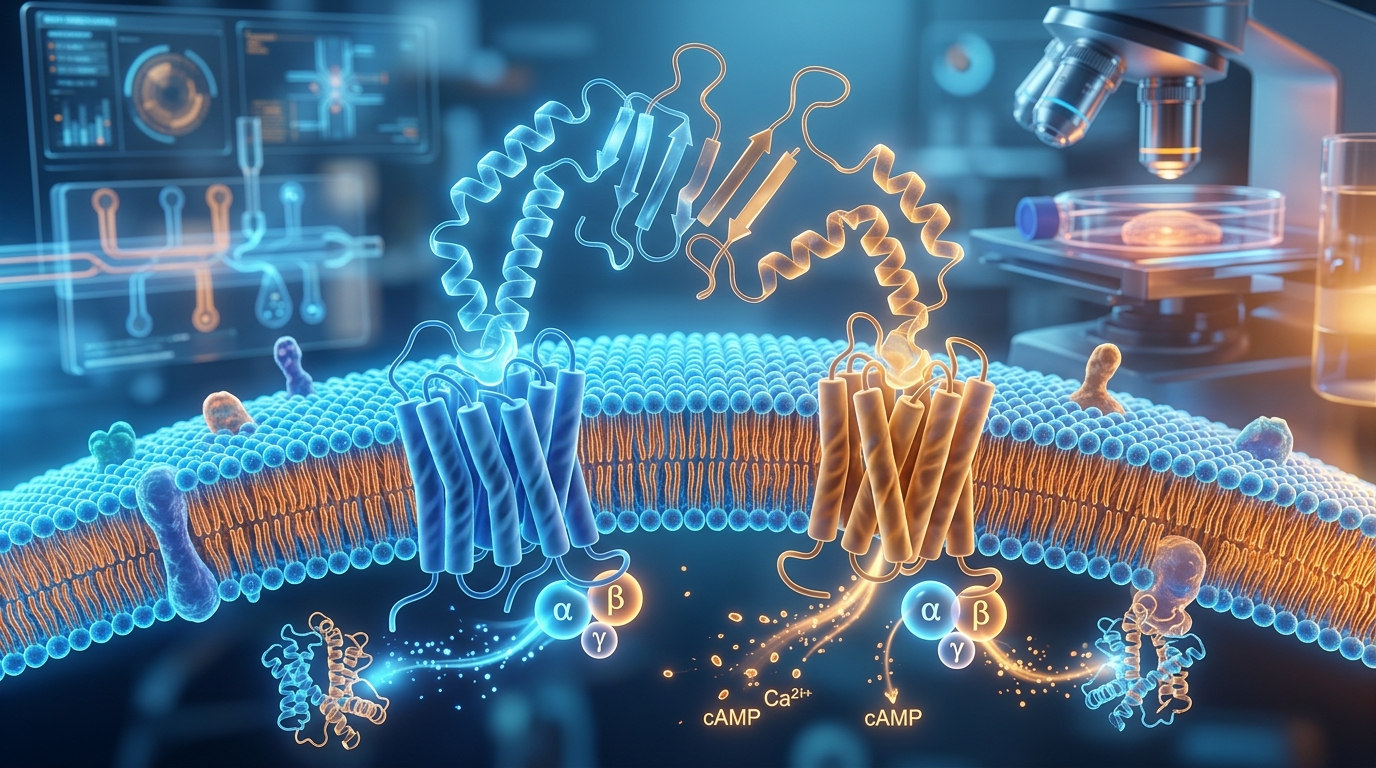
By simultaneously engaging both the glucose-dependent insulinotropic polypeptide receptor (GIPR) and the glucagon-like peptide-1 receptor (GLP-1R), tirzepatide orchestrates a complementary, glucose-dependent endocrine response that optimizes pancreatic islet function.
Human Clinical Evidence
- SURPASS Trial Program: In randomized, phase 3 clinical trials (SURPASS 1–5), tirzepatide (5 mg, 10 mg, 15 mg once weekly) demonstrated dose-dependent HbA1c reductions ranging between 1.87% and 2.59%. In the head-to-head SURPASS-2 trial, tirzepatide 15 mg achieved superior HbA1c reduction compared to selective GLP-1 receptor agonist semaglutide 1.0 mg (-2.30% vs. -1.86%, p < 0.001).
- Islet Cell Function and Insulin Sensitivity: Hyperglycemic clamp and meal-tolerance clinical evaluations confirm that tirzepatide enhances both first-phase and second-phase insulin secretion while restoring homeostatic model assessment of insulin resistance (HOMA2-IR) indices to near-physiologic levels.
In-Vitro & Biochemical Evidence
- Biased Agonist Kinetics: Cell-based receptor signaling assays demonstrate that tirzepatide possesses native-like binding affinity for the human GIP receptor and an approximate 5-fold lower affinity for the human GLP-1 receptor compared to native GLP-1, engineered specifically to prevent excessive GLP-1R internalization while optimizing intracellular cAMP accumulation.
Animal Evidence
- Pancreatic Morphology in Diabetic Rodents: Studies in diabetic db/db mice and diet-induced obesity (DIO) rat models demonstrate that dual GIP/GLP-1 co-stimulation preserves beta-cell mass, prevents cytokine-induced apoptosis, and stimulates beta-cell proliferation more effectively than equivalent doses of selective GLP-1 receptor mono-agonists.
Supporting Reason 2: Coordinated Central and Peripheral Receptor Activation Drives Unprecedented Satiety and Adiposity Reductions
Tirzepatide recruits distinct hypothalamic and peripheral signaling circuits to suppress appetite, delay gastric emptying, and enhance energy balance without precipitating the refractory metabolic slowdown commonly associated with caloric deficit.
Human Clinical Evidence
- SURMOUNT Trial Program: In the landmark SURMOUNT-1 trial in individuals with overweight or obesity without type 2 diabetes, tirzepatide achieved mean body weight reductions of 15.0% (5 mg), 19.5% (10 mg), and 20.9% (15 mg; 22.5 kg) over 72 weeks.
- Body Composition Analysis: DEXA and MRI substudies from SURMOUNT-1 revealed that approximately 75% of the total weight loss achieved was pure fat mass, maintaining a favorable fat-to-lean mass ratio throughout prolonged administration.
Animal Evidence
- CNS Neurocircuitry Modulation: Murine neuroimaging and c-Fos mapping confirm that tirzepatide penetrates circumventricular organs and the arcuate nucleus, activating pro-opiomelanocortin (POMC) neurons while inhibiting neuropeptide Y/agouti-related peptide (NPY/AgRP) orexigenic pathways.
- Adipose Tissue Remodeling: In rodent DIO models, chronic administration accelerates white adipose tissue lipolysis, reduces adipocyte hypertrophy, and upregulates uncoupling protein 1 (UCP-1) expression in brown adipose depots.
Hypotheses and Mechanistic Projections
- GIP-Mediated Tolerability Buffering: Researchers hypothesize that GIP receptor co-activation in the area postrema and solitary tract dampens central GLP-1-induced emetic signaling, facilitating higher bioavailable dosing with lower rates of severe nausea.
Supporting Reason 3: Multi-Tissue Engagement Delivers Robust Cardiometabolic, Renal, and Hepatic Organ Protection
Beyond glycemic control and weight management, tirzepatide directly modulates lipid flux, systemic inflammation, and vascular endothelial tone across key organ systems.
Human Clinical Evidence
- Metabolic Dysfunction-Associated Steatohepatitis (MASH): In the phase 2 SYNERGY-NASH trial, 74% of participants on 15 mg tirzepatide achieved complete MASH resolution without worsening of liver fibrosis, confirmed via serial liver biopsies.
- Cardiovascular and Lipid Biomarkers: SURPASS and SURMOUNT clinical datasets demonstrate significant decreases in fasting triglycerides (-15% to -31%), very-low-density lipoprotein (VLDL), and systolic blood pressure (-5 to -7 mmHg), alongside reductions in high-sensitivity C-reactive protein (hs-CRP).
In-Vitro and Animal Evidence
- Hepatic De Novo Lipogenesis: Primary human hepatocyte cultures and DIO mouse studies reveal that tirzepatide downregulates lipogenic transcription factors (SREBP-1c, ChREBP), directly decreasing intrahepatic triglyceride accumulation.
- Atherosclerosis and Endothelial Tone: In ApoE-deficient mice, tirzepatide reduces aortic plaque formation, attenuates vascular cell adhesion molecule-1 (VCAM-1) expression, and suppresses pro-inflammatory macrophage infiltration.
Anecdotal Claims vs. Scientific Evidence
- Subjective Energy Surges and Tolerance Reversal: Community and anecdotal self-reports claim localized fat loss and sudden shifts in resting metabolic rate; however, controlled metabolic chamber data indicate that energy expenditure adjustments are strictly systemic and attributable to total body mass alterations and baseline substrate oxidation shifts.