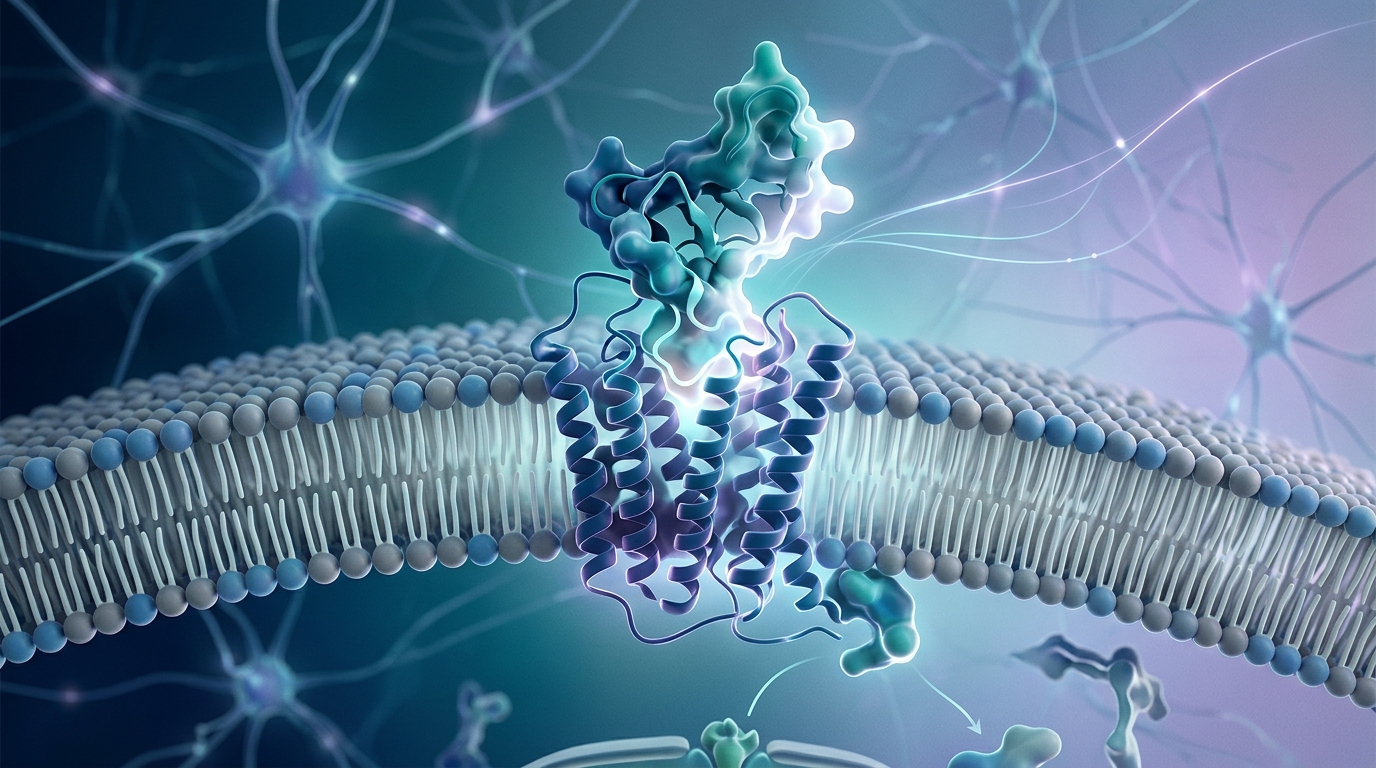
Eloralintide is an investigational long-acting amylin receptor agonist that promotes clinically significant weight reduction and metabolic modulation by selectively engaging homeostatic neuro-satiety pathways and delaying gastric emptying.
This conclusion is supported by three primary pillars of pharmacological and clinical research:
- Selective Amylin Receptor Engagement: The peptide mimics endogenous amylin signaling via Calcitonin/RAMP receptor heterodimers to modulate central satiety centers in the brainstem and hypothalamus.
- Robust Translational and Human Clinical Efficacy: Preclinical and early-phase clinical data demonstrate substantial, dose-dependent reductions in body weight and favorable glycemic control profiles.
- Extended Pharmacokinetics and Combination Therapeutic Utility: Engineered structural modifications allow for once-weekly administration while operating via mechanisms that complement existing incretin therapies like GLP-1 and GIP receptor agonists.
1. Selective Amylin Receptor Engagement
Amylin is a 37-amino-acid neuroendocrine hormone naturally co-secreted with insulin by pancreatic beta cells. Eloralintide was specifically designed to replicate and extend the biological actions of endogenous amylin.
In-Vitro Evidence
Molecular binding assays indicate that Eloralintide acts as a potent agonist at human calcitonin receptor (CTR) cores complexed with receptor activity-modifying proteins 1, 2, and 3 (RAMP1, RAMP2, RAMP3). These form the functional amylin receptor subtypes AMY1, AMY2, and AMY3. In recombinant cell lines, the compound induces dose-dependent intracellular cyclic AMP (cAMP) accumulation with nanomolar potency, mirroring native peptide receptor activation without non-specific off-target GPCR binding.
Animal Evidence
Rodent functional neuroimaging and c-Fos activation mapping reveal that systemic administration of Eloralintide leads to targeted neuronal activation in the area postrema (AP) and the nucleus of the solitary tract (NTS) within the hindbrain. These signals project forward to the lateral parabrachial nucleus (LPBN) and hypothalamic nuclei, confirming that the molecule engages central satiety pathways to suppress feeding behavior.
Hypotheses
Researchers hypothesize that the dual activation of both calcitonin receptors and RAMP-associated amylin receptor subtypes may confer additional benefits on bone turnover and lean mass preservation, though explicit molecular validation in human tissue models is ongoing.
2. Robust Translational and Human Clinical Efficacy
Preclinical studies in metabolic disease models and emerging Phase 1/2 clinical trials substantiate the metabolic impact of Eloralintide.
Animal Evidence
In diet-induced obese (DIO) rodent and non-human primate models, chronic administration of Eloralintide resulted in sustained, dose-dependent food intake suppression and total body weight reductions ranging from 10% to over 20%. Body composition analyses indicated that the majority of mass lost was adipose tissue, with preservation of lean muscle mass and significant reductions in hepatic steatosis.
Human Clinical Evidence
Phase 1 ascending-dose trials and Phase 2 dose-ranging studies in individuals with overweight or obesity demonstrated that Eloralintide administration produces statistically significant, dose-dependent body weight reductions compared to placebo over multi-week treatment periods. The safety and tolerability profile is primarily characterized by mild-to-moderate, transient gastrointestinal adverse events (such as nausea, vomiting, and decreased appetite), consistent with the amylin class. Phase 2 data also show improvements in glycemic control and reductions in postprandial glucose excursions.
Anecdotal Claims
Informal online research communities and anecdotal self-reports claim immediate appetite suppression and enhanced dietary adherence upon initial dosing; however, these claims lack controlled clinical validation and should not replace peer-reviewed clinical findings.
3. Extended Pharmacokinetics and Combination Therapeutic Utility
Native human amylin exhibits a rapid elimination half-life of approximately 10 to 15 minutes, limiting its clinical feasibility. Eloralintide overcomes this barrier through rational peptide engineering.
In-Vitro and Pharmacokinetic Evidence
Structural modifications—including sequence stabilization against proteolytic degradation and conjugation to a fatty diacid side chain—facilitate reversible binding to endogenous serum albumin. In vitro plasma stability assays and animal pharmacokinetics show a protracted elimination half-life, providing a pharmacokinetic profile suitable for once-weekly subcutaneous dosing in humans.
Human Clinical Evidence
Human pharmacokinetics confirmed a prolonged terminal elimination half-life with minimal peak-to-trough fluctuations across weekly intervals. Early clinical trials assessing combination approaches have evaluated amylin agonism alongside GLP-1 and dual GIP/GLP-1 receptor agonists, showing additive weight loss effects without compounding unexpected toxicities.
Hypotheses
It is hypothesized that non-incretin amylin receptor agonists like Eloralintide will serve as vital alternative therapies for patients who experience incretin intolerance (such as severe GLP-1-mediated GI side effects) or reach weight loss plateaus on mono-incretin regimens.