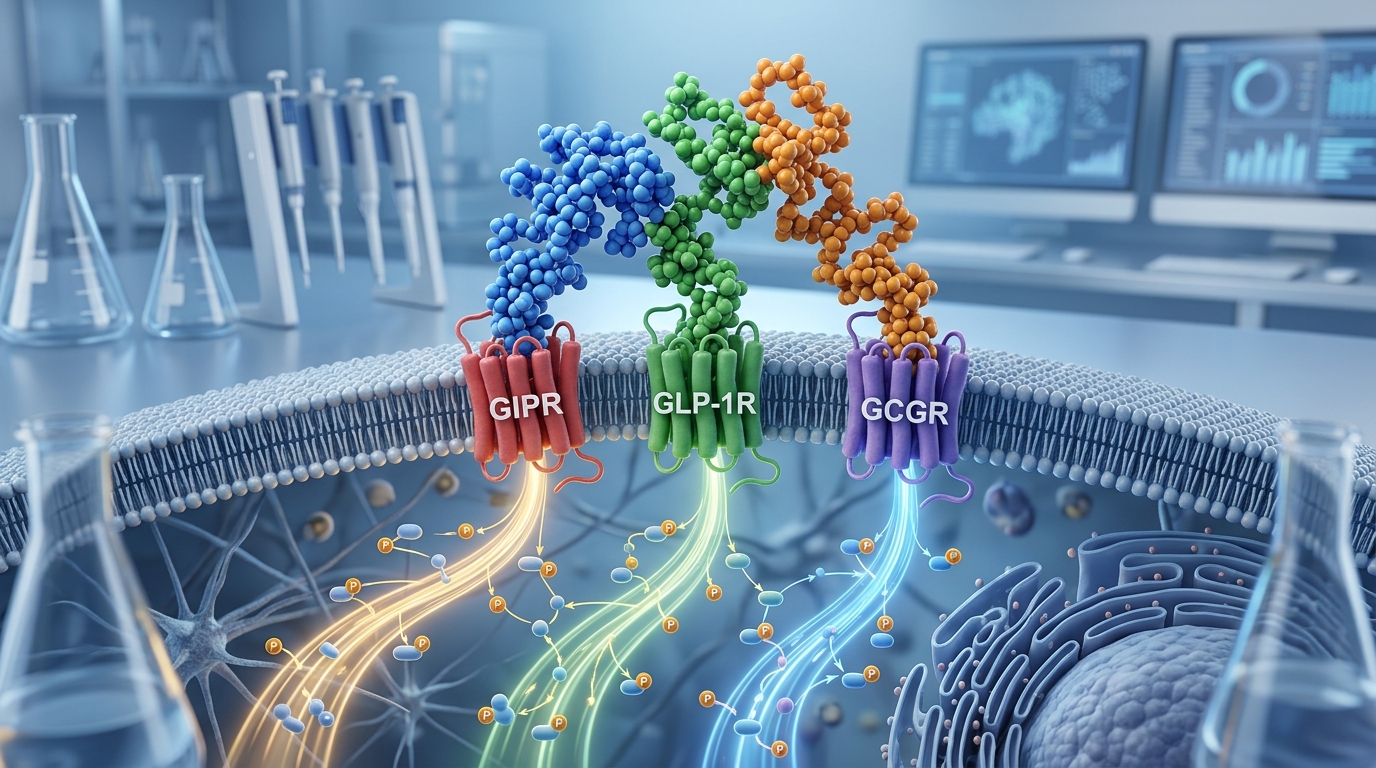
Retatrutide (LY3437943) represents a transformative advancement in metabolic peptide research, achieving unprecedented weight loss exceeding 24% and profound metabolic remodeling by simultaneously activating GIP, GLP-1, and glucagon (GCGR) receptors.
This landmark profile is supported by three primary pillars:
- Triple-Receptor Agonist Synergy: The molecule coordinates complementary cellular pathways to suppress appetite, stimulate glucose-dependent insulin secretion, and upregulate resting energy expenditure.
- Robust Phase 2 Human Clinical Efficacy: Rigorous clinical trials demonstrate dose-dependent reductions in body weight, HbA1c, and cardiometabolic risk factors that surpass existing mono- and dual-agonist benchmarks.
- Profound Hepatic and Cardiometabolic Disease Modification: Direct glucagon receptor stimulation in the liver mediates rapid clearance of intrahepatic lipid content and systemic improvements in atherogenic lipids and blood pressure.
1. Triple-Receptor Agonist Synergy
Retatrutide is a synthetic 39-amino-acid single peptide engineered with an alpha-methyl phenylalanine substitution and a C20 diacid acyl chain, enabling once-weekly subcutaneous pharmacokinetics alongside balanced activation across three key metabolic GPCRs.
- In-Vitro Evidence: Cell-based functional assays demonstrate that retatrutide binds and activates all three target receptors with high potency. Receptor activation potency assays show that retatrutide is approximately 8.9-fold more potent at human GIP receptors compared to native human GIP, while maintaining balanced potency at human GLP-1 receptors and human glucagon receptors (GCGR), achieving efficient multi-pathway signaling without excessive tachyphylaxis.
- Animal Evidence: In diet-induced obese (DIO) murine and non-human primate models, co-stimulation of GCGR alongside GIP and GLP-1 resulted in elevated brown adipose tissue thermogenesis, increased whole-body oxygen consumption, and accelerated lipid mobilization. Animal studies confirmed that blocking the GCGR arm abolished the excess energy expenditure, demonstrating that glucagon agonism drives caloric burn while GIP/GLP-1 agonism prevents glucagon-induced hyper-glycemia.
- Mechanistic Hypotheses: Researchers hypothesize that GIP receptor agonism acts synergistically in the central nervous system to attenuate potential nausea signals induced by GLP-1 and glucagon pathways while enhancing insulin sensitivity in peripheral adipose depots.
- Anecdotal Claims: Research community discussions frequently cite rapid onset of appetite reduction and sustained satiety; however, informal self-reports lack standardized dosing verification and biomarker validation.
2. Robust Phase 2 Human Clinical Efficacy
Human trials have confirmed the clinical translation of retatrutide’s multi-incretin mechanism across large populations with obesity and type 2 diabetes.
- Human Clinical Evidence (Obesity): In a double-blind, randomized, placebo-controlled Phase 2 trial published in The New England Journal of Medicine (Rosenstock et al., 2023), 338 non-diabetic adults with obesity or overweight received retatrutide across doses ranging from 1 mg to 12 mg weekly. At 48 weeks, the 12 mg cohort achieved a mean body weight reduction of -24.2% (-23.9 kg), with 100% of participants on the 8 mg and 12 mg doses achieving at least 5% body weight loss and 63% achieving a 20% or greater reduction. Weight trajectory curves did not reach a plateau at 48 weeks, suggesting potential for additional reduction in longer-term trials.
- Human Clinical Evidence (Type 2 Diabetes): A parallel Phase 2 trial evaluating retatrutide in individuals with type 2 diabetes demonstrated mean HbA1c reductions of up to -2.02% at 36 weeks alongside substantial weight loss (-16.9% in the 12 mg group), with safety profiles characterized primarily by transient, mild-to-moderate gastrointestinal adverse events (e.g., nausea, diarrhea, vomiting) consistent with incretin-class therapies.
- Hypotheses Regarding Long-Term Maintenance: Clinical investigators hypothesize that combining GCGR-mediated resting metabolic rate maintenance with GLP-1/GIP-mediated appetite regulation may decrease the compensatory metabolic slowdown typically observed during sustained negative energy balance.
3. Profound Hepatic and Cardiometabolic Disease Modification
Beyond glycemic control and total mass reduction, retatrutide directly targets hepatic lipid metabolism and downstream cardiovascular parameters.
- Human Clinical Evidence (Hepatic Fat Clearance): In a pre-specified substudy of the Phase 2 trial involving patients with metabolic dysfunction-associated steatohepatitis (MASH / NAFLD), magnetic resonance imaging-proton density fat fraction (MRI-PDFF) assessments showed an average relative reduction of liver fat content of up to 81.4% at 24 weeks. Over 85% of subjects receiving the 8 mg and 12 mg doses achieved normal liver fat content (<5%) at 24 weeks, resolving baseline hepatic steatosis.
- Human Clinical Evidence (Cardiometabolic Biomarkers): Subjects experienced significant improvements in systolic and diastolic blood pressure, fasting serum triglycerides (decreases up to 35%), and reductions in circulating low-density lipoprotein cholesterol (LDL-C) and very-low-density lipoprotein (VLDL), indicating systemic atherogenic risk reduction.
- Animal Evidence: Rodent models of non-alcoholic steatohepatitis demonstrated that retatrutide suppressed pro-fibrotic gene expression (including COL1A1 and ACTA2) and improved hepatic mitochondrial beta-oxidation far more effectively than GLP-1 receptor mono-agonists.
- In-Vitro Evidence: Hepatocyte culture models confirm that direct GCGR agonism stimulates carnitine palmitoyltransferase-1 (CPT-1) activity and downregulates lipogenic transcription factors (SREBP-1c), directly accelerating intracellular fatty acid degradation.
Conclusion
Retatrutide establishes a new paradigm in multi-receptor metabolic pharmacology. Supported by rigorous in-vitro kinetics, preclinical validation, and high-quality Phase 2 human clinical trials, the triple agonist LY3437943 offers unprecedented efficacy in body mass reduction, glycemic management, and hepatic steatosis resolution, serving as a primary cornerstone for ongoing Phase 3 clinical research programs.