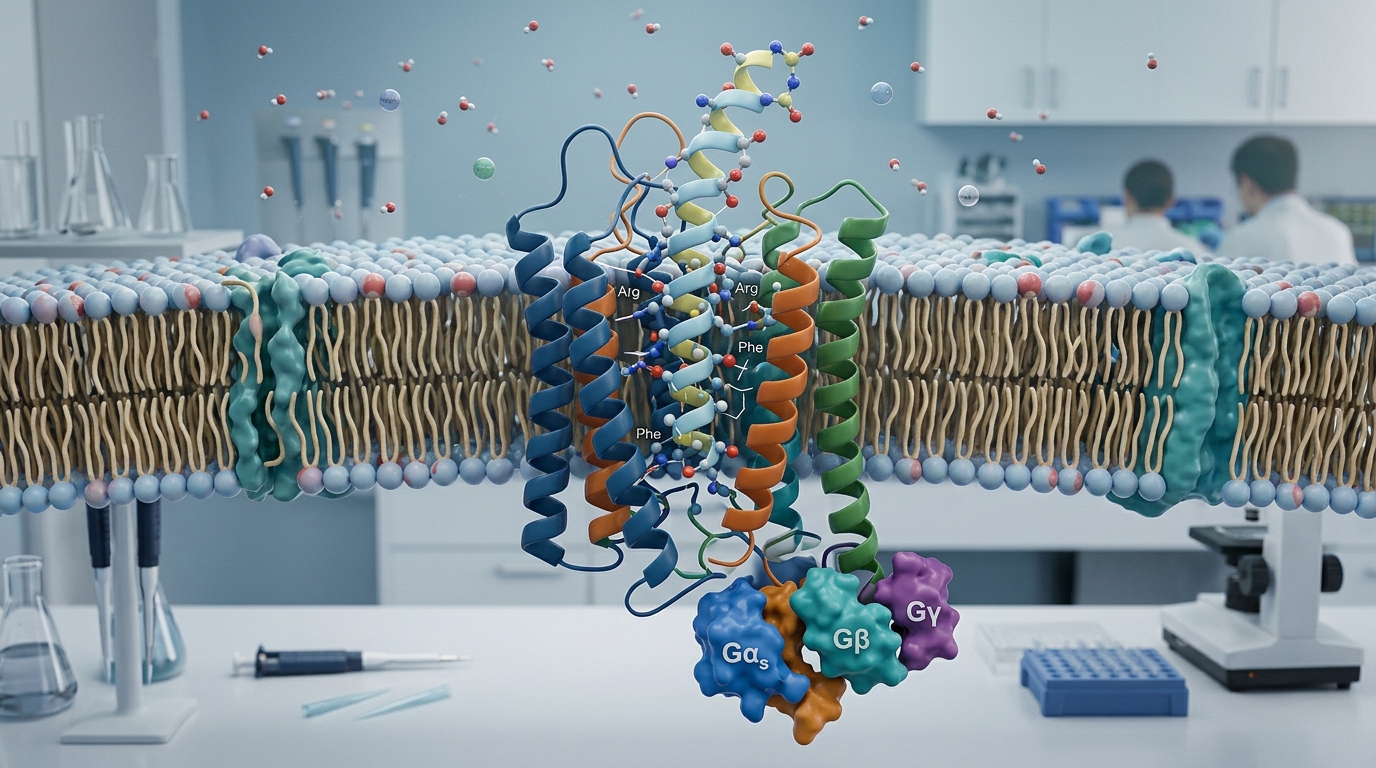
Sermorelin (growth hormone-releasing factor 1-29 amide, or GRF 1-29) is a synthetic 29-amino-acid peptide that represents the shortest fully functional N-terminal fragment of endogenous growth hormone-releasing hormone (GHRH). First synthesized and characterized in the early 1980s, the compound was engineered to replicate the biological activity of native 44-amino-acid human GHRH while offering improved synthetic tractability. Unlike direct human growth hormone (somatropin) therapies, sermorelin acts upstream at the pituitary level, serving as a primary model for investigating targeted somatotrophic secretagogues and neuroendocrine feedback regulation.
Sermorelin and Its FDA Regulatory Trajectory
Sermorelin possesses a distinct regulatory history compared to other research peptides, having previously traversed full clinical development and New Drug Application (NDA) approval through the U.S. Food and Drug Administration (FDA).
- Diagnostic Approval (1990): The FDA initially approved sermorelin acetate injection (NDA 019863) under the trade name Geref Diagnostic for evaluating pituitary somatotroph function and diagnosing suspected growth hormone deficiency (GHD).
- Therapeutic Approval (1997): In September 1997, the FDA approved sermorelin acetate (NDA 020443) for the treatment of idiopathic growth hormone deficiency in prepubertal pediatric patients experiencing growth failure.
- Commercial Discontinuation (2008): The original marketing authorization holder, EMD Serono, voluntarily ceased production of Geref in 2008. In a formal 2013 notice published in the Federal Register, the FDA confirmed that sermorelin acetate was withdrawn strictly for commercial and market-related reasons, not due to safety or efficacy concerns.
- Current Status: Following the withdrawal of the brand-name product, no finished, commercial FDA-approved drug product containing sermorelin remains on the market. It is primarily accessed via licensed compounding pharmacies under Section 503A/503B frameworks or procured as an analytical reference material for laboratory and clinical research.
Endocrine Mechanisms: Action on the Somatotropic Axis
The endocrine mechanism of sermorelin centers on the hypothalamic-pituitary-somatotropic axis. Sermorelin functions as a selective agonist at the GHRH receptor (GHRH-R), a class B G-protein-coupled receptor localized on the surface of anterior pituitary somatotroph cells.
Upon binding to GHRH-R, sermorelin stimulates the heterotrimeric Gs protein alpha subunit, activating adenylate cyclase. This activation catalyzes the conversion of adenosine triphosphate (ATP) to cyclic adenosine monophosphate (cAMP). Elevated intracellular cAMP activates protein kinase A (PKA), triggering downstream phosphorylation cascades that open voltage-gated L-type calcium channels. The influx of extracellular calcium drives the exocytosis of pre-formed growth hormone (GH) storage granules into systemic circulation. Concurrently, cAMP-responsive element-binding protein (CREB) is activated, stimulating gene transcription for endogenous GH synthesis.
Crucially, because sermorelin acts as a secretagogue rather than an exogenous hormone replacement, its activity remains subject to normal neuroendocrine negative feedback. Circulating GH and downstream hepatic insulin-like growth factor 1 (IGF-1) stimulate hypothalamic somatostatin (growth hormone-inhibiting hormone) release, which blocks pituitary adenylate cyclase activation and prevents supraphysiologic hormonal spikes. This preservation of physiological pulsatility and feedback control distinguishes GHRH analogues from direct recombinant human GH administration.
Clinical and Experimental Research Findings
Published peer-reviewed literature spans pediatric endocrinology, diagnostic profiling, and age-associated endocrine changes.
Pediatric Growth Hormone Deficiency
Pivotal trials leading to regulatory approval demonstrated that daily subcutaneous administration of sermorelin (typically 30 μg/kg) significantly accelerated growth velocity in children with idiopathic growth failure. In multicenter pediatric studies, approximately 74% of treated patients achieved clinically meaningful catch-up growth within the first 6 to 12 months, with therapeutic benefits sustained over multi-year evaluation periods.
Adult Somatotropic Function and Aging
Endocrine research has evaluated sermorelin in the context of somatopause—the gradual, age-related decline in spontaneous GH pulse amplitude and circulating IGF-1 concentrations. In randomized, placebo-controlled human investigations, such as studies by Vittone et al. and related clinical teams, nightly administration of GHRH(1-29) in older adults restored nocturnal GH pulse amplitude and significantly elevated baseline IGF-1 levels. Some studies reported modest improvements in lean body mass, skin thickness, and nitrogen balance; however, therapeutic responses were most robust in individuals with demonstrably low baseline IGF-1 levels.
Sleep Architecture and Metabolic Markers
Because native GHRH promotes slow-wave sleep (SWS) and major GH release peaks during non-REM stages, researchers have monitored sleep parameters during nocturnal sermorelin exposure. Clinical trials have observed enhancements in slow-wave sleep duration and modest shifts in lipid metabolism, though data regarding functional vitality and long-term metabolic health in unselected non-deficient adult populations remain inconclusive.
Safety Findings and Research Limitations
Across historical clinical trials, sermorelin exhibited a well-characterized tolerability profile. Commonly reported adverse events were primarily localized and mild, including injection-site erythema, transient facial flushing, headache, and dizziness. A small subset of patients developed anti-GHRH antibodies during prolonged therapy, though these rarely exhibited neutralizing activity or compromised clinical efficacy.
Significant research limitations persist in modern contexts:
- Pharmacokinetic Half-Life: Sermorelin possesses a brief biological half-life (approximately 10 to 12 minutes in human plasma) due to rapid cleavage by dipeptidyl peptidase-IV (DPP-4), requiring daily administration to sustain pulsatile signaling.
- Pituitary Reserve Dependency: Efficacy depends entirely on an intact, responsive anterior pituitary; patients with severe primary pituitary destruction or panhypopituitarism show minimal secretagogue response.
- Anti-Aging Evidence Gaps: Major endocrine societies note that while GHRH analogues raise biomarker concentrations (e.g., IGF-1), large-scale, double-blind randomized trials demonstrating concrete anti-aging or life-extension outcomes in healthy older adults are lacking.
Frequently Asked Questions
Why was brand-name sermorelin removed from the market if it was approved?
EMD Serono discontinued the manufacture of Geref in 2008 due to commercial considerations and the market dominance of recombinant human growth hormone. The FDA published a formal determination confirming that the withdrawal was unrelated to safety or clinical effectiveness.
How does sermorelin differ mechanistically from recombinant growth hormone?
Recombinant human growth hormone directly supplements exogenous somatropin, bypassing the pituitary and suppressing natural production via feedback inhibition. In contrast, sermorelin binds pituitary GHRH receptors to stimulate endogenous, pulsatile GH release while maintaining the somatostatin regulatory brake.
What is the difference between sermorelin and tesamorelin?
Both are synthetic GHRH receptor agonists, but tesamorelin contains an added trans-3-hexenoic acid moiety at its N-terminus that confers greater resistance to enzymatic degradation, resulting in a prolonged plasma half-life and higher biological potency compared to unmodified sermorelin.
Is sermorelin currently approved for anti-aging or athletic performance?
No. Sermorelin is not FDA-approved for anti-aging, longevity, or athletic performance. The compound is also categorized as a prohibited substance by the World Anti-Doping Agency (WADA) under growth hormone secretagogues.
Research Summary
Sermorelin is a well-characterized, 29-amino-acid synthetic GHRH analogue supported by established preclinical receptor pharmacology and historical human randomized clinical trials. Its ability to stimulate pulsatile GH release, elevate IGF-1, and preserve neuroendocrine feedback mechanisms is supported by strong clinical evidence in pediatric growth failure and adult pituitary reserve testing. However, its application in age-related body composition and anti-aging management is primarily exploratory, lacking large-scale definitive efficacy trials. No finished commercial product holds active FDA approval, positioning sermorelin as a valuable historical and active investigational model for somatotropic axis regulation.
References
- U.S. Food and Drug Administration. (2013). Determination That GEREF (Sermorelin Acetate) Injection… Were Not Withdrawn From Sale for Reasons of Safety or Effectiveness. Federal Register, 78(42), 14309–14310. Link
- Prakash, A., & Goa, K. L. (1999). Sermorelin: a review of its use in the diagnosis and treatment of children with idiopathic growth hormone deficiency. BioDrugs, 12(2), 139–157. PubMed
- Vittone, J., et al. (1997). Effects of methods of administration of growth hormone-releasing hormone on growth hormone and insulin-like growth factor-I in normal elderly individuals. The Journal of Clinical Endocrinology & Metabolism, 82(2), 438–444. PubMed
- Walker, R. F. (2006). Sermorelin: a better approach to management of adult-onset growth hormone insufficiency? Clinical Interventions in Aging, 1(4), 307–308. PMC