Key Takeaways
- The Wolverine peptide stack is an experimental combination of two synthetic peptides: Body Protection Compound-157 (BPC-157) and TB-500 (a synthetic fragment of Thymosin Beta-4).
- Preclinical studies indicate distinct cellular mechanisms: BPC-157 upregulates vascular endothelial growth factor receptor 2 (VEGFR2) and modulates the nitric oxide pathway, while TB-500 sequesters G-actin to facilitate cell migration and tissue remodeling.
- There is currently zero peer-reviewed, controlled clinical trial data evaluating the safety, pharmacokinetics, or efficacy of administering both peptides concurrently in humans.
- Neither peptide is approved by the United States Food and Drug Administration (FDA) for musculoskeletal repair or sports recovery, and both are prohibited at all times by the World Anti-Doping Agency (WADA).
What Is the Wolverine Peptide Stack?
In biomedical discourse and non-clinical fitness subcultures, the informal moniker “Wolverine peptide stack” refers to the co-administration of two distinct research peptides: BPC-157 and TB-500. Named colloquially after the comic-book character noted for rapid tissue regeneration, the stack is promoted in grey-market communities as an accelerated recovery agent for acute and chronic musculoskeletal injuries, including tendon tears, ligament sprains, and muscle strains.
Scientifically, however, these two molecules belong to completely separate biochemical classes and origin pathways:
- BPC-157: A synthetic 15-amino-acid pentadecapeptide derived from a native cytoprotective protein sequence identified in human gastric juice.
- TB-500: A synthetic 17-amino-acid derivative representing the active actin-binding motif (specifically featuring the central sequence
LKKTETQ) of Thymosin Beta-4 (Tβ4), a ubiquitous intracellular protein.
While often discussed as a unified therapeutic protocol, scientific literature assesses each peptide independently. No standard clinical formulation combines both agents into a single verified pharmacological intervention.
Biological Mechanisms: How the Peptides Function Preclinically
Preclinical animal and cell-culture experiments suggest that BPC-157 and TB-500 influence wound healing and tissue regeneration through distinct, non-overlapping biochemical mechanisms.
BPC-157: Angiogenic Signaling and Growth Factor Modulation
Laboratory research indicates that BPC-157 exerts cytoprotective and reparative effects largely through vascular modulation and early growth response signaling:
- VEGFR2 Activation: BPC-157 has been observed to stimulate the VEGFR2-Akt-eNOS signaling axis, promoting new capillary network formation (angiogenesis) to restore blood supply in ischemic or injured soft tissues.
- Fibroblast Viability and Migration: In vitro tendon explants exposed to BPC-157 show accelerated outgrowth and survival of tendon fibroblasts, accompanied by enhanced expression of growth hormone receptors.
- Extracellular Matrix Turnover: Animal studies demonstrate increased synthesis of type I collagen relative to type III collagen, potentially improving tensile strength during tendon-to-bone remodeling.
- Inflammatory Modulation: Rodent models of systemic inflammation show reduced serum concentrations of pro-inflammatory cytokines such as TNF-alpha and IL-6 following administration.
TB-500: Cytoskeletal Dynamics and Cell Migration
TB-500 acts through the cellular regulation of actin, a core protein component of the internal cytoskeleton:
- G-Actin Sequestration: By binding globular actin (G-actin), the active motif of Thymosin Beta-4 maintains an equilibrium pool of unpolymerized monomeric actin, enabling rapid cytoskeletal rearrangement necessary for cellular movement.
- Endothelial Cell and Myoblast Migration: Enhanced actin remodeling allows endothelial cells and progenitor stem cells to migrate swiftly to the margins of injured tissue.
- Downregulation of Scarring: Research indicates that Thymosin Beta-4 motifs help modulate collagen deposition during remodeling, mitigating excessive fibrotic scarring while encouraging functional tissue architecture.
Preclinical Evidence vs. Scientific Reality
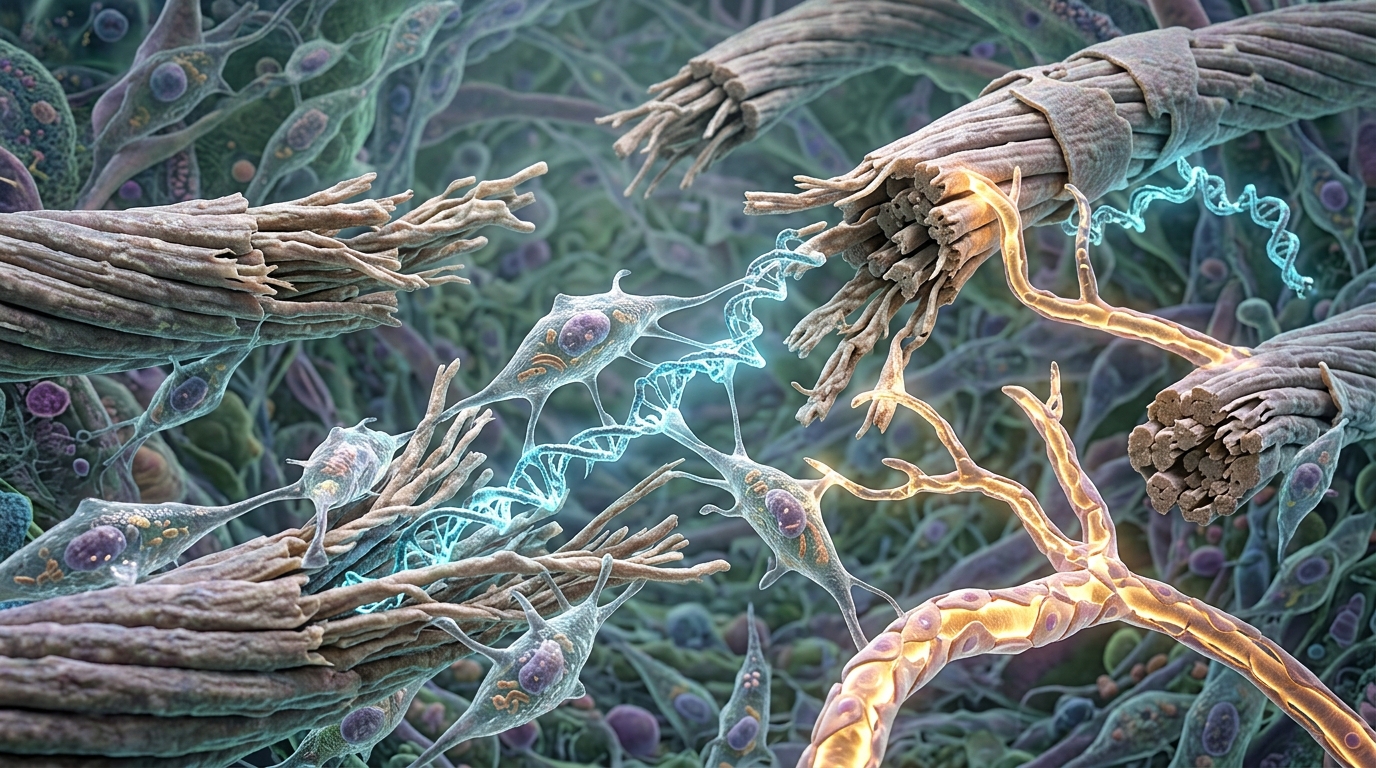
Proponents of the Wolverine peptide stack hypothesize that combining BPC-157’s angiogenic stimulation with TB-500’s cell-migration dynamics produces a synergistic therapeutic benefit. From a biological perspective, delivering new capillary beds while mobilizing reparative cells represents an intuitive theoretical strategy.
However, scientific validation requires direct experimental proof. When analyzing published literature in databases such as PubMed and Embase, key realities emerge:
- Absence of Combination Studies: Nearly all published regenerative data evaluate BPC-157 or Thymosin Beta-4 / TB-500 in isolation. Rigorous studies evaluating additive toxicity, cross-reactivity, or pharmacodynamic synergy between the two are virtually non-existent in peer-reviewed literature.
- Reliance on Rodent Models: The overwhelmingly positive data on BPC-157 stems primarily from surgical injury models in rodents (e.g., transected Achilles tendons, crush injuries in rat gastrocnemius muscles). Rodent wound healing relies heavily on rapid contraction rather than the secondary re-epithelialization and remodeling seen in human tissue, limiting direct translatability.
- Veterinary Doping Roots: Much of the historical testing around TB-500 focused on equine racing doping detection rather than human clinical pharmacology.
Safety Gaps and the Human Evidence Deficit
The transition from animal models to human clinical practice involves resolving significant safety questions, which remain unanswered for this stack:
Lack of Robust Human Clinical Trials
To date, human clinical evidence for BPC-157 consists of isolated safety evaluations and uncontrolled pilot case series. Well-controlled, double-blind randomized clinical trials (RCTs) testing soft-tissue healing in humans have not established efficacy or standard dosing ranges. For TB-500, clinical trials evaluating the synthetic fragment for orthopedic repair are similarly lacking, although full-length Thymosin Beta-4 has been studied under investigative new drug (IND) protocols for ophthalmic and dermal wounds.
Theoretical Risks and Uncertainties
- Angiogenesis in Neoplasia: Pathological angiogenesis is a well-established driver of tumor vascularization. While neither compound has been proven to be directly oncogenic, systematically stimulating potent angiogenic pathways raises unresolved questions regarding occult or pre-existing tumor growth.
- Immunogenicity: Exogenous administration of synthetic peptides carries risks of anti-drug antibody formation, localized site reactions, and systemic immunogenic responses, a primary concern highlighted by regulatory agencies.
- Purity and Gray-Market Sourcing: Because the stack is not marketed as an approved prescription medication, research compounds acquired online often suffer from lack of sterile manufacturing controls, unknown endotoxin contamination, incorrect peptide sequences, and structural degradation.
Regulatory and Anti-Doping Status
Regulatory authorities and sports governing bodies have established definitive stances on both components of the Wolverine stack:
- U.S. FDA: Neither BPC-157 nor TB-500 is an approved human drug. The FDA has restricted both substances within compounding frameworks (Category 2 under Section 503A interim policies) due to safety concerns, lack of human pharmacokinetic data, and risks related to active pharmaceutical ingredient (API) characterization and peptide impurities.
- WADA: Both BPC-157 and Thymosin Beta-4 derivatives (including TB-500) are explicitly listed on the World Anti-Doping Agency Prohibited List under Section S2 (Peptide Hormones, Growth Factors, Related Substances, and Mimetics). Their use is prohibited at all times, both in-competition and out-of-competition.
Frequently Asked Questions
Why is the combination called the “Wolverine stack”?
The name is an informal internet moniker derived from the comic character known for rapid healing. It reflects theoretical marketing claims surrounding tissue regeneration rather than any medical or pharmaceutical classification.
Have BPC-157 and TB-500 been tested together in clinical trials?
No. There are no published, peer-reviewed randomized controlled trials in humans evaluating the simultaneous administration of BPC-157 and TB-500. Published data assess the compounds separately, predominantly in rodent models.
Is the Wolverine peptide stack legal for athletes?
No. Both BPC-157 and TB-500 are banned by WADA and major sporting organizations worldwide. Athletes using these compounds face strict anti-doping rule violations and suspensions regardless of whether they were used for injury recovery.
Are these peptides available as approved medications?
No. Neither BPC-157 nor TB-500 possesses an FDA-approved indication for medical treatment. They remain classified as research chemicals or unapproved investigational substances.
References
- McGuire, F. et al. (2025). Regeneration or Risk? A Narrative Review of BPC-157 for Musculoskeletal Healing. Current Reviews in Musculoskeletal Medicine.
- Bowers, R. et al. (2025). Emerging Use of BPC-157 in Orthopaedic Sports Medicine: A Systematic Review. The American Journal of Sports Medicine.
- Gwyer, D. et al. (2019). Gastric pentadecapeptide body protection compound BPC 157 and its role in accelerating musculoskeletal soft tissue healing. Cell and Tissue Research, 377(2), 153-159.
- U.S. Food and Drug Administration (FDA). Certain Bulk Drug Substances for Use in Compounding that May Present Significant Safety Risks.
- World Anti-Doping Agency (WADA). The Prohibited List: Peptide Hormones, Growth Factors, Related Substances and Mimetics (Section S2).
Research Summary
The biological rationale underlying the Wolverine peptide stack relies on combining BPC-157’s angiogenic pathway activation with TB-500’s modulation of actin-mediated cell motility. However, the current evidence base is heavily skewed toward preclinical rodent studies and cell cultures. Robust, controlled human trial evidence is non-existent for the combination, leaving questions regarding long-term safety, optimal dosing, oncogenic risk, and immunogenicity unanswered. Both compounds remain unapproved by the FDA and strictly prohibited in competitive sport.