Key Takeaways
- Semaglutide research extends well beyond glycemic control, demonstrating multi-organ biological activity across cardiovascular, hepatic, and central nervous systems.
- Cardiovascular outcomes trials confirm robust reductions in major adverse cardiovascular events (MACE) in both diabetic and non-diabetic populations.
- Hepatic investigations demonstrate significant resolution of metabolic dysfunction-associated steatohepatitis (MASH) and improvements in liver histology.
- Despite compelling preclinical neuroprotective mechanisms, pivotal phase 3 clinical trials in symptomatic Alzheimer’s disease failed to demonstrate cognitive slowing.
- Regulatory approvals currently cover diabetes, weight management, and secondary cardiovascular prevention, while hepatic and neurological applications remain investigational or distinct.
Introduction: The Multi-System Biology of Semaglutide
Semaglutide research has evolved from investigating targeted glycemic regulation into evaluating broad systemic pathophysiology. Originally designed as a long-acting synthetic analog of the endogenous incretin hormone glucagon-like peptide-1 (GLP-1), semaglutide features 94% sequence homology to human GLP-1 with structural modifications: an amino acid substitution at position 8 (alpha-aminoisobutyric acid) to prevent degradation by dipeptidyl peptidase-4 (DPP-4), and an attached C18 di-acid fatty chain at position 26 that promotes reversible binding to serum albumin.
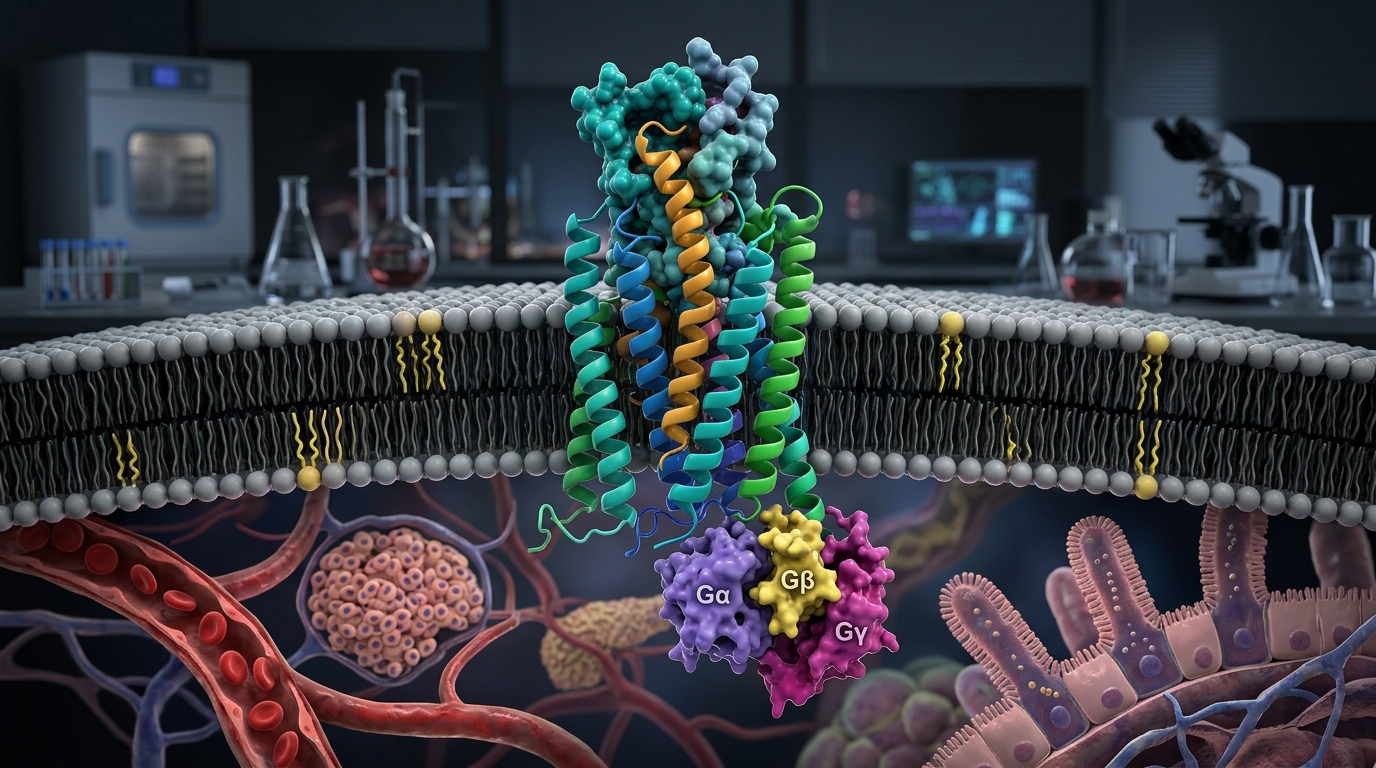
The ubiquity of GLP-1 receptors (GLP-1R) across vascular endothelium, cardiomyocytes, autonomic nervous centers, hepatocytes, and glial tissue explains why this incretin mimetic produces effects far beyond pancreatic beta cells. As research has advanced, preclinical and clinical models have evaluated the drug’s impact on three critical extra-glycemic systems: the cardiovascular network, hepatic parenchymal architecture, and central neural pathways.
Cardiovascular Models: Endothelial Function and Event Reduction
Cardiovascular disease remains the leading cause of mortality in patients with metabolic disorders. Preclinical rodent and porcine models established early on that GLP-1 receptor activation attenuates vascular inflammation, reduces macrophage infiltration into atherosclerotic plaques, enhances nitric oxide bioavailability, and improves myocardial ischemic tolerance.
These mechanistic findings have translated directly into robust human clinical evidence. The landmark SELECT trial evaluated 17,604 non-diabetic patients with overweight or obesity and established cardiovascular disease. Patients randomized to once-weekly subcutaneous semaglutide (2.4 mg) experienced a significant 20% reduction in the composite primary endpoint of cardiovascular death, nonfatal myocardial infarction, or nonfatal stroke over a mean follow-up of 39.8 months (HR 0.80; 95% CI, 0.72–0.90; P < 0.001).
Crucially, cardiovascular benefit began diverging early in the trial, prior to maximal weight loss, suggesting that direct anti-atherosclerotic, anti-inflammatory (such as high-sensitivity C-reactive protein reduction), and hemodynamic mechanisms play an independent protective role alongside caloric reduction.
Hepatic Evidence: Steatohepatitis and Fibrosis Reversal
Metabolic dysfunction-associated steatotic liver disease (MASLD) and its progressive inflammatory counterpart, metabolic dysfunction-associated steatohepatitis (MASH), represent substantial global burdens. Although primary hepatocytes display minimal GLP-1 receptor expression, semaglutide influences hepatic lipid metabolism indirectly by suppressing systemic lipolysis, enhancing peripheral insulin sensitivity, reducing de novo lipogenesis, and diminishing pro-inflammatory cytokine secretion from visceral adipose tissue.
The phase 3 ESSENCE trial (NCT04822181) evaluated once-weekly semaglutide (2.4 mg) over 72 weeks in 800 patients with biopsy-confirmed MASH and moderate-to-advanced fibrosis (stages F2–F3). Published findings revealed that:
- MASH Resolution: 62.9% of semaglutide-treated participants achieved resolution of steatohepatitis without worsening of fibrosis, compared to 34.3% in the placebo cohort (P < 0.001).
- Fibrosis Improvement: 36.8% achieved at least a one-stage reduction in fibrosis without worsening of steatohepatitis, versus 22.4% with placebo (P < 0.001).
- Combined Endpoints: 32.7% met both histological endpoints simultaneously, compared to 16.1% on placebo.
These findings demonstrate clear histological efficacy on liver inflammation, though the magnitude of direct architectural fibrosis reversal continues to be evaluated in long-term observational windows.
Neural Pathways and the Neurodegenerative Paradox
The interaction between semaglutide and the central nervous system occurs via dual pathways: direct binding at accessible circumventricular organs lacking a complete blood-brain barrier (such as the area postrema and the arcuate nucleus) and secondary activation of vagal afferent pathways. In preclinical rodent models of Alzheimer’s and Parkinson’s disease, GLP-1 receptor agonists demonstrated potent neuroprotective profiles, including suppression of microglial activation, preservation of synaptic density, reduced amyloid-beta deposition, and improved neuronal glucose metabolism. Epidemiological and retrospective analyses also correlated GLP-1RA prescription with lower dementia incidence in diabetic populations.
However, this mechanistic and observational promise encountered a severe translational roadblock in late-stage clinical trials. The pivotal phase 3 EVOKE (NCT04777396) and EVOKE+ (NCT04777409) trials assessed oral semaglutide (14 mg daily) across 3,808 patients with early-stage symptomatic Alzheimer’s disease.
Despite successfully modulating systemic inflammatory biomarkers (such as plasma hs-CRP) and exploratory neurodegenerative markers, oral semaglutide showed no statistically significant slowing of cognitive or functional decline compared to placebo on the Clinical Dementia Rating–Sum of Boxes (CDR-SB) or the Alzheimer’s Disease Cooperative Study–Activities of Daily Living (ADCS-ADL) scale at 104 weeks.
Researchers hypothesize that while GLP-1 agonists modify upstream vascular and metabolic contributors to neurodegeneration, they are insufficient to reverse or halt established downstream neurodegenerative cascades once cognitive symptoms manifest.
Research Limitations and Evidence Gaps
Interpreting multi-system semaglutide literature requires acknowledging distinct methodological limitations:
- Indirect vs. Direct Effects: Separating direct tissue-receptor mediated effects from secondary benefits driven by substantial systemic weight loss and improved glycemic metrics remains challenging in clinical trial design.
- Translational Discordance: Rodent models of acute neurotoxicity or rapid amyloid overexpression do not accurately model chronic human sporadic neurodegeneration.
- Long-Term Fibrosis Kinetics: Reversing established collagen cross-linking in hepatic cirrhosis requires multi-year observation that exceeds standard 52-to-72-week trial durations.
- Gastrointestinal Attrition: Across trials, dose-dependent gastrointestinal adverse events (nausea, vomiting, diarrhea) result in non-trivial discontinuation rates that must be factored into intention-to-treat analyses.
Regulatory Status vs. Experimental Research
Semaglutide is approved by the U.S. Food and Drug Administration (FDA) and global regulatory agencies under distinct brand formulations for:
- Type 2 diabetes mellitus management (subcutaneous and oral formulations).
- Chronic weight management in adult and pediatric patients with obesity or overweight and related comorbidities.
- Reduction of major adverse cardiovascular events (MACE) in adults with established cardiovascular disease and obesity/overweight.
Applications in non-cirrhotic MASH, Parkinson’s disease, and cognitive disorders remain investigational or discontinued in phase 3 development, with safety and efficacy not established for these specific diagnostic indications.
Frequently Asked Questions
How does semaglutide benefit cardiovascular tissue if heart cells do not primarily store glycogen?
GLP-1 receptors are expressed on vascular smooth muscle cells and endothelial tissue. Activation reduces vascular cell adhesion molecule expression, diminishes systemic inflammation, enhances endothelial nitric oxide production, and stabilizes atheromatous plaques independently of direct myocardial energy storage.
Why did semaglutide fail in clinical trials for Alzheimer’s disease despite positive animal data?
Preclinical models evaluate early-phase neuroinflammation and artificial peptide toxicity, whereas clinical Alzheimer’s trials enroll patients with established tau tangles, synaptic loss, and structural neurodegeneration. Modulating metabolic pathways and reducing systemic inflammation at this symptomatic stage was insufficient to halt existing neurodegenerative pathology.
Can semaglutide reverse liver cirrhosis?
Clinical trials such as ESSENCE evaluated non-cirrhotic MASH with fibrosis stages F2 and F3, demonstrating significant resolution of steatohepatitis and moderate improvement in fibrosis. However, evidence does not show that semaglutide can reverse end-stage cirrhosis (stage F4), where permanent fibrotic scarring and vascular architectural distortion have occurred.
Research Summary
The body of semaglutide research demonstrates pronounced multi-organ divergence. Human randomized controlled trials provide level-one clinical evidence for its efficacy in glycemic control, substantial body mass reduction, and secondary cardiovascular event prevention. In hepatology, phase 3 evidence confirms significant histological resolution of MASH. Conversely, in neurodegenerative neurology, well-powered phase 3 clinical trials have proven that preclinical neuroprotective mechanisms do not translate into clinical cognitive preservation in symptomatic Alzheimer’s disease. Regulatory approvals remain strictly demarcated for metabolic and cardiovascular indications.
References
- Lincoff, A. M., et al. (2023). Semaglutide and Cardiovascular Outcomes in Obesity without Diabetes. New England Journal of Medicine, 389(24), 2221-2232.
- Newsome, P. N., Sanyal, A. J., et al. (2025). Phase 3 Trial of Semaglutide in Metabolic Dysfunction-Associated Steatohepatitis. New England Journal of Medicine.
- ClinicalTrials.gov. (2025). A Research Study Investigating Semaglutide in People With Early Alzheimer’s Disease (EVOKE). Identifier: NCT04777396.
- Deanfield, J., et al. (2024). Semaglutide and cardiovascular outcomes in patients with obesity and prevalent heart failure. The Lancet, 404(10454), 773-786.