Key Takeaways
- Preclinical Tolerability: Animal models in rodents, rabbits, and dogs report low acute toxicity and no established lethal dose across standard experimental ranges, with rapid peptide metabolism into constituent amino acids.
- Human Safety Evidence Gaps: There is an absence of large-scale, randomized Phase 1 human clinical trials evaluating systemic pharmacokinetics, long-term safety, or dose-dependent adverse effects.
- Theoretical Concerns: Prominent mechanisms of action, such as the upregulation of Vascular Endothelial Growth Factor (VEGF) and accelerated angiogenesis, present theoretical risks regarding tumor vascularization and abnormal cell proliferation.
- Regulatory Standing: BPC-157 is not approved by the U.S. Food and Drug Administration (FDA) for any medical condition and is prohibited in competitive athletics by the World Anti-Doping Agency (WADA).
What Is BPC-157?
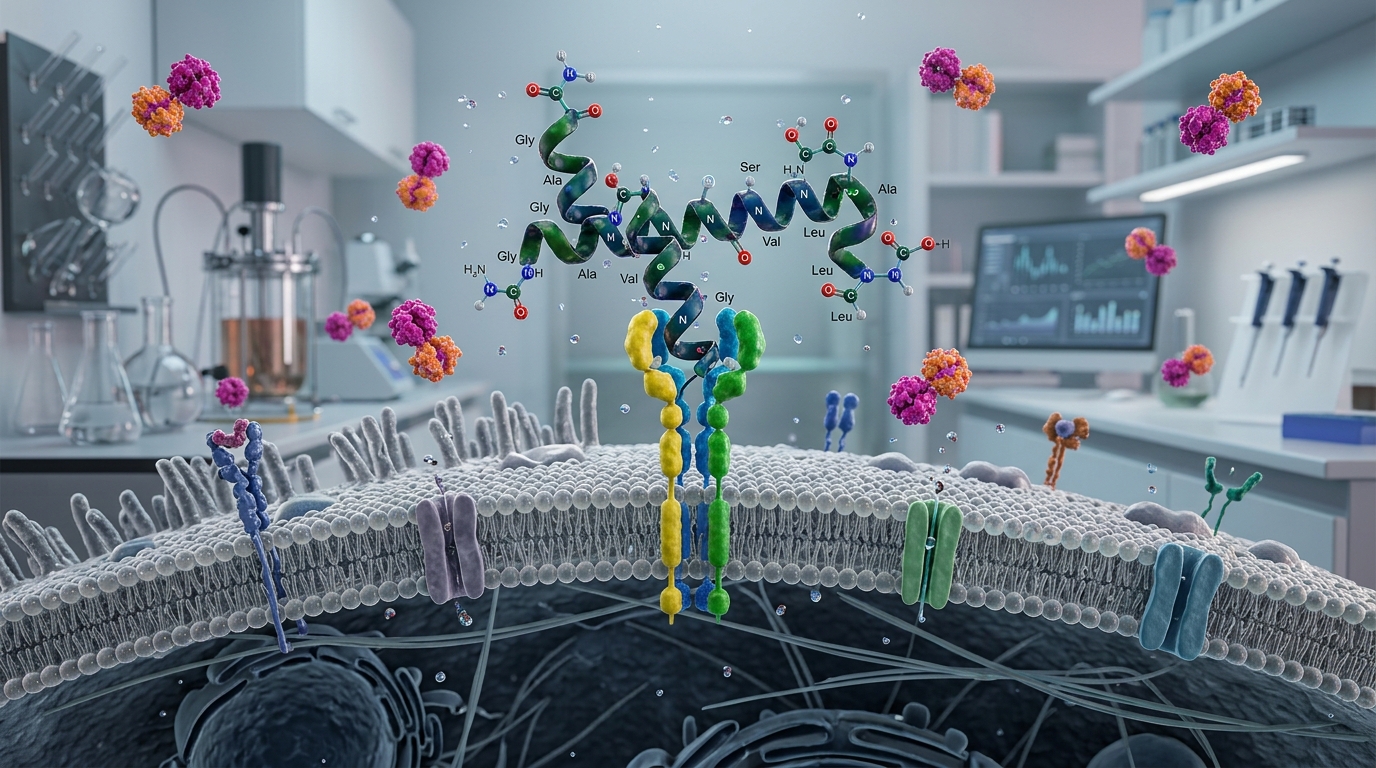
Body Protection Compound-157 (BPC-157) is a synthetic pentadecapeptide composed of 15 amino acids (Gly-Glu-Pro-Pro-Pro-Pro-Gly-Lys-Pro-Ala-Asp-Asp-Ala-Gly-Leu-Val). It is derived from a partial sequence of a naturally occurring protective protein originally identified in human gastric juice. In laboratory settings, BPC-157 is investigated primarily for its cytoprotective and regenerative properties, with preclinical studies exploring its potential in healing tendons, ligaments, skeletal muscle, bone, and gastrointestinal mucosa.
Despite substantial interest from the scientific community and extensive informal public use, rigorous evaluation of its toxicology, pharmacokinetics, and regulatory standing remains essential to distinguishing empirical data from experimental hypotheses.
Preclinical Toxicology and Pharmacokinetics
The majority of safety and toxicological data available for BPC-157 comes from non-human animal research. Controlled laboratory evaluations in rodents, rabbits, and beagle dogs have sought to establish basic toxicity parameters, distribution kinetics, and elimination pathways.
Acute and Repeated-Dose Toxicity
In acute toxicity assays, experimental animals administered single escalating doses of BPC-157 exhibited no observable signs of lethal toxicity, behavioral alterations, or severe organ failure. Repeated-dose preclinical studies in canine and rodent models demonstrated general tolerance across sub-chronic exposure periods, with no major changes in gross pathology, hematological profiles, or vital organ histology. One canine study noted a transient, reversible decrease in serum creatinine at high dosages (2 mg/kg), which resolved following a two-week washout period and was hypothesized to relate to renal hemodynamics rather than structural organ damage.
Metabolism and Clearance
Pharmacokinetic investigations using radiolabeled BPC-157 have clarified how the compound is processed in vivo:
- Short Plasma Half-Life: The elimination half-life (t1/2) of the prototype peptide is less than 30 minutes following parenteral administration.
- Degradation Pathways: The peptide is rapidly cleaved by ubiquitous endogenous peptidases into smaller peptide fragments and free amino acids.
- Excretion: Metabolites and degraded fragments are cleared predominantly through hepatic (biliary) and renal (urinary) pathways, feeding into standard endogenous amino acid pools.
- Bioavailability: Preclinical models demonstrate absolute bioavailability between 14% and 51% following intramuscular injection, depending on the animal species.
Human Safety Data and Clinical Evidence Gaps
While animal toxicology suggests a favorable acute profile in controlled laboratory environments, translating these findings to human physiology remains a major hurdle. Robust human safety data is virtually non-existent in peer-reviewed medical literature.
Standard pharmaceutical development requires rigorous Phase 1 clinical trials to determine human maximum tolerated doses, pharmacokinetic profiles, metabolite characterization, and potential immunogenic liabilities. For BPC-157, published human investigations are restricted to very small pilot studies and preliminary case series. For example, a pilot study evaluated intravenous infusions in only two participants, reporting short-term biomarker stability but lacking the statistical power, blinded controls, or sample size necessary to establish clinical safety.
Consequently, critical clinical questions remain unanswered:
- Long-term physiological effects of sustained systemic exposure.
- Potential drug-drug interactions involving hepatic cytochrome P450 enzymes or renal transporters.
- Safety across vulnerable patient populations, including individuals with cardiovascular, autoimmune, or metabolic disorders.
Theoretical Risks and Mechanistic Uncertainties
Beyond the lack of clinical trials, specific mechanistic properties of BPC-157 raise notable safety considerations that warrant cautious evaluation.
Angiogenesis and Oncogenic Potential
A primary biological pathway through which BPC-157 facilitates tissue repair is the stimulation of angiogenesis—the growth of new blood vessels from existing vasculature. Research indicates that BPC-157 promotes angiogenesis via the upregulation of vascular endothelial growth factor receptor 2 (VEGFR2) and downstream Akt-eNOS pathways.
While neovascularization is beneficial for repairing poorly vascularized connective tissues like tendons, unchecked angiogenesis is a well-documented hallmark of malignant tumor progression. In theoretical oncology models, administering an uncharacterized pro-angiogenic agent in the presence of undetected occult tumors or pre-cancerous lesions poses a risk of accelerating tumor vascularization and growth. Formal carcinogenicity assays have not been completed to assess this risk.
Immunogenicity and Peptide Impurities
As a synthetic peptide, BPC-157 carries an intrinsic risk of triggering an immune response, particularly when formulated with active pharmaceutical ingredient (API) impurities, degradation aggregates, or non-sterile compounding reagents. The formation of anti-drug antibodies (ADAs) can lead to allergic reactions, reduced biological activity, or localized inflammatory cascades.
Regulatory Status
The regulatory status of BPC-157 is defined by its investigational classification and specific restrictions enacted by public health and sports governing bodies.
FDA Position and 503A Compounding Restrictions
In the United States, BPC-157 is not approved by the FDA for any human therapeutic indication. In late 2023, the FDA placed BPC-157 on its Category 2 list of bulk drug substances under interim compounding policies. Category 2 identifies substances that present significant safety concerns, lack adequate safety data, or carry potential immunogenicity risks. Substances in this category cannot be legally compounded by 503A or 503B compounding pharmacies.
Although regulatory reviews and advisory panel discussions continue regarding the eligibility of peptide bulk substances, the FDA maintains that unapproved peptides distributed without validated manufacturing controls, standardized dosing ranges, or completed safety trials present unquantified risks to the public.
World Anti-Doping Agency (WADA)
In international sports, BPC-157 is included on the WADA Prohibited List under the S0 class (Non-Approved Substances). This category encompasses any pharmacological substance not currently approved by a governmental regulatory health authority for human therapeutic use. Its use is strictly prohibited at all times (both in-competition and out-of-competition) for tested athletes.
Frequently Asked Questions
Is BPC-157 FDA-approved?
No. BPC-157 is not approved by the FDA for the treatment, prevention, or diagnosis of any medical condition. It remains an unapproved investigational research peptide.
What are the primary side effects identified in research?
In preclinical animal trials, observable adverse effects were minimal at experimental doses. However, because formal human Phase 1 and Phase 2 safety trials are lacking, the full adverse event profile in humans—including potential cardiovascular, immunogenic, and oncological effects—has not been systematically characterized.
Why did the FDA restrict BPC-157 from pharmacy compounding?
The FDA placed BPC-157 into Category 2 due to a lack of published clinical safety trials in humans, unknown systemic toxicity profiles, risks of immunogenicity, and the absence of standardized manufacturing standards to prevent harmful peptide impurities.
Can BPC-157 promote tumor growth?
While BPC-157 has not been shown to directly cause malignant mutations in vitro, its mechanism involves activating angiogenic pathways such as VEGFR2. Because tumors rely on angiogenesis to secure blood supply, there is theoretical concern that stimulating new vessel growth could support the progression of existing, undiagnosed malignancies.
Research Summary
BPC-157 is a synthetic 15-amino acid peptide that exhibits consistent tissue-protective, anti-inflammatory, and angiogenic properties in animal models. Preclinical toxicology studies in rodents and canines demonstrate rapid clearance, peptide breakdown into standard amino acids, and low acute toxicity. However, the current evidence base is heavily skewed toward preclinical models, with an absence of robust, randomized, controlled human trials. Key safety questions regarding human pharmacokinetics, immunogenicity, long-term organ toxicity, and pro-angiogenic risks in oncogenesis remain unanswered. BPC-157 is not FDA-approved, is restricted from bulk compounding under Category 2 safety policies, and is prohibited in competitive athletics by WADA.
References
- Preclinical safety evaluation of body protective compound-157, a potential drug for treating various wounds (2020)
- Pharmacokinetics, distribution, metabolism, and excretion of body-protective compound 157 in rats and dogs (2022)
- Emerging Use of BPC-157 in Orthopaedic Sports Medicine: A Systematic Review (2024)
- Safety of Intravenous Infusion of BPC157 in Humans: A Pilot Study (2024)
- Regeneration or Risk? A Narrative Review of BPC-157 for Musculoskeletal Healing (2024)
- U.S. FDA: Certain Bulk Drug Substances for Use in Compounding that May Present Significant Safety Risks