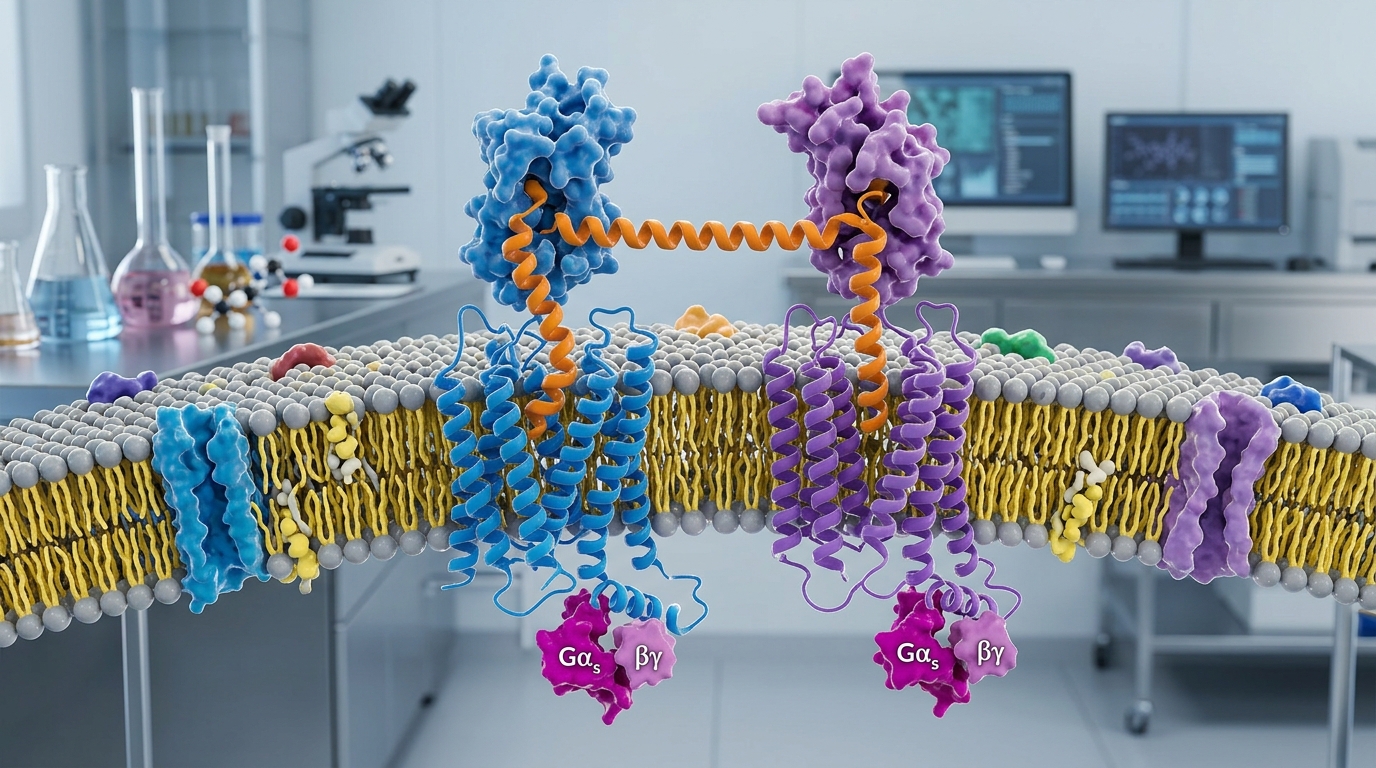
Tirzepatide is a synthetic peptide engineered as a unimolecular dual agonist of both the glucose-dependent insulinotropic polypeptide (GIP) receptor and the glucagon-like peptide-1 (GLP-1) receptor. Over the past decade, its physiological effects have been evaluated in two extensive phase 3 clinical programs: the SURPASS trials, which investigated glycemic control and metabolic outcomes in adults with type 2 diabetes mellitus, and the SURMOUNT trials, which evaluated chronic weight management in individuals with obesity or overweight. Together, these clinical programs represent one of the largest modern clinical datasets in metabolic medicine.
The Pharmacological Basis of Dual GIP/GLP-1 Incretin Agonism
Endogenous GLP-1 and GIP are gut-derived incretin hormones secreted in response to nutrient ingestion. Both stimulate insulin secretion in a glucose-dependent manner. However, they act on distinct receptors with complementary physiological functions. GLP-1 suppresses glucagon secretion during hyperglycemia, delays gastric emptying, and centrally reduces appetite. GIP acts on pancreatic islet cells, enhances lipid buffering in adipose tissue, and stimulates glucagon during hypoglycemia, providing a counter-regulatory safeguard.
Tirzepatide was designed to harness synergistic signaling by binding to both receptors. Structurally, it is a 39-amino-acid peptide with a C20 fatty diacid moiety that facilitates non-covalent binding to albumin, extending its terminal elimination half-life to approximately five days and permitting once-weekly subcutaneous administration.
The SURPASS Trial Program: Glycemic Control in Type 2 Diabetes
The SURPASS clinical development program evaluated the efficacy and safety of tirzepatide (at weekly maintenance doses of 5 mg, 10 mg, and 15 mg) across diverse baseline conditions, ranging from treatment-naïve patients to individuals requiring basal insulin regimens.
Monotherapy and Metformin Add-On
In the double-blind SURPASS-1 trial, tirzepatide monotherapy was tested against placebo in treatment-naïve adults. Over 40 weeks, participants receiving 5 mg, 10 mg, and 15 mg of tirzepatide experienced mean reductions in glycated hemoglobin (HbA1c) of 1.87%, 1.89%, and 2.07%, respectively, with up to 52% of individuals achieving normoglycemia (HbA1c < 5.7%).
Head-to-Head Comparison: SURPASS-2
The SURPASS-2 trial directly compared tirzepatide (5 mg, 10 mg, 15 mg) against the selective GLP-1 receptor agonist semaglutide (1.0 mg weekly) in 1,879 patients with inadequately controlled diabetes on background metformin. At 40 weeks, all three tirzepatide doses demonstrated statistical superiority over semaglutide in both HbA1c reduction (−2.01% to −2.30% vs. −1.86%) and mean body weight reduction (−7.6 kg to −11.2 kg vs. −5.7 kg).
Comparisons Against Basal Insulin and Cardiovascular Populations
Subsequent SURPASS trials benchmarked tirzepatide against titrated insulin therapies:
- SURPASS-3: In patients on metformin with or without SGLT2 inhibitors, tirzepatide achieved greater HbA1c reductions and substantial weight reduction compared to daily titrated insulin degludec at 52 weeks.
- SURPASS-4: Conducted in patients with type 2 diabetes and elevated cardiovascular risk, SURPASS-4 showed that tirzepatide lowered HbA1c by up to 2.58% at 52 weeks compared to 1.44% with titrated insulin glargine. It also reported favorable cardiovascular safety profiles, with no excess risk of major adverse cardiovascular events (MACE).
- SURPASS-5: Tirzepatide added to baseline insulin glargine yielded significant incremental glycemic reductions without escalating severe hypoglycemia.
The SURMOUNT Trial Program: Chronic Weight Management
Recognizing the substantial appetite-suppressive and metabolic effects of dual incretin agonism, the SURMOUNT program was initiated to evaluate tirzepatide specifically for weight reduction in adults with obesity or overweight with comorbidities.
SURMOUNT-1: Landmark 72-Week and 3-Year Evidence
The phase 3 SURMOUNT-1 trial enrolled 2,539 participants with a mean body mass index (BMI) of 38.0 kg/m² without type 2 diabetes. At 72 weeks, the mean weight reductions from baseline were 15.0% for the 5 mg dose, 19.5% for the 10 mg dose, and 20.9% for the 15 mg dose, compared to 3.1% in the placebo group.
A dedicated 3-year extension of SURMOUNT-1 evaluated participants with prediabetes over 176 weeks of treatment followed by a 17-week off-treatment period. At week 176, the 15 mg group maintained a 19.7% mean weight reduction. Furthermore, tirzepatide reduced the risk of progressing from prediabetes to type 2 diabetes by 93% compared to placebo (hazard ratio 0.07).
SURMOUNT-2, 3, 4, and SURMOUNT-5
Subsequent trials in the SURMOUNT series explored additional clinical scenarios:
- SURMOUNT-2: Evaluated individuals with both obesity and type 2 diabetes, demonstrating mean weight loss of up to 14.7% at 72 weeks (a population typically demonstrating attenuated weight loss compared to non-diabetic cohorts).
- SURMOUNT-3: Demonstrated that tirzepatide produced substantial additional weight loss (21.1%) following a successful 12-week intensive lifestyle intervention.
- SURMOUNT-4: Highlighted the necessity of continued therapy; participants randomized to switch to placebo at week 36 regained approximately half of their lost weight by week 88, whereas those maintained on tirzepatide achieved additional weight reduction.
- SURMOUNT-5: A direct head-to-head trial in obesity comparing tirzepatide against semaglutide (2.4 mg weekly), showing superior mean weight loss (−20.2% vs. −13.7%) at week 72.
Safety Profile and Tolerability
The safety and tolerability profile of tirzepatide across both trial series aligns closely with the known pharmacodynamic effects of incretin-based therapeutics.
Gastrointestinal Adverse Events
Gastrointestinal symptoms represent the vast majority of treatment-emergent adverse events. In both SURPASS and SURMOUNT studies, nausea, diarrhea, vomiting, and constipation were the most frequently reported side effects. These events were primarily mild to moderate in severity, occurred predominantly during the dose-escalation phases, and diminished over time with steady maintenance dosing.
Hypoglycemia Risk
Because the insulinotropic action of both GLP-1 and GIP is dependent on elevated blood glucose levels, the risk of clinically significant hypoglycemia with tirzepatide monotherapy is low. The incidence of hypoglycemia increased primarily when tirzepatide was co-administered with insulin secretagogues (such as sulfonylureas) or exogenous insulin.
Thyroid and Pancreatic Safety
Consistent with other incretin therapies, tirzepatide carries a boxed warning regarding the risk of thyroid C-cell tumors, a finding derived from preclinical rodent studies. In human trials, routine monitoring showed no significant imbalance in medullary thyroid carcinoma or pancreatitis compared to control groups, though acute pancreatitis remains a labeled precaution.
Evidence Limitations and Remaining Research Questions
While the SURPASS and SURMOUNT programs provide rigorous randomized evidence, several scientific questions remain under active exploration:
- Cardiovascular Outcomes: Long-term cardiovascular outcome trials (such as SURPASS-CVOT) are ongoing to determine whether dual agonism confers superior macrovascular risk reduction compared to GLP-1 mono-agonists.
- Body Composition: Further research is needed to determine the exact ratio of lean mass loss to fat mass loss during rapid, high-magnitude weight reduction.
- Treatment Durability and Discontinuation: Data from SURMOUNT-4 confirm that metabolic and weight benefits diminish significantly upon treatment cessation, underscoring questions regarding long-term therapy protocols and management of rebound weight gain.
Regulatory Status
Tirzepatide is approved by the U.S. Food and Drug Administration (FDA) as an adjunct to diet and exercise to improve glycemic control in adults with type 2 diabetes mellitus (marketed as Mounjaro) and for chronic weight management in adults with obesity or overweight with at least one weight-related condition (marketed as Zepbound). Investigational studies continue to evaluate its efficacy in heart failure with preserved ejection fraction (HFpEF), metabolic dysfunction-associated steatohepatitis (MASH), and obstructive sleep apnea.
Frequently Asked Questions
What distinguishes tirzepatide from selective GLP-1 receptor agonists?
Tirzepatide is a dual incretin receptor agonist that activates both GIP and GLP-1 receptors simultaneously, whereas selective GLP-1 receptor agonists activate only the GLP-1 receptor. This co-agonism is hypothesized to enhance insulin secretion and central energy balance regulation.
What were the primary findings of the SURPASS-2 trial?
SURPASS-2 showed that tirzepatide at 5 mg, 10 mg, and 15 mg weekly was superior to semaglutide 1.0 mg weekly in reducing HbA1c and body weight over 40 weeks in adults with type 2 diabetes on background metformin.
What happened after discontinuation in the SURMOUNT trials?
In SURMOUNT-4 and the off-treatment extension of SURMOUNT-1, participants who discontinued tirzepatide experienced substantial weight regain and a partial reversal of cardiometabolic improvements, indicating that weight management effects require continuous treatment.
Is tirzepatide FDA-approved?
Yes. Tirzepatide is FDA-approved for the treatment of type 2 diabetes and for chronic weight management in qualifying adults. Its use in other metabolic or cardiovascular indications remains investigational.
Research Summary
Current clinical evidence establishes tirzepatide as a potent dual GIP/GLP-1 receptor agonist capable of producing substantial reductions in HbA1c and body weight. Findings across the phase 3 SURPASS and SURMOUNT trial series demonstrate consistent superiority over placebo and several active comparators, including selective GLP-1 agonists and basal insulin. The safety profile consists primarily of transient, dose-dependent gastrointestinal events. However, long-term weight maintenance requires continuous therapy, and ongoing trials will further clarify its long-term cardiovascular and organ-specific outcomes.
References
- Frias JP, Davies MJ, Rosenstock J, et al. Tirzepatide versus Semaglutide Once Weekly in Patients with Type 2 Diabetes (SURPASS-2). New England Journal of Medicine. 2021;385(6):503-515.
- Rosenstock J, Wysham C, Frias JP, et al. Efficacy and safety of a novel dual GIP and GLP-1 receptor agonist tirzepatide in patients with type 2 diabetes (SURPASS-1). The Lancet. 2021;398(10295):143-155.
- Del Prato S, Kahn SE, Pavo I, et al. Tirzepatide versus insulin glargine in type 2 diabetes and increased cardiovascular risk (SURPASS-4). The Lancet. 2021;398(10313):1811-1824.
- Jastreboff AM, Aronne LJ, Ahmad NN, et al. Tirzepatide Once Weekly for the Treatment of Obesity (SURMOUNT-1). New England Journal of Medicine. 2022;387(3):205-216.
- Aronne LJ, Horn DB, le Roux CW, et al. Tirzepatide as Compared with Semaglutide for the Treatment of Obesity (SURMOUNT-5). New England Journal of Medicine. 2025;393(1):26-36.