Glutathione (L-gamma-glutamyl-L-cysteinylglycine, or GSH) is a tripeptide present in millimolar concentrations within nearly all mammalian cells. Acting as the primary intracellular antioxidant, enzyme cofactor, and Phase II conjugation substrate, it plays a foundational role in maintaining cellular redox balance and mitigating reactive oxygen species (ROS). However, the therapeutic and research application of exogenous glutathione has long been complicated by significant barriers to systemic delivery. Understanding glutathione bioavailability requires examining how the tripeptide is broken down, absorbed, distributed, and metabolized across various routes of administration.
The Pharmacokinetic Challenge of Glutathione Bioavailability
The primary hurdle in delivering intact glutathione into systemic circulation lies in the body’s enzymatic architecture. Glutathione consists of three amino acids linked by a standard peptide bond between cysteine and glycine, and an atypical gamma-peptide bond between glutamate and cysteine. While this gamma-glutamyl linkage confers resistance to most general intracellular proteases, it is readily recognized and cleaved on extracellular cell surfaces by the membrane-bound enzyme gamma-glutamyltransferase (GGT, also known as GGT1).
When oral glutathione enters the gastrointestinal tract, luminal peptidases and brush-border GGT rapidly hydrolyze the molecule into its constituent parts: cysteinylglycine and a gamma-glutamyl moiety, which are further cleaved into free cysteine, glycine, and glutamate. Consequently, native intact tripeptide absorption across the intestinal epithelium is historically estimated to be negligible (often reported below 1% in acute models), with systemic tissues relying instead on the uptake of constituent amino acids for subsequent intracellular de novo synthesis.
Oral Glutathione Bioavailability: Acute vs. Sustained Exposure
Early human trials using single, acute bolus doses of standard oral glutathione often failed to demonstrate statistically significant increases in plasma GSH concentrations. In these early protocols, ingested GSH was primarily catabolized in the gut lumen or cleared via hepatic first-pass metabolism before reaching systemic target tissues.
However, pharmacokinetic paradigms shifted with longer-term clinical investigations. A seminal randomized, double-blind, placebo-controlled trial by Richie et al. (2015) evaluated sustained daily oral glutathione administration (250 mg/day and 1,000 mg/day) over a six-month duration in 54 healthy adults. The findings demonstrated time- and dose-dependent increases in cellular GSH pools:
- Erythrocytes and Plasma: Glutathione concentrations in red blood cells and plasma increased by 30% to 35% at six months in the high-dose cohort.
- Buccal Mucosal Cells: Cellular stores in exfoliated buccal tissue increased by up to 260% in the high-dose group.
- Washout Kinetics: Following a one-month cessation of supplementation, tissue concentrations returned toward baseline, demonstrating reversible steady-state dynamics rather than permanent alteration of endogenous synthesis.
These data indicate that while acute oral administration may not produce pronounced plasma peaks, sustained daily supplementation can expand intracellular and tissue-specific reserves over multi-month timescales.
Advanced Delivery Formulations: Liposomes, Micelles, and Derivatives
To overcome luminal enzymatic degradation and enhance intact peptide absorption, researchers have developed various advanced formulation technologies.
Liposomal and Micellar Encapsulation
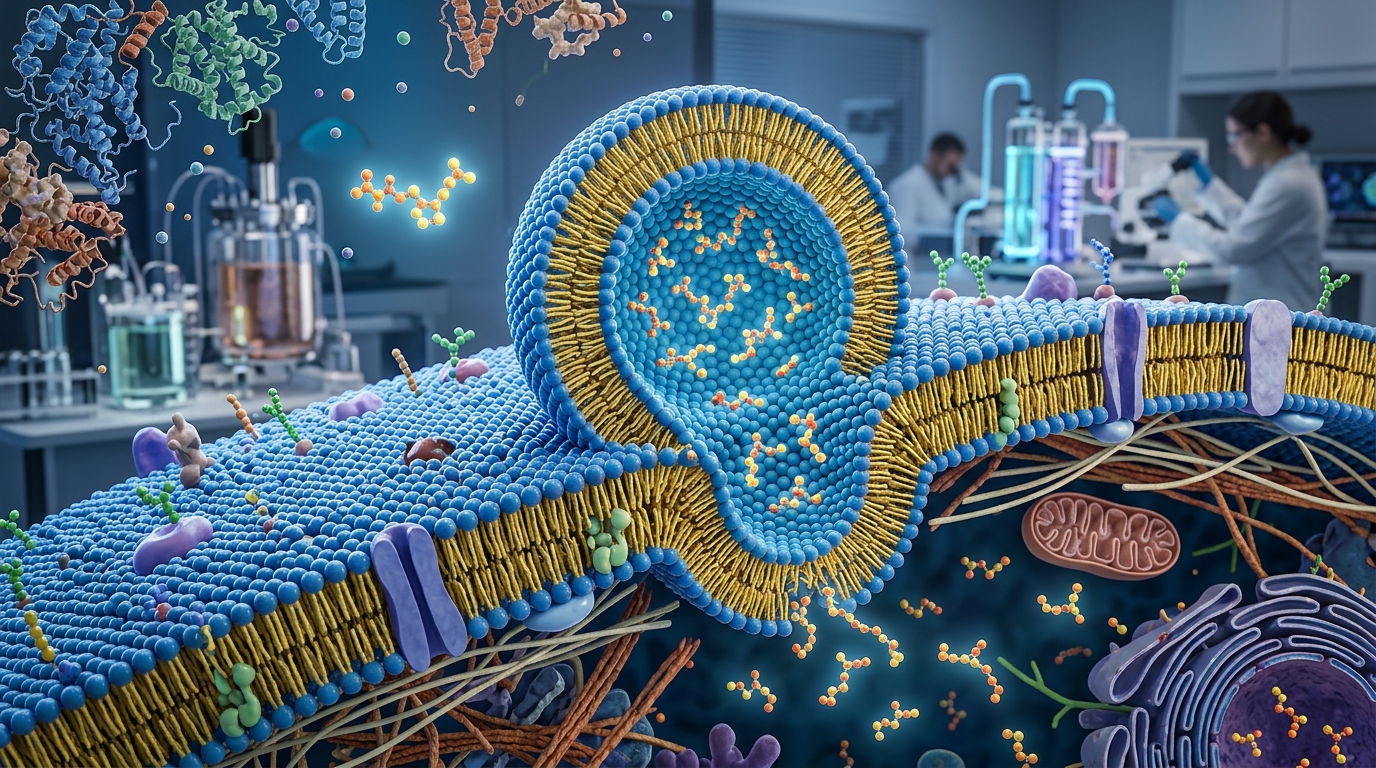
Liposomal glutathione encloses the hydrophilic tripeptide within a phospholipid bilayer vesicle, shielding the molecule from brush-border GGT and gastrointestinal acids. In a clinical trial published by Sinha et al. (2018), oral administration of liposomal glutathione elevated body stores of glutathione in plasma, whole blood, and peripheral blood mononuclear cells (PBMCs) within one to four weeks, accompanied by measurable reductions in systemic oxidative stress biomarkers. Similarly, recent pharmacokinetic evaluations of lipid micellar dispersions report increased baseline-adjusted area under the plasma concentration-time curve (AUC) relative to unformulated powder preparations.
S-Acetyl-Glutathione and Chemical Modifications
Another approach involves acetylating the free thiol group on the cysteine residue. S-acetyl-glutathione (SAG) is more lipophilic and less susceptible to premature oxidation or cleavage in the gut. Laboratory and animal models demonstrate that SAG traverses cell membranes via passive diffusion and is subsequently deacetylated by non-specific intracellular esterases, liberating free reduced GSH directly inside the cytoplasm.
Sublingual and Buccal Delivery
Sublingual dissolving tablets and orally dissolving films aim to bypass hepatic first-pass metabolism and gastrointestinal degradation altogether by utilizing the highly vascularized oral mucosa. Clinical pharmacokinetic studies show rapid systemic uptake through the non-keratinized sublingual epithelium, though absolute delivered mass remains constrained by the surface area and dissolution time of the mucosal matrix.
Non-Oral Routes: Intravenous and Inhalation Pharmacokinetics
Outside of oral delivery, systemic and localized pharmacokinetics vary widely depending on the chosen route.
Intravenous (IV) Pharmacokinetics
Intravenous injection provides 100% immediate systemic bioavailability, resulting in sharp spikes in plasma GSH. However, pharmacokinetic studies show that exogenous circulating glutathione has an exceptionally brief plasma half-life—approximately 10 to 15 minutes in humans. The molecule is rapidly cleared by renal brush-border GGT, metabolized by the liver, or filtered by the glomeruli. Furthermore, high plasma levels do not automatically translate to equivalent intracellular penetration across organs with tight barriers, such as the central nervous system, because cells lack a universal active transporter for the intact tripeptide across the blood-brain barrier.
Inhaled and Nebulized Delivery
Nebulized glutathione is utilized in research models investigating pulmonary pathologies, such as cystic fibrosis and chronic obstructive pulmonary disease (COPD). Pharmacokinetically, inhalation bypasses systemic circulation entirely to deliver high localized concentrations directly to the epithelial lining fluid of the lower respiratory tract, where extracellular oxidative stress is pronounced.
Precursor Supplementation vs. Intact Peptide Delivery
An ongoing question in redox pharmacology is whether administering intact glutathione offers pharmacokinetic advantages over supplying its rate-limiting biosynthetic precursor, N-acetylcysteine (NAC). Cellular GSH synthesis occurs in a two-step enzymatic process governed by glutamate-cysteine ligase (GCL) and glutathione synthetase (GSS). Under normal physiological conditions, intracellular cysteine availability is the rate-limiting factor.
- Precursor Approach (NAC): Readily crosses membranes, is deacetylated to cysteine, and fuels intracellular GCL activity. However, synthesis is constrained by feedback inhibition of GCL by high intracellular GSH levels.
- Intact Delivery (Liposomal/Derivatives): Bypasses the GCL feedback mechanism, potentially delivering antioxidant capacity to cells where biosynthetic enzymes are compromised or downregulated by severe oxidative stress.
Research Limitations and Analytical Complexities
Evaluating glutathione pharmacokinetics involves significant methodological challenges:
- Artifactual Oxidation: Reduced glutathione (GSH) rapidly oxidizes to glutathione disulfide (GSSG) ex vivo during sample collection, centrifugation, and storage, requiring rigorous acidification and derivatization protocols to avoid false measurements.
- Compartmental Disconnect: Plasma GSH represents less than 1% of total body pools. Measuring changes in circulating plasma does not necessarily reflect intracellular concentrations in erythrocytes, leukocytes, hepatocytes, or neuronal tissues.
- Sample Size Constraints: Many advanced formulation pharmacokinetic trials have featured small cohorts (often 10 to 50 subjects), requiring larger, multicenter trials to validate long-term functional and clinical outcomes.
Frequently Asked Questions
Why does standard oral glutathione have low acute bioavailability?
Standard oral glutathione is subject to rapid hydrolysis by digestive enzymes and gamma-glutamyltransferase (GGT) located along the intestinal brush border. This breakdown cleaves the peptide into its individual amino acids before significant amounts can enter the bloodstream intact.
How do liposomal formulations alter glutathione pharmacokinetics?
Liposomal formulations encapsulate glutathione in a protective lipid bilayer. This structure shields the tripeptide from luminal enzymatic degradation in the gut, facilitating intact cellular absorption and leading to higher measurable increases in erythrocyte and leukocyte stores compared to unencapsulated forms.
What is the plasma half-life of intravenous glutathione?
Following intravenous bolus administration, glutathione exhibits an exceptionally short elimination half-life of roughly 10 to 15 minutes due to rapid renal clearance, vascular catabolism, and tissue distribution.
Is glutathione FDA-approved as a medical drug?
In the United States, glutathione is not approved as an oral prescription drug for general antioxidant use. It is available as a dietary supplement ingredient and in specific injectable compounded forms under medical supervision for designated investigational or off-label clinical indications.
Research Summary
Current pharmacokinetics research demonstrates that while standard oral glutathione suffers from substantial gastrointestinal degradation and poor acute plasma bioavailability, long-term daily administration can progressively expand cellular and tissue stores. Advanced delivery strategies—including liposomal encapsulation, sublingual formulations, and S-acetylated derivatives—demonstrate enhanced systemic delivery and protection against enzymatic breakdown in clinical trials. Intravenous delivery achieves immediate plasma peaks but is limited by rapid elimination kinetics. Glutathione is not FDA-approved to treat or prevent disease, and optimal delivery strategies continue to be investigated across human and preclinical models.
References
- Richie, J. P., Nichenametla, S., Neidig, W., Calcagnotto, A., Haley, J. S., Schell, T. D., & Muscat, J. E. (2015). Randomized controlled trial of oral glutathione supplementation on body stores of glutathione. European Journal of Nutrition, 54(2), 251–263. https://doi.org/10.1007/s00394-014-0706-z
- Sinha, R., Sinha, I., Calcagnotto, A., Trushin, N., Haley, J. S., Schell, T. D., & Richie, J. P. (2018). Oral supplementation with liposomal glutathione elevates body stores of glutathione and markers of immune function. European Journal of Clinical Nutrition, 72(1), 105–111. https://doi.org/10.1038/ejcn.2017.132
- Solnier, J., Du, M., Zhang, Y., Chang, C., Sinha, R., Sinha, I., Calcagnotto, A., & Richie, J. P. (2026). A targeted metabolomic assessment of oral glutathione bioavailability and safety in humans: A randomized crossover clinical trial. Nutrients / PMC. PMC Article Link