Key Takeaways
- Pharmacological Class: Cagrilintide is a synthetic acylated peptide acting as a non-selective, long-acting dual amylin and calcitonin receptor agonist (DACRA).
- Mechanism of Action: It activates human amylin receptors (AMY1, AMY2, and AMY3) and calcitonin receptors (CTR), delaying gastric emptying, reducing postprandial glucagon secretion, and enhancing central satiety pathways in the brainstem and hypothalamus.
- Pharmacokinetic Design: Engineered with a fatty diacid side chain to enable reversible albumin binding, cagrilintide has an elimination half-life of approximately 160 to 195 hours, supporting once-weekly subcutaneous administration.
- Human Trial Findings: Monotherapy Phase 2 trials demonstrated dose-dependent weight reduction (up to 10.8% at 26 weeks), while Phase 3 trials (REDEFINE and REIMAGINE programs) demonstrate enhanced metabolic efficacy when co-administered with GLP-1 receptor agonists.
- Regulatory Status: Cagrilintide is an investigational compound not approved by the U.S. Food and Drug Administration (FDA) or international regulatory bodies as of 2026.
What Is Cagrilintide?
Cagrilintide (development code AM833) is an investigational, 37-amino-acid synthetic peptide engineered as a long-acting analog of native human amylin. Amylin is a 37-amino-acid neuroendocrine hormone naturally co-secreted with insulin by pancreatic beta cells in response to nutrient ingestion. In native physiology, amylin regulates meal-related glycemic excursions by slowing gastric emptying, suppressing excess postprandial glucagon secretion, and promoting homeostatic and hedonic satiety signals within the central nervous system.
The therapeutic application of native amylin and its early analog, pramlintide, was historically constrained by rapid renal clearance, an elimination half-life of less than one hour, physical instability in solution, and the requirement for multiple daily injections timed with meals. Cagrilintide was systematically engineered to address these structural and pharmacokinetic limitations, providing continuous receptor engagement with once-weekly administration.
Receptor Pharmacology and Mechanism of Action
Cagrilintide functions as a dual amylin and calcitonin receptor agonist (DACRA). Understanding its receptor pharmacology requires analyzing the heterodimeric nature of the amylin receptor family.
Receptor Composition and Signaling
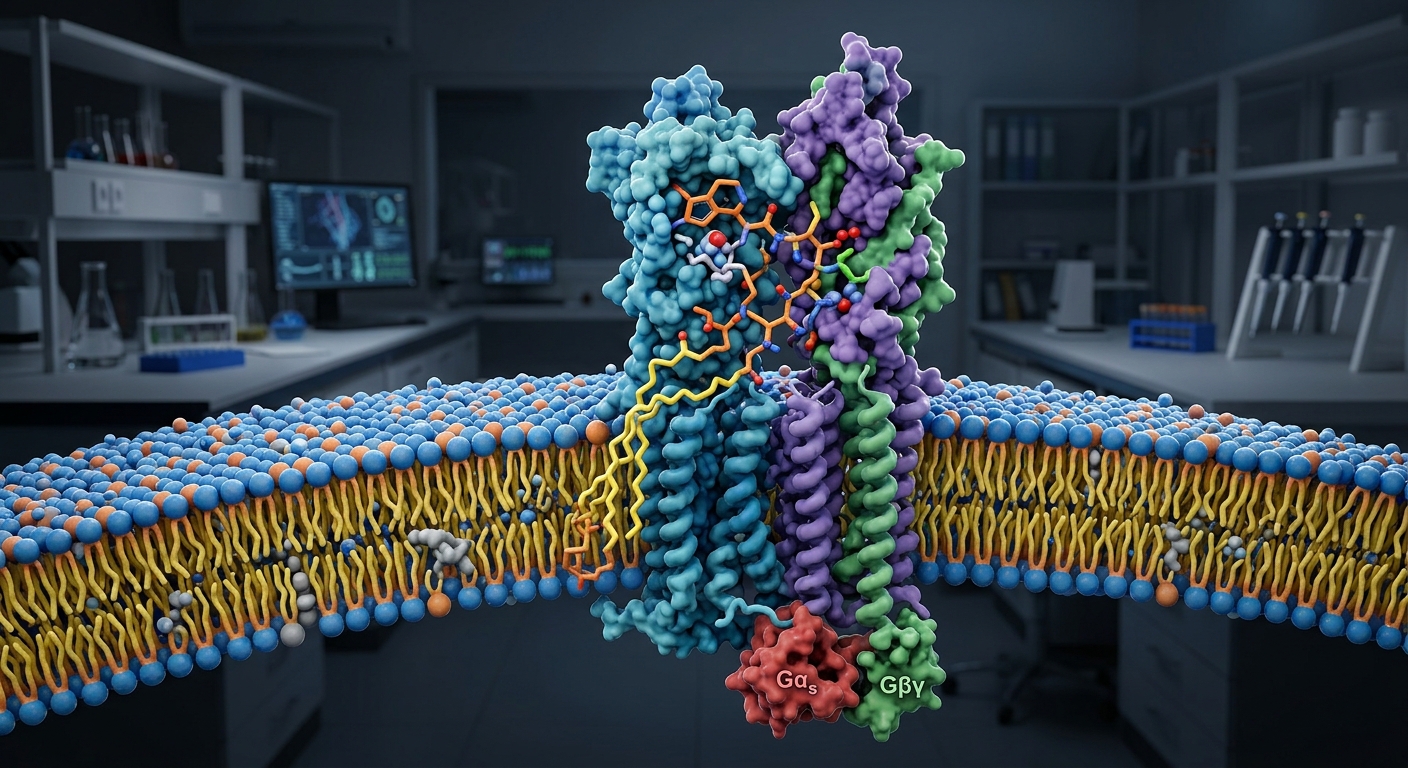
Amylin receptors are complex multi-protein structures. They consist of a core calcitonin receptor (CTR) paired with one of three receptor activity-modifying proteins (RAMP1, RAMP2, or RAMP3), forming the AMY1, AMY2, and AMY3 receptor subtypes, respectively. While native human amylin binds AMY receptors with high affinity but exhibits lower affinity for the uncomplexed CTR, cagrilintide acts as a potent, non-selective agonist across all three AMY subtypes as well as the isolated CTR core.
Receptor activation by cagrilintide triggers intracellular signaling via the G-protein alpha-s (Gαs) pathway, elevating cyclic adenosine monophosphate (cAMP) and engaging downstream protein kinase cascades. This activity stimulates distinct neuronal circuits in the area postrema and the nucleus tractus solitarii (NTS) in the hindbrain, which relay signals to the lateral parabrachial nucleus and hypothalamus to modulate appetite, satiation, and energy intake.
Pharmacokinetic Engineering
To overcome the short half-life of native peptides, cagrilintide incorporates amino acid substitutions that enhance chemical stability and prevent fibril formation. Crucially, it features a C20 fatty diacid moiety attached via a hydrophilic linker. This acyl modification facilitates strong, reversible binding to circulating serum albumin. Albumin binding minimizes glomerular filtration and shields the peptide from rapid enzymatic degradation, extending its human terminal elimination half-life to roughly 7 to 8 days (160–195 hours).
Human Clinical Trial Evidence
The clinical development of cagrilintide spans multiple phase 1, 2, and 3 clinical trials assessing both monotherapy and co-formulation paradigms.
Phase 2 Monotherapy (Lau et al., 2021)
A pivotal Phase 2 randomized, double-blind, placebo-controlled, dose-finding trial published in The Lancet evaluated cagrilintide monotherapy in 706 adults with overweight or obesity without diabetes. Participants were randomized to receive once-weekly subcutaneous cagrilintide (doses ranging from 0.3 mg to 4.5 mg), once-daily liraglutide (3.0 mg, an active comparator), or matching placebo over 26 weeks.
The trial demonstrated significant, dose-dependent body weight reductions across all active cagrilintide cohorts:
- Cagrilintide 4.5 mg: 10.8% mean weight reduction from baseline.
- Cagrilintide 2.4 mg: 9.7% mean weight reduction.
- Liraglutide 3.0 mg daily: 9.0% mean weight reduction.
- Placebo: 3.0% mean weight reduction.
Phase 1b Co-Administration Studies
Preclinical data indicated that the central pathways engaged by amylin receptor agonists are complementary to those stimulated by glucagon-like peptide-1 (GLP-1) receptor agonists. A 20-week, randomized Phase 1b trial (Enebo et al., The Lancet, 2021) examined the safety and pharmacodynamics of co-administering cagrilintide with semaglutide 2.4 mg. The combination exhibited synergistic reductions in body weight (up to 17.1% at 20 weeks) compared to single-agent arms, without unexpected synergistic adverse events, laying the clinical foundation for fixed-ratio combination development (CagriSema).
Phase 3 REDEFINE and REIMAGINE Programs
The Phase 3 development of cagrilintide has primarily centered on its co-formulation with semaglutide across large global clinical programs:
- REDEFINE 1: A 68-week trial in 3,417 adults with overweight or obesity without diabetes, comparing CagriSema (cagrilintide 2.4 mg + semaglutide 2.4 mg) against individual monotherapies and placebo. At week 68, CagriSema achieved an average body weight reduction of 20.4% to 22.7% (on-treatment estimand), outperforming semaglutide monotherapy (14.9%) and cagrilintide monotherapy (11.5%).
- REDEFINE 2: Evaluated the regimen in 1,200 adults with overweight or obesity and type 2 diabetes, demonstrating superior glycemic improvements and substantial weight reduction compared to placebo.
- REIMAGINE 2: Investigated glycemic control and weight management in adults with type 2 diabetes on background metformin, establishing statistically superior reductions in HbA1c (up to 1.91 percentage points) and body weight compared to semaglutide alone.
- REDEFINE 3: An ongoing, event-driven cardiovascular outcomes trial assessing major adverse cardiovascular events (MACE) in over 7,000 participants with established cardiovascular disease.
Safety Findings and Adverse Event Profile
Across human clinical trials, cagrilintide has shown an overall tolerability profile typical of gut-brain axis peptide therapeutics. The most frequently reported adverse events are gastrointestinal:
- Gastrointestinal Symptoms: Nausea, constipation, diarrhea, vomiting, and dyspepsia are the most prevalent events. These symptoms are predominantly mild to moderate in severity, dose-dependent, and most frequent during dose-escalation periods.
- Discontinuation Rates: Discontinuation due to adverse events in monotherapy and combination trials has remained in the low-to-moderate single-digit range, comparable to existing incretin therapies.
- Pancreatic and Thyroid Safety: Clinical trial data have not identified a significant, consistent safety signal for acute pancreatitis or medullary thyroid carcinoma, though surveillance remains ongoing across large Phase 3 programs.
Evidence Limitations and Research Uncertainties
Despite robust Phase 2 and Phase 3 data, several scientific uncertainties and limitations remain:
- Monotherapy Phase 3 Scarcity: The vast majority of Phase 3 clinical trial data evaluate cagrilintide in combination with semaglutide (CagriSema) rather than as an isolated monotherapy agent, leaving standalone long-term Phase 3 monotherapy data limited.
- Long-Term Cardiovascular Outcomes: While cardiovascular safety trials (REDEFINE 3) are active, final adjudicated long-term data on cardiovascular event reduction have not concluded.
- Body Composition Data: Comprehensive, large-scale dual-energy X-ray absorptiometry (DEXA) assessments evaluating the exact ratio of lean mass to fat mass loss across multi-year intervals remain limited to trial sub-studies.
- Rebound and Discontinuation Dynamics: Post-cessation kinetics, weight regain trajectories, and metabolic adaptation patterns following the discontinuation of chronic amylin receptor agonism require longer post-trial follow-up investigations.
Regulatory Status
As of 2026, cagrilintide is an investigational drug. It has not been approved by the U.S. FDA, the European Medicines Agency (EMA), or any other national regulatory body for the treatment of obesity, type 2 diabetes, or any other medical condition. It is not commercially available by prescription outside authorized clinical trials.
Frequently Asked Questions
How does cagrilintide differ from GLP-1 receptor agonists?
GLP-1 receptor agonists (such as semaglutide) bind the GLP-1 receptor to augment glucose-dependent insulin secretion and engage hypothalamic satiety circuits. Cagrilintide acts through an independent pathway: it is an amylin and calcitonin receptor agonist that suppresses postprandial glucagon, slows gastric motility, and stimulates distinct hindbrain neurocircuits.
Is cagrilintide available for medical use?
No. Cagrilintide is strictly an investigational peptide undergoing clinical evaluation. It is not FDA-approved, cannot be legally prescribed outside of formal clinical trials, and is not approved as an active pharmaceutical ingredient for commercial compounding.
Why is cagrilintide primarily studied in combination therapy?
Preclinical and clinical evidence indicates that the amylin pathway and the GLP-1 pathway operate through complementary neurohormonal mechanisms. Co-administering both agents produces greater weight reduction and glycemic improvements than either mechanism alone.
Research Summary
Cagrilintide is an investigational, long-acting dual amylin and calcitonin receptor agonist (DACRA) designed for once-weekly subcutaneous delivery. Robust human clinical evidence from Phase 1b, Phase 2, and large-scale Phase 3 trials (REDEFINE and REIMAGINE) confirms its efficacy in reducing body weight and improving glycemic parameters, both alone and co-administered with GLP-1 receptor agonists. Its safety profile is dominated by mild-to-moderate, dose-dependent gastrointestinal events. However, cagrilintide remains an investigational compound without FDA approval, with long-term cardiovascular outcome studies still underway.
References
- Lau DCW, Erichsen L, Francisco AM, et al. Once-weekly cagrilintide for weight management in people with overweight and obesity: a multicentre, randomised, double-blind, placebo-controlled and active-controlled, dose-finding phase 2 trial. The Lancet. 2021;398(10317):2160-2172.
- Enebo LB, Berthelsen KK, Kankam M, et al. Safety, tolerability, pharmacokinetics, and pharmacodynamics of concomitant administration of multiple doses of cagrilintide with semaglutide 2.4 mg for weight management: a randomised, controlled, phase 1b trial. The Lancet. 2021;397(10286):1736-1748.
- Novo Nordisk A/S. The Cardiovascular Safety and Efficacy of Cagrilintide in Combination With Semaglutide (CagriSema) in Participants With Established Cardiovascular Disease (REDEFINE 3). ClinicalTrials.gov ID: NCT05669755.