Key Takeaways
- Mitochondrial Origin: MOTS-c (mitochondrial open reading frame of the 12S rRNA type-c) is a 16-amino-acid peptide encoded within mitochondrial DNA that coordinates cellular energy homeostasis.
- Robust Preclinical Data: In rodent and cell culture models, exogenous MOTS-c activates AMP-activated protein kinase (AMPK), enhances glucose uptake, prevents diet-induced obesity, and improves physical performance.
- Limited Human Interventional Data: Most published human research consists of observational or correlative studies tracking endogenous plasma levels in response to exercise, aging, and metabolic disease.
- Translational Uncertainties: Rigorous, published phase II/III randomized controlled trials demonstrating efficacy and safety for synthetic MOTS-c administration in humans remain absent.
- Regulatory Status: MOTS-c is not approved by the U.S. Food and Drug Administration (FDA) for any clinical indication and remains an investigational research compound.
Understanding MOTS-c: A Mitochondrial-Derived Hormone
For decades, biological textbooks described mitochondrial DNA (mtDNA) as encoding a strict set of 13 proteins essential for oxidative phosphorylation, alongside 22 transfer RNAs and two ribosomal RNAs. That view changed significantly with the identification of short open reading frames (sORFs) within mtDNA capable of generating bioactive signaling molecules termed mitochondrial-derived peptides (MDPs).
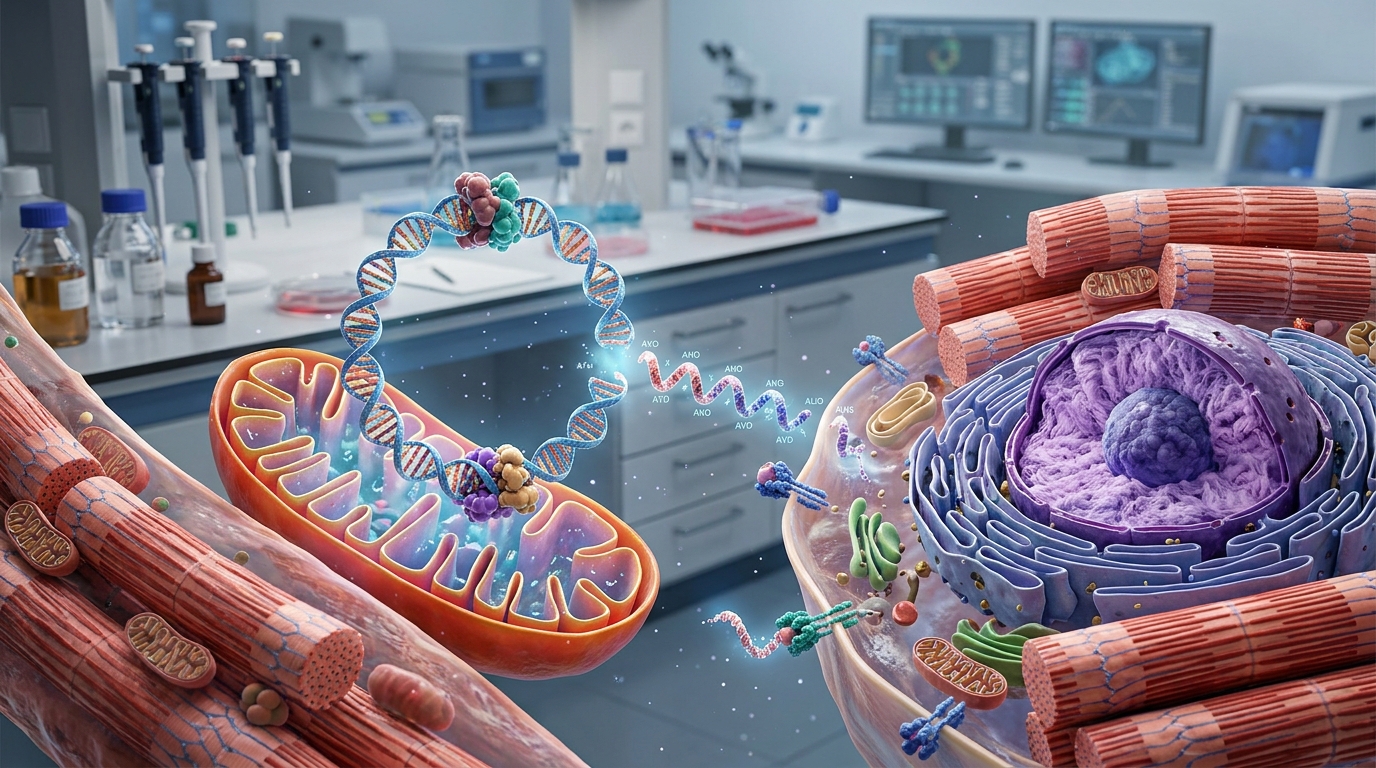
Discovered in 2015, MOTS-c is a 16-amino-acid peptide encoded within the mitochondrial 12S rRNA locus. Unlike classical hormones secreted by endocrine glands, MOTS-c represents a form of mitocellular communication. Under metabolic stress, intracellular MOTS-c can translocate to the cell nucleus to modulate nuclear gene expression, while circulating extracellular MOTS-c acts systemically on peripheral tissues such as skeletal muscle, liver, and adipose tissue.
While experimental findings have generated immense scientific excitement, evaluating the current state of MOTS-c preclinical vs human evidence is necessary to understand what the data truly supports versus what remains speculative.
Preclinical Evidence: Cell Culture and Animal Models
The vast majority of published literature demonstrating direct physiological benefits from exogenous MOTS-c administration originates from rodent models and in vitro cellular assays.
1. AMPK Activation and Glucose Homeostasis
In foundational rodent models, systemic administration of MOTS-c was shown to inhibit the folate-methionine cycle, leading to an accumulation of 5-aminoimidazole-4-carboxamide ribonucleotide (AICAR). AICAR acts as an endogenous activator of AMP-activated protein kinase (AMPK), a master regulator of cellular energy balance. In high-fat-diet-fed mice, daily MOTS-c injections reversed skeletal muscle insulin resistance, stimulated GLUT4 translocation, and normalized circulating glucose levels without causing overt hypoglycemia.
2. Obesity and Lipid Metabolism
Animal studies demonstrate that MOTS-c treatment prevents high-fat-diet-induced weight gain. Mice treated with MOTS-c exhibited increased systemic energy expenditure, reduced fat accumulation in white adipose tissue, and enhanced fatty acid beta-oxidation in skeletal muscle. Preclinical work also suggests a suppression of hepatic lipid accumulation, pointing to a protective role against non-alcoholic fatty liver disease (NAFLD) in rodents.
3. Physical Performance and Age-Related Decline
A seminal 2021 study evaluated the effect of MOTS-c administration across young, middle-aged, and elderly mice. Exogenous treatment significantly enhanced treadmill running capacity, grip strength, and metabolic flexibility across all age cohorts. In aged mice, MOTS-c administration restored physical performance markers toward levels observed in younger control animals, sparking research interest into its potential as an exercise mimetic.
Human Evidence: What the Clinical Literature Actually Shows
Translating preclinical rodent models into human medicine involves navigating distinct pharmacological, pharmacokinetic, and biological hurdles. Currently, human data surrounding MOTS-c is fundamentally different in methodology and scope from animal research.
1. Observational and Correlative Studies
Most published human studies analyze endogenous MOTS-c levels circulating in serum or expressed within skeletal muscle biopsies. Key clinical findings include:
- Exercise Induction: Acute bouts of high-intensity endurance and resistance exercise elicit rapid, transient increases in endogenous circulating MOTS-c and skeletal muscle expression in healthy human volunteers.
- Inverse Association with Metabolic Disease: Clinical cross-sectional studies show that individuals with obesity, insulin resistance, or type 2 diabetes mellitus often display significantly lower circulating baseline levels of MOTS-c compared to lean, healthy controls.
- Age-Related Decline: Endogenous plasma MOTS-c concentrations exhibit an inverse correlation with chronological age, mirroring the decline seen in mitochondrial bioenergetics.
- Cardiovascular Biomarkers: Lower circulating MOTS-c levels have been correlated with impaired endothelial function, coronary artery disease severity, and elevated inflammatory cytokines.
2. Interventional Clinical Trial Status
While observational studies establish biological relevance, they do not establish causal efficacy for exogenous synthetic peptide administration. Early-stage clinical development of MOTS-c analogues (such as CB4211) has explored safety, tolerability, and pharmacokinetics in early-phase trial settings for metabolic disorders. However, broad, peer-reviewed, phase II and phase III randomized controlled trials evaluating direct MOTS-c supplementation in humans remain lacking in the published scientific literature.
Key Differences: Preclinical Findings vs. Human Evidence
The distinction between established laboratory discoveries and human clinical certainty can be summarized as follows:
- Mechanism of Action: Preclinical research clearly outlines the folate-AICAR-AMPK axis in rodent muscle cells. In humans, endogenous correlations suggest similar metabolic pathways, but pharmacodynamic validation of exogenous doses remains incomplete.
- Administration and Dosing: Animal models rely on controlled intraperitoneal or subcutaneous injections at specific weight-adjusted dosages. Validated therapeutic dosing ranges, systemic bioavailability, and half-life parameters have not been clinically standardized in humans.
- Therapeutic Endpoints: Reversal of diet-induced obesity, enhanced exercise endurance, and lifespan extension are documented in mice. Human evidence is currently restricted to observational biomarker tracking and preliminary early-phase safety evaluations.
Safety Considerations and Research Limitations
Because comprehensive human clinical data is sparse, the clinical safety profile of exogenous MOTS-c remains unestablished. Preclinical animal studies report general tolerability at experimental doses, but animal models cannot reliably predict long-term human adverse events, immunogenicity risks, or chronic organ toxicity.
Furthermore, theoretical mechanisms that stimulate cellular proliferation or modulate folate pathways warrant careful evaluation in human oncological models before conclusions regarding chronic safety can be drawn.
Regulatory Status
MOTS-c is not approved by the U.S. FDA, European Medicines Agency (EMA), or any other national regulatory body for medical use, weight management, glycemic control, or athletic performance enhancement. Products marketed online as “research peptides” are intended solely for laboratory in vitro or animal experimentation. In competitive athletics, mitochondrial-derived peptides and metabolic modulators are strictly prohibited under World Anti-Doping Agency (WADA) regulations.
Frequently Asked Questions
Does endogenous MOTS-c act the same as synthetic MOTS-c?
Endogenous MOTS-c is produced natively within mitochondria in response to physiological cues like exercise. While synthetic MOTS-c matches the 16-amino-acid primary sequence, exogenous administration introduces different systemic concentrations, bioavailability profiles, and cellular uptake rates that require independent clinical verification.
Has MOTS-c been proven to cause weight loss in humans?
No. While rodent models demonstrate significant reductions in adiposity and prevention of diet-induced weight gain, controlled human clinical trials confirming weight-loss efficacy have not been published.
How is endogenous MOTS-c stimulated naturally?
Clinical studies demonstrate that structured physical exercise—particularly high-intensity interval training and resistance training—naturally elevates endogenous circulating MOTS-c concentrations in human plasma and skeletal muscle.
Why are there discrepancies between animal results and human trials?
Differences in metabolic rate, receptor distribution, peptide enzymatic degradation, and physiological complexity mean rodent responses do not automatically translate to human outcomes.
Research Summary
MOTS-c represents a fascinating discovery in mitochondrial endocrinology, proving that the mitochondrial genome produces bioactive peptides that coordinate systemic metabolic responses. Preclinical evidence strongly establishes that MOTS-c regulates AMPK signaling, improves insulin sensitivity, prevents obesity, and enhances physical capacity in rodent models. In contrast, current human evidence consists predominantly of observational correlations and endogenous biomarker studies. MOTS-c remains an investigational research compound without FDA approval, and robust randomized human trials are essential before definitive clinical conclusions can be made.
References
- Lee, C., et al. (2015). The mitochondrial-derived peptide MOTS-c promotes metabolic homeostasis and reduces obesity and insulin resistance. Cell Metabolism, 21(3), 443–454.
- Reynolds, J. C., et al. (2021). MOTS-c is an exercise-induced mitochondrial-encoded regulator of physical capacity and advanced aging. Nature Communications, 12(1), 470.
- Kim, K. H., et al. (2018). The mitochondrial-encoded peptide MOTS-c translocates to the nucleus to regulate nuclear gene expression in response to metabolic stress. Cell Metabolism, 28(3), 516–524.
- Zheng, Y., Wei, Z., & Wang, Z. (2023). MOTS-c: A promising mitochondrial-derived peptide for therapeutic exploitation. Frontiers in Endocrinology, 14, 1120533.
- Lee, C., et al. (2016). MOTS-c: A novel mitochondrial-derived peptide regulating muscle and fat metabolism. Free Radical Biology and Medicine, 100, 182–187.