Over the past decade, incretin mimetics targeting glucagon-like peptide-1 (GLP-1) and glucose-dependent insulinotropic polypeptide (GIP) receptors have reshaped metabolic medicine. However, clinical researchers continue exploring non-incretin pathways to provide alternative mechanisms of action, reduce gastrointestinal side effects, and optimize body composition. Among the most closely watched candidates in this category is eloralintide (development code LY3841136), a novel, selective, long-acting amylin receptor agonist currently undergoing clinical evaluation.
What Is Eloralintide?
Eloralintide is an investigational synthetic peptide analog of human amylin engineered for once-weekly subcutaneous administration. Amylin is a 37-amino-acid neuroendocrine hormone naturally co-secreted with insulin by pancreatic beta cells in response to nutrient intake. While native amylin has an elimination half-life of only several minutes and is prone to self-aggregation, eloralintide incorporates structural modifications—including conjugation to a fatty diacid side chain—that stabilize the peptide, extend circulating plasma half-life, and enable sustained receptor engagement.
Unlike first-generation amylin mimetics such as pramlintide, which require multiple daily injections before meals and carry dose-limiting adverse event profiles, eloralintide was developed with high selectivity for human amylin receptor subtypes while minimizing off-target activation of calcitonin receptors.
Mechanism of Action: How Eloralintide and Amylin Receptor Agonism Work
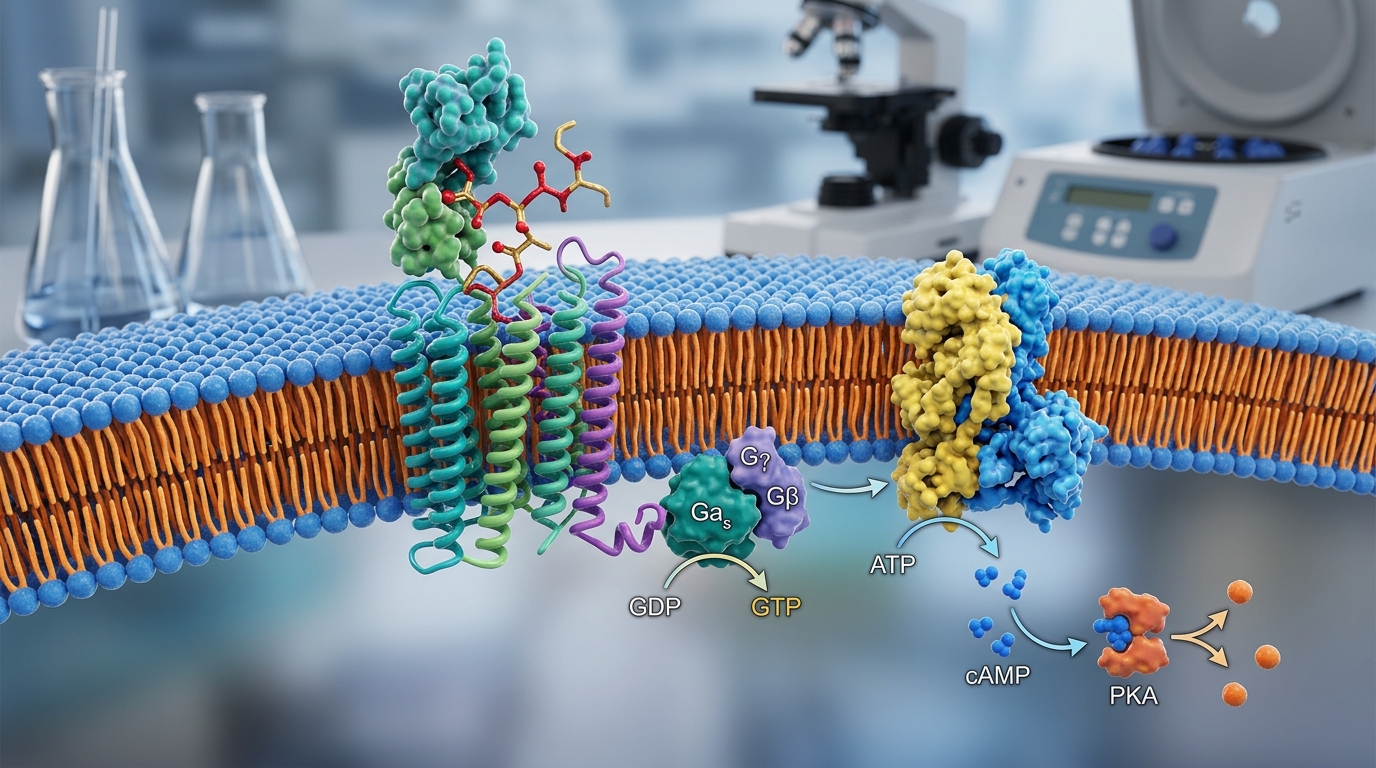
Amylin receptors are complex heterodimers consisting of the core calcitonin receptor (CTR) paired with one of three receptor activity-modifying proteins (RAMP1, RAMP2, or RAMP3), forming the receptor subtypes AMY1, AMY2, and AMY3, respectively. Eloralintide acts as a potent and selective agonist at these functional complexes, particularly AMY1 and AMY3.
When eloralintide activates central and peripheral amylin receptors, it triggers several complementary physiological pathways:
- Central Satiety Signaling: Eloralintide crosses or acts on circumventricular structures lacking a complete blood-brain barrier, notably the area postrema and the nucleus of the solitary tract in the hindbrain. This stimulation enhances neural signaling to hypothalamic appetite networks, suppressing hunger and reducing meal size.
- Modulation of Gastric Emptying: Agonism of amylin pathways slows postprandial gastric motility without completely arresting digestion, prolonging fullness sensations and smoothing postprandial glucose excursions.
- Glucagon Suppression: Amylin receptor activation suppresses inappropriate postprandial glucagon secretion by pancreatic alpha cells, preventing excess hepatic glucose release.
- Non-Incretin Metabolic Control: Unlike GLP-1 or GIP mimetics, amylin agonists do not stimulate endogenous insulin secretion, lowering the risk of therapy-induced hypoglycemia when used without insulin secretagogues.
Clinical Evidence: Phase 1 and Phase 2 Trial Findings
Early clinical characterization of eloralintide evaluated safety, pharmacokinetics, and preliminary efficacy across ascending doses in human participants. In initial proof-of-concept studies, once-weekly administration of eloralintide produced clear dose-dependent reductions in caloric intake and body weight with acceptable tolerability.
The Phase 2 Dose-Finding Trial
The landmark clinical evidence for eloralintide comes from a 48-week, multicenter, randomized, double-blind, placebo-controlled Phase 2 trial published in The Lancet. The study enrolled 263 adults with overweight or obesity and at least one weight-related comorbidity, excluding individuals with type 2 diabetes. Participants were assigned to receive once-weekly subcutaneous injections of placebo or eloralintide across fixed doses (1 mg, 3 mg, 6 mg, or 9 mg) or dose-escalation regimens (up to 9 mg).
Key findings from the 48-week Phase 2 trial include:
- Significant Weight Reduction: All active treatment arms achieved statistically significant, dose-dependent weight loss compared to placebo. Mean body weight reductions ranged from approximately 9.5% at lower doses to 20.1% at the highest 9 mg dose, compared to 0.4% in the placebo cohort.
- Efficacy of Dose Escalation: Stepwise titration regimens achieved weight loss comparable to highest fixed doses (around 20%) while noticeably smoothing gastrointestinal adaptation during drug initiation.
- Cardiometabolic Improvements: Active treatment was associated with favorable changes in waist circumference, blood pressure, fasting lipid profiles, and markers of systemic inflammation.
- Body Composition Quality: Sub-studies utilizing dual-energy X-ray absorptiometry (DEXA) indicated that the substantial weight reduction observed was predominantly attributable to reductions in fat mass rather than disproportionate lean mass loss.
Safety, Tolerability, and Differences from Incretin Agonists
Across Phase 1 and Phase 2 trials, eloralintide demonstrated a safety profile characterized mainly by mild-to-moderate adverse events. The most frequently reported events were gastrointestinal, including nausea, decreased appetite, and transient fatigue. Discontinuation rates due to adverse effects remained low, particularly when dose titration protocols were utilized.
Importantly, clinical and preclinical investigations highlight key physiological distinctions between selective amylin agonism and incretin therapies:
- Hemodynamic Profile: While GLP-1 receptor agonists frequently induce mild resting heart rate elevations (tachycardia) via sympathetic stimulation, clinical observations indicate that eloralintide does not produce this chronotropic increase and instead shows modest resting heart rate reductions, reflecting distinct autonomic pathway engagement.
- Selectivity vs. Pan-Calcitonin Agonists: Previous non-selective amylin mimetics exhibited strong cross-reactivity with calcitonin receptors, occasionally leading to bone turnover alterations or heightened nausea. Eloralintide’s engineered selectivity for AMY1/AMY3 over CTR reduces these off-target interactions.
Current Research Directions and Phase 3 Programs
Given the efficacy demonstrated in mid-stage trials, eloralintide has progressed into broad Phase 3 clinical evaluation programs, known collectively as the ENLIGHTEN program. Ongoing studies registered on ClinicalTrials.gov are investigating several clinical questions:
- ENLIGHTEN-1 (NCT07321886): Evaluating long-term efficacy and safety over 75 weeks (with a multi-year extension for participants with prediabetes) in individuals with obesity or overweight without type 2 diabetes.
- ENLIGHTEN-2 (NCT07282600): Investigating eloralintide for glycemic control and weight management in adults with type 2 diabetes.
- ENLIGHTEN-3: Exploring the effects of eloralintide in individuals with obesity-related obstructive sleep apnea.
- Combination Strategies: Phase 2 studies are actively examining eloralintide administered alongside GLP-1/GIP receptor agonists (such as tirzepatide) to assess potential synergistic weight-loss and metabolic effects.
Research Limitations and Evidence Gaps
While current clinical trial data are encouraging, several scientific limitations and evidence gaps remain:
- Lack of Long-Term Phase 3 Outcomes: Completed human data are primarily derived from Phase 1 and Phase 2 studies lasting up to 48 weeks. Definitive multi-year cardiovascular outcome trials and long-term durability data are not yet complete.
- Diverse Population Data: Broad efficacy in heterogeneous populations, such as individuals with advanced chronic kidney disease or non-alcoholic steatohepatitis (MASH), requires ongoing evaluation.
- Investigational Status: Eloralintide is an investigational peptide and has not been approved by the U.S. Food and Drug Administration (FDA) or any international regulatory authority. It is not commercially available for clinical prescription or human use outside of authorized clinical research protocols.
Frequently Asked Questions
Is eloralintide FDA-approved?
No. Eloralintide is strictly an investigational compound undergoing Phase 3 clinical trials. It does not have regulatory approval for obesity, diabetes, or any other therapeutic indication.
How does eloralintide differ from GLP-1 medications like semaglutide?
Eloralintide targets amylin receptors (AMY1/AMY3) rather than GLP-1 receptors. While both classes slow gastric emptying and promote satiety via the central nervous system, amylin agonists do not directly stimulate insulin secretion and exhibit distinct cardiovascular effects, such as avoiding the resting heart rate increases seen with GLP-1 agonists.
Can eloralintide be combined with incretin therapies?
Preclinical studies and exploratory Phase 2 clinical trials are investigating whether combining amylin receptor agonists with dual GLP-1/GIP agonists like tirzepatide produces additive weight loss or improved metabolic parameters. However, formal clinical safety and efficacy standards for combination regimens remain under active investigation.
What was the average weight loss observed in Phase 2 trials?
In the 48-week Phase 2 study published in The Lancet, participants receiving the highest dose regimen (9 mg once weekly) achieved a mean weight reduction of approximately 20% from baseline, compared to 0.4% in the placebo group.
References
- Billings LK, et al. Eloralintide, a selective amylin receptor agonist for the treatment of obesity: a 48-week phase 2, multicentre, double-blind, randomised, placebo-controlled trial. The Lancet. 2025;406(10515).
- Briere DA, et al. Eloralintide (LY3841136), a novel amylin receptor agonist for the treatment of obesity: From discovery to clinical proof of concept. Diabetes, Obesity and Metabolism. 2025.
- ClinicalTrials.gov. A Phase 3 Study of Eloralintide (LY3841136) in Participants With Obesity or Overweight Without Type 2 Diabetes (ENLIGHTEN-1). Identifier: NCT07321886.
- ClinicalTrials.gov. A Study of Eloralintide (LY3841136) in Participants With Obesity or Overweight, and Type 2 Diabetes (ENLIGHTEN-2). Identifier: NCT07282600.
Research Summary
Current clinical research supports eloralintide as an effective and selective once-weekly amylin receptor agonist capable of producing clinically meaningful body weight reductions of up to 20% in adults with obesity. The evidence base is anchored in controlled Phase 1 and Phase 2 randomized human clinical trials demonstrating favorable gastrointestinal tolerability and cardiometabolic improvements without inducing resting tachycardia. However, multi-year durability, organ-specific outcomes, and comparative combination profiles remain uncertain pending the completion of global Phase 3 clinical trials. Eloralintide remains an unapproved, investigational agent under active evaluation.