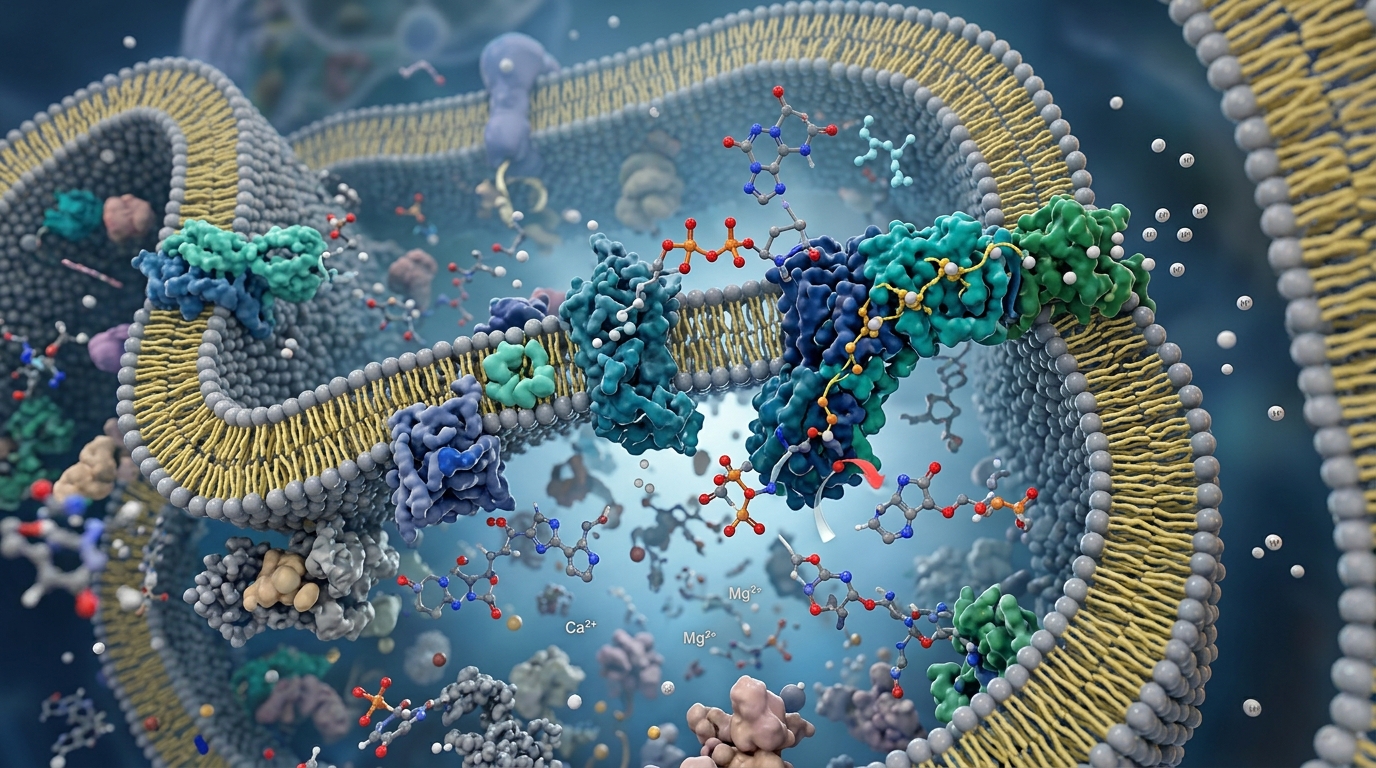
Nicotinamide adenine dinucleotide (NAD+) is an essential pyridine nucleotide coenzyme found in every living cell. It serves two distinct biological functions: acting as a vital hydride-accepting and donating electron carrier in core metabolic pathways such as glycolysis and oxidative phosphorylation, and functioning as a consumable substrate for regulatory enzymes including sirtuins (SIRT1–7), poly(ADP-ribose) polymerases (PARPs), and cyclic ADP-ribose synthases (CD38 and CD157) .
Preclinical models have consistently demonstrated that tissue NAD+ concentrations decline with advancing age and metabolic stress, and that restoring these levels can improve mitochondrial efficiency, mitigate oxidative damage, and extend healthspan in rodents. However, translating these findings to human physiology has proven more complex. This review examines what controlled NAD+ human clinical trials and pharmacokinetic studies have demonstrated to date, separating verifiable clinical endpoints from preliminary hypotheses.
Key Takeaways
- Biological Role: NAD+ is an indispensable cellular coenzyme that mediates redox reactions and powers enzymes responsible for cellular repair and gene expression .
- Bioavailability Distinctions: Intact NAD+ is a large, phosphorylated molecule with poor membrane permeability; oral bioavailability of parent NAD+ is minimal, whereas precursor molecules (such as nicotinamide riboside and nicotinamide mononucleotide) and parenteral administration elevate circulating concentrations .
- Clinical Efficacy Signals: Human trials demonstrate reliable increases in blood metabolite pools, but functional outcomes—including insulin sensitivity, muscle strength, and exercise performance—show mixed or modest results across diverse populations .
- Safety Profile: Short- to medium-term human trials report acceptable safety and tolerability across oral precursors and controlled intravenous infusions, though data on long-term outcomes remain limited .
- Regulatory Status: NAD+ is not approved by the U.S. Food and Drug Administration (FDA) to treat, prevent, or cure any age-related disease or chronic condition.
Human Pharmacokinetics and Administration Routes
A primary challenge in NAD+ therapeutics is delivery. Cellular membranes do not possess ubiquitous transporters for intact, extracellular phosphorylated NAD+. Consequently, researchers have evaluated three primary delivery methodologies in human participants: direct intravenous (IV) infusion, parenteral injections, and oral supplementation with biosynthetic precursors .
Direct Intravenous Infusion
Direct intravenous delivery introduces intact NAD+ into systemic circulation, bypassing gastrointestinal digestion. A landmark human pharmacokinetic pilot study evaluated changes in plasma and urine metabolites during a constant 6-hour IV infusion of NAD+ (administered at 3 μmol/min) in healthy male participants . The trial demonstrated that:
- During the first two hours of continuous infusion, intact NAD+ was rapidly cleared from the plasma compartment without an immediate rise in circulating NAD+ or its breakdown products, suggesting rapid tissue uptake or cellular ecto-enzyme degradation .
- By hour six, plasma levels of NAD+, nicotinamide (NAM), and methylnicotinamide increased significantly, accompanied by increased urinary excretion of methylnicotinamide .
- The infusion was clinically well-tolerated when administered at controlled flow rates, though transient flushing and chest or abdominal tightness were noted when infusion rates were accelerated.
Oral Precursor Supplementation
Because orally ingested NAD+ is extensively cleaved in the gastrointestinal tract into smaller metabolites like nicotinamide, oral clinical research has focused on salvage pathway precursors, principally Nicotinamide Riboside (NR) and Nicotinamide Mononucleotide (NMN) . Randomized controlled trials have confirmed that daily oral administration of 300 mg to 2,000 mg of NR or NMN reliably increases whole-blood NAD+ concentrations in a dose-dependent manner (ranging from 40% to over 140% above baseline) within one to two weeks of sustained intake .
What Current Human Trials Show by Endpoint
Systematic reviews of human randomized clinical trials have evaluated whether elevating NAD+ pools produces measurable physiological changes . Across published trials involving healthy older adults, overweight cohorts, and specific clinical populations, the evidence indicates clear biomarker elevations but heterogeneous functional outcomes .
Metabolic Function and Insulin Sensitivity
Preclinical studies suggested that replenishing NAD+ would reverse diet-induced insulin resistance and improve lipid profiles. In human trials, results have been more circumscribed. Some randomized trials in postmenopausal women with prediabetes and overweight phenotypes reported modest improvements in skeletal muscle insulin signaling and peripheral insulin sensitivity . However, larger trials in broader cohorts of middle-aged and older adults failed to demonstrate significant changes in fasting blood glucose, overall lipid panels, or whole-body insulin clearance compared to placebo .
Cardiovascular and Endothelial Parameters
Human trials investigating vascular function have assessed aortic stiffness (measured via carotid-femoral pulse wave velocity) and systolic blood pressure following chronic NAD+ precursor supplementation. Modest reductions in blood pressure and arterial stiffness have been observed in individuals with elevated baseline cardiovascular risk, but these effects have not consistently replicated in normotensive cohorts .
Physical Performance and Muscle Physiology
Despite robust mitochondrial activation in animal models, human trials evaluating exercise capacity, maximal oxygen uptake (VO2 max), and muscle strength have yielded conflicting data. While small cohorts of amateur athletes demonstrated modest enhancements in aerobic capacity during specific endurance tests, trials in healthy older adults generally show that NAD+ augmentation does not substitute for or meaningfully amplify the physiological adaptations elicited by regular physical exercise .
Neurodegenerative and Cognitive Conditions
Clinical trials exploring NAD+ and NADH supplementation in neurodegenerative conditions, such as Parkinson's disease and Alzheimer's disease, have primarily evaluated safety, cerebral bioenergetics via magnetic resonance spectroscopy (MRS), and exploratory symptom scores . While cerebral NAD+ metabolite uptake has been detected and mild improvements in fatigue or symptom ratings have been reported in small cohorts, large-scale, definitive Phase III clinical trials demonstrating disease-modifying efficacy are currently lacking .
Safety and Limitations in the Human Evidence
Human clinical trials published to date describe a favorable short-term safety profile for both oral precursors and controlled intravenous infusions . Reported adverse effects are typically mild and include transient nausea, flushing, lightheadedness, and gastrointestinal discomfort. Standard hematology, renal function, and hepatic biomarkers have generally remained within normal clinical limits during trial periods ranging from several days up to 12 weeks .
Nonetheless, important scientific and methodological limitations remain:
- Sample Size and Duration: Most completed human trials feature small sample sizes (typically 10 to 100 participants) and short treatment durations (2 to 12 weeks), limiting conclusions regarding long-term efficacy and safety .
- Surrogate Endpoints: Many studies measure circulating blood NAD+ concentrations as their primary endpoint rather than hard clinical outcomes, such as reduced incidence of chronic disease or validated functional longevity metrics .
- Tissue-Specific Distribution: Quantifying intracellular NAD+ concentrations in human internal organs (such as the brain, liver, and heart) remains methodologically challenging and poorly characterized following parenteral administration.
Regulatory and Investigational Status
NAD+ and its associated precursors occupy an evolving regulatory landscape. The compound is not approved by the U.S. FDA as a prescription drug for anti-aging, longevity, or metabolic optimization. In clinical and academic research, NAD+ and precursors are investigated under Investigational New Drug (IND) frameworks or dietary supplement safety evaluations depending on the specific formulation, route of delivery, and study design.
Frequently Asked Questions
Does raising blood NAD+ levels guarantee health improvements?
No. While clinical trials confirm that oral precursors and intravenous infusions increase circulating NAD+ and its metabolites, biomarker elevations do not automatically equate to improved physical function, reversed aging, or clinical disease resolution .
How do oral precursors compare to intravenous NAD+ in clinical trials?
Oral precursors such as NR and NMN have been evaluated in numerous double-blind, placebo-controlled trials demonstrating sustained elevation of whole-blood NAD+ pools . In contrast, direct IV NAD+ has fewer published human trials, consisting mainly of acute pharmacokinetic pilot studies and open-label tolerability evaluations .
Can intact NAD+ cross cell membranes directly?
Direct cellular uptake of intact NAD+ is limited because it is a bulky, charged molecule. Extracellular enzymes such as CD38 and CD73 generally cleave NAD+ into precursors (like nicotinamide or nicotinamide riboside) that enter the cell via specific transporters before being resynthesized into NAD+ via the intracellular salvage pathway .
Is NAD+ therapy approved by the FDA for anti-aging?
No. The FDA has not approved NAD+ or its precursors for anti-aging purposes, cognitive enhancement, or general wellness. Any clinical use in those contexts is considered investigational or unapproved.
Research Summary
Current clinical research demonstrates that NAD+ is a critical coenzyme in bioenergetics and cellular maintenance, and that blood metabolite pools can be reliably increased in humans via oral precursors or controlled intravenous infusions , . However, the robust healthspan and lifespan extensions observed in animal models have not yet translated into unequivocal, broad-spectrum functional improvements in human trials . Human evidence remains predominantly composed of small, short-duration Phase I/II trials, and the compound possesses no FDA approvals for therapeutic indications.
References
- Grant, R., et al. (2019). A Pilot Study Investigating Changes in the Human Plasma and Urine NAD+ Metabolome During a 6 Hour Intravenous Infusion of NAD+. Frontiers in Aging Neuroscience, 11, 257. https://www.frontiersin.org/articles/10.3389/fnagi.2019.00257/full
- Braidy, N., & Liu, Y. (2020). Pharmacology and Potential Implications of Nicotinamide Adenine Dinucleotide Precursors. Aging and Disease, 12(8), 1879–1897. https://www.ncbi.nlm.nih.gov/pmc/articles/PMC8612620/
- de Guingand, D. L., et al. (2024). Evaluation of safety and effectiveness of NAD in different clinical conditions: a systematic review. American Journal of Physiology – Endocrinology and Metabolism, 326(4), E417–E427. https://pubmed.ncbi.nlm.nih.gov/37971292/
- Freeberg, K. A., et al. (2023). Dietary Supplementation With NAD+-Boosting Compounds in Humans: Current Knowledge and Future Directions. The Journals of Gerontology: Series A, 78(12), 2209–2219. https://www.ncbi.nlm.nih.gov/pmc/articles/PMC10692436/