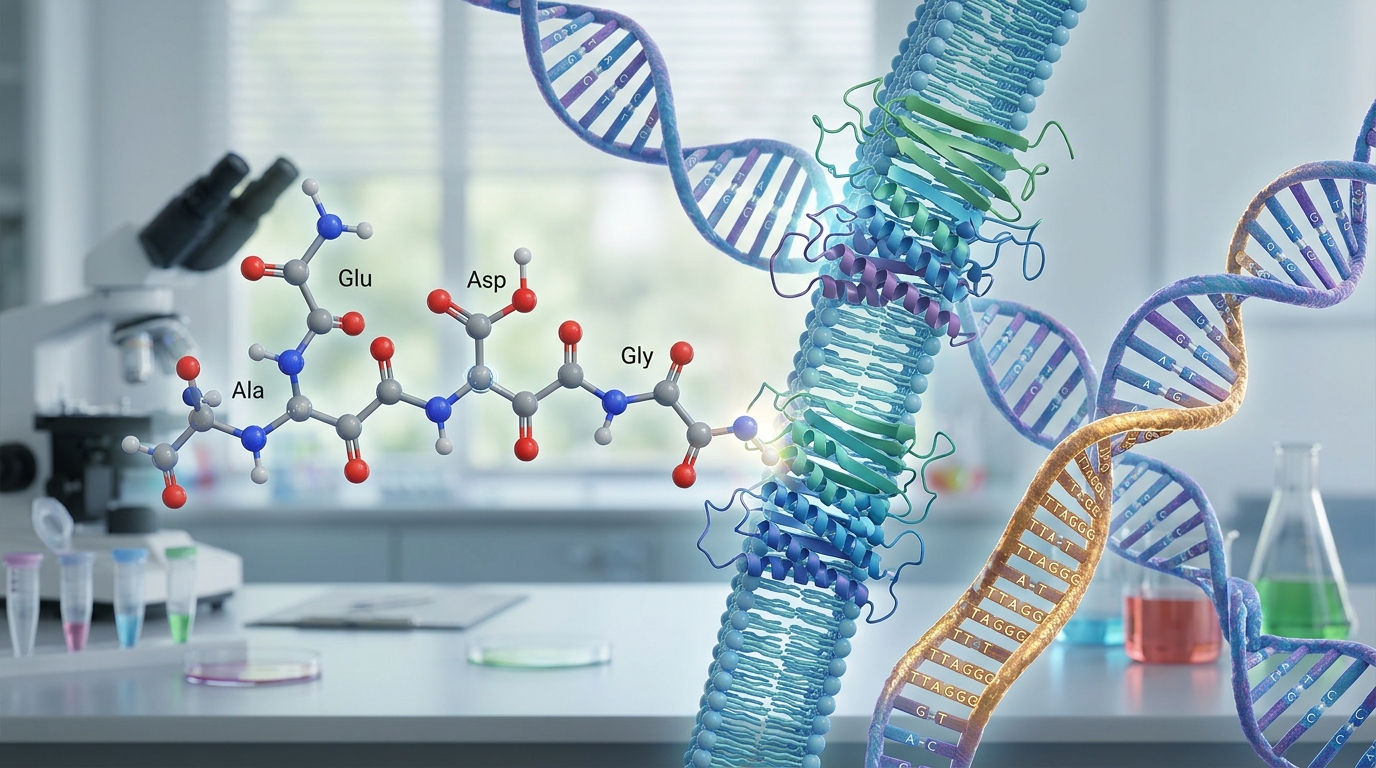
Scientific discussions surrounding peptide bioregulators and pineal physiology frequently conflate two related yet distinct compounds: Epitalon vs. Epithalamin. While both emerged from the biogerontology program initiated by Vladimir Khavinson and colleagues at the St. Petersburg Institute of Bioregulation and Gerontology, they represent fundamentally different chemical entities. Epithalamin is a complex, crude peptide extract derived from bovine pineal glands, whereas Epitalon (also spelled Epithalon) is a synthetic, four-amino-acid peptide (Ala-Glu-Asp-Gly or AEDG) designed to replicate the primary bioactive signaling sequence found within that glandular complex.
Distinguishing between synthetic Epitalon and glandular Epithalamin is essential for researchers evaluating preclinical assays, historical clinical datasets, and translational dosing models. This review outlines the structural, biochemical, pharmacological, and evidentiary distinctions between the synthetic tetrapeptide and the biological extract from which it was developed.
Chemical Structure and Compositional Differences
The primary distinction between the two compounds lies in molecular definition and manufacturing origin:
- Epithalamin: A biological extract obtained via acid-base fractionation of bovine pineal gland tissue. It constitutes a heterogeneous mixture of low-molecular-weight polypeptides, regulatory peptides, amino acids, and trace glandular fractions. Because it is derived from animal tissue, batch-to-batch variation occurs, and its precise composition cannot be standardized to a single active pharmaceutical ingredient.
- Epitalon (AEDG): A fully synthetic tetrapeptide with the defined sequence L-alanyl-L-glutamyl-L-aspartyl-glycine (molecular formula: C14H22N4O9, molecular weight: 390.35 g/mol). It contains no animal-derived material, is produced by standard solid-phase peptide synthesis, and yields a pure, chemically standardized molecule that can be verified by high-performance liquid chromatography (HPLC) and mass spectrometry.
Evolution of the Pineal Peptide Bioregulator Theory
During the 1970s and 1980s, Soviet researchers investigated the neuroendocrine hypothesis of aging, proposing that progressive involution of the pineal gland reduces systemic peptide signaling, leading to disrupted circadian rhythms, impaired immune surveillance, and accelerated senescence. Initial experiments utilized Epithalamin to test whether administering exogenous pineal-derived extracts could restore endocrine homeostasis in aged animal models.
While Epithalamin demonstrated reproducible biological activity in rodent and primate models, tissue extracts presented inherent challenges: potential immunological reactions to foreign bovine proteins, contamination risks, and regulatory hurdles in standardization. To overcome these limitations, researchers analyzed the amino acid profile of the active fractions in Epithalamin and synthesized ultra-short peptide sequences. This work identified the tetrapeptide Ala-Glu-Asp-Gly (Epitalon) as the minimal active sequence capable of mimicking the parent extract’s proposed epigenetic and endocrine effects.
Mechanisms of Action: Comparing Epitalon vs. Epithalamin
Preclinical studies have explored several overlapping and distinct cellular mechanisms for both substances:
1. Telomerase Induction and Chromatin Interaction
Epitalon has been extensively evaluated for its direct interaction with DNA and chromatin architecture. In vitro studies in human fetal fibroblasts and somatic cell cultures showed that Epitalon induces the expression of the human telomerase reverse transcriptase (hTERT) gene, leading to telomerase reactivation, telomere elongation, and extension of the Hayflick limit beyond standard replicative senescence. Independent in vitro assays have also noted alterations in heterochromatin decondensation in cultured lymphocytes from elderly donors. While Epithalamin demonstrated comparable downstream cellular preservation in animal tissue, specific mechanistic chromatin-binding models have centered primarily on the synthetic tetrapeptide sequence.
2. Pineal Function and Melatonin Biosynthesis
Both compounds influence pineal gland activity. In senescent non-human primates (Macaca mulatta) and aged rodents, administration of Epitalon or Epithalamin stimulated nighttime melatonin secretion and partially restored youthful circadian patterns of cortisol secretion. The proposed mechanism involves the upregulation of tryptophan hydroxylase and serotonin N-acetyltransferase, the rate-limiting enzymes in melatonin biosynthesis.
3. Antioxidant Enzyme Expression
Epithalamin was initially shown to reduce lipid peroxidation products and increase the activity of endogenous antioxidant enzymes, including superoxide dismutase (SOD) and glutathione peroxidase, in aging rats and Drosophila melanogaster. Subsequent evaluations of Epitalon confirmed similar antioxidant enzyme upregulation, suggesting that the AEDG sequence serves as the core molecular driver for these gene-regulatory actions.
Preclinical Longevity and Oncology Findings
Rodent survival assays form a significant portion of the historical literature for both preparations:
- Epithalamin in Animal Lifespan Studies: Multiple cohorts of mice and rats treated chronically with Epithalamin exhibited extensions in mean and maximum lifespan (often reported between 15% and 30%), alongside reductions in spontaneous tumor development.
- Epitalon in Controlled Assays: When tested in female C3H/He mice, Swiss mice, and senescence-accelerated models, synthetic Epitalon similarly decreased spontaneous mammary adenocarcinoma incidence and chromosomal aberrations while increasing maximum survival in specific cohorts. However, the magnitude of lifespan extension with Epitalon has varied substantially depending on animal strain, sex, age of initiation, and administration schedule.
The Clinical Research Gap and Translational Conflation
A frequent error in longevity reviews is attributing historical human data gathered with Epithalamin directly to synthetic Epitalon. During the 1990s and early 2000s, clinical cohort studies conducted in Russia investigated Epithalamin in elderly subjects with coronary artery disease and accelerated aging markers, reporting improvements in functional cardiovascular metrics and reduced long-term mortality.
However, modern, Western-standard randomized, double-blind, placebo-controlled human trials (RCTs) evaluating synthetic Epitalon remain sparse. Most human claims for Epitalon rely on extrapolation from these early Epithalamin observational trials. As a result, robust pharmacokinetic, pharmacodynamic, and clinical safety profiles for synthetic AEDG in human populations have not been formally established according to current International Council for Harmonisation (ICH) standards.
Translational Dosing Considerations
Because Epithalamin is a crude extract and Epitalon is a concentrated single tetrapeptide, their relative potencies differ dramatically. Comparative analyses in primate and insect models indicate that synthetic Epitalon is substantially more potent on a per-milligram basis than the crude pineal extract. Recent pharmacological analyses emphasize that applying milligram doses originally derived from crude Epithalamin studies directly to synthetic Epitalon represents a significant translational mismatch, with animal allometric scaling pointing instead to active ranges in the microgram tier.
Regulatory Status and Research Limitations
Epitalon is not approved by the U.S. Food and Drug Administration (FDA) or the European Medicines Agency (EMA) for the treatment, prevention, or diagnosis of any human medical condition. It is categorized strictly as an investigational research compound. Epithalamin is similarly unapproved in Western jurisdictions.
Significant research limitations include:
- Heavy reliance on studies originating from a single primary research institution.
- A lack of large-scale, multi-center, independent randomized controlled trials in humans.
- Unclear long-term systemic effects of sustained telomerase activation across diverse tissue types.
- Unregulated sourcing from chemical suppliers, which carries risks of varying purity, inaccurate labeling, and degradation products in non-clinical settings.
Frequently Asked Questions
Is Epitalon the same substance as Epithalamin?
No. Epitalon is a defined synthetic tetrapeptide (Ala-Glu-Asp-Gly), whereas Epithalamin is a crude, heterogeneous peptide extract harvested from bovine pineal glands.
Can findings from Epithalamin clinical trials be applied directly to Epitalon?
No. While Epitalon was designed based on the active components of Epithalamin, biological extracts contain multiple co-factors and peptides. Findings from historical Epithalamin trials cannot be assumed to represent the clinical pharmacology or safety of pure Epitalon without independent validation.
How do Epitalon and Epithalamin affect telomeres?
In vitro and cell culture studies show that synthetic Epitalon upregulates hTERT expression and stimulates telomerase enzyme activity, which elongates telomeres and delays cellular senescence in human fibroblast lines. Epithalamin demonstrates similar downstream protective effects in tissue models, largely attributed to its endogenous AEDG content.
Is Epitalon FDA-approved for anti-aging or longevity?
No. Epitalon does not have FDA approval for any therapeutic indication and is restricted to laboratory and preclinical research investigations.
References
- Overview of Epitalon—Highly Bioactive Pineal Tetrapeptide with Promising Properties (2025)
- Synthetic tetrapeptide epitalon restores disturbed neuroendocrine regulation in senescent monkeys (2001)
- Effects of pineal peptide preparation Epithalamin on free-radical processes in humans and animals (2002)
- Epitalon increases telomere length in human cell lines through telomerase upregulation or ALT activity (2025)
- PubChem Compound Summary: Epitalon (CID 219042)
Research Summary
Current evidence confirms that synthetic Epitalon (AEDG) and the glandular extract Epithalamin share biological targets related to pineal signaling, circadian melatonin restoration, and antioxidant enzyme regulation. Epitalon offers a defined, pure, and reproducible molecular structure that eliminates the biological variability and contamination risks of animal tissue extracts. However, while in vitro assays and rodent studies provide intriguing evidence regarding telomerase activation and cellular longevity, the vast majority of human data resides in historical observational studies of Epithalamin rather than synthetic Epitalon. Epitalon remains an unapproved investigational compound requiring standardized, independent clinical trials before its therapeutic efficacy and safety profile in humans can be verified.