Key Takeaways
- The Blood-Brain Barrier Barrier: As a hydrophilic cyclic nonapeptide, peripheral oxytocin exhibits very low baseline permeability across the mammalian blood-brain barrier (<0.1% under typical conditions).
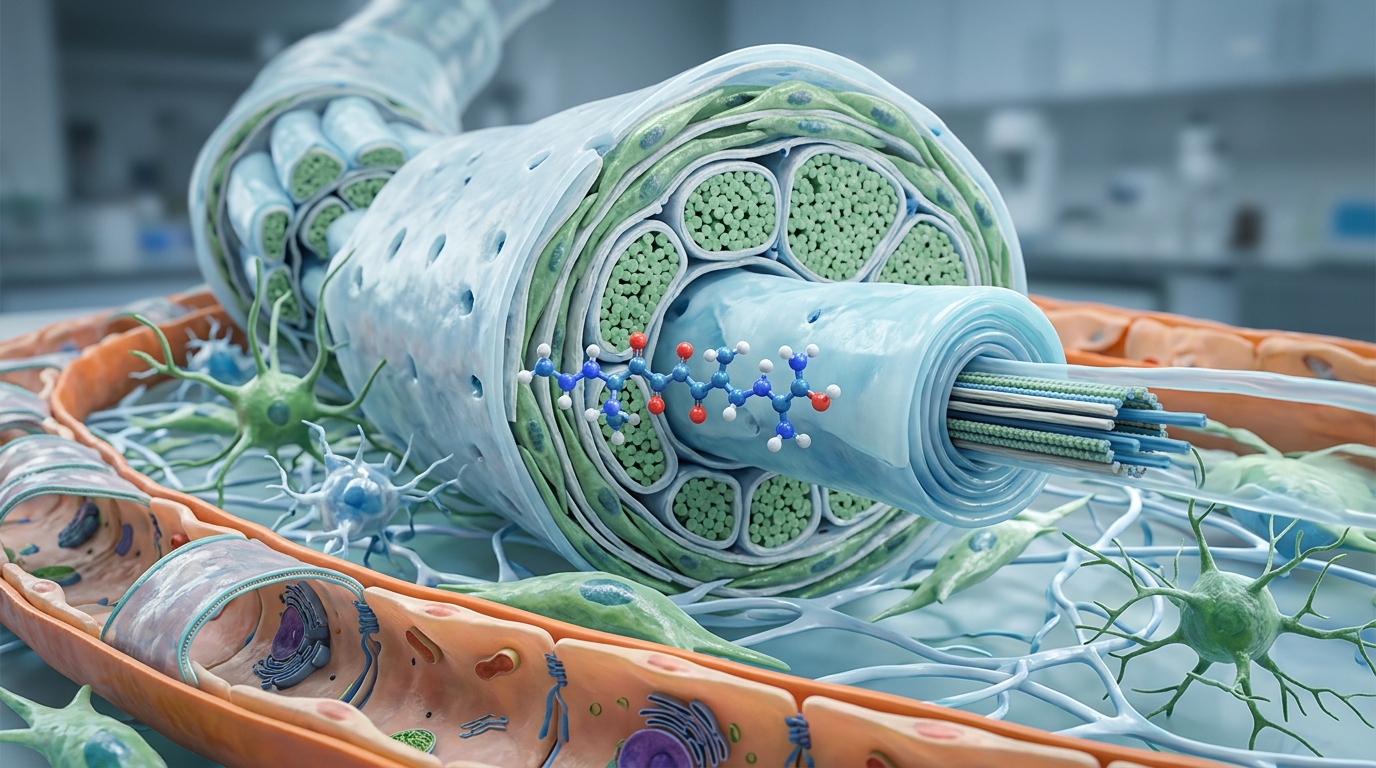
- Proposed Delivery Routes: Intranasal administration is studied to explore direct nose-to-brain transport along the perineural channels of the olfactory and trigeminal nerves, bypassing first-pass hepatic metabolism and the vascular endothelial barrier.
- Central Evidence: Elevated oxytocin levels in cerebrospinal fluid (CSF) have been documented in humans and primates post-nasal spray, but questions persist regarding the exact proportion of delivery attributable to direct axonal pathways versus systemic uptake.
- Methodological Challenges: Standard nasal delivery devices direct most drug volume to the respiratory epithelium rather than the olfactory cleft, leading to variable central bioavailability and inconsistent clinical findings.
The Challenge of Central Neuropeptide Delivery
Oxytocin is a hypothalamic neuropeptide composed of nine amino acids that acts both as a peripheral hormone and a central neuromodulator. In the central nervous system (CNS), oxytocin receptors are distributed across key neural hubs involved in emotional regulation, threat processing, social recognition, and stress modulation, including the amygdala, hypothalamus, and striatum.
Investigating the central effects of oxytocin in human subjects presents a significant pharmacological hurdle: oxytocin and the blood-brain barrier. The blood-brain barrier (BBB) consists of tight junctions between brain capillary endothelial cells, surrounded by astrocyte end-feet and pericytes. Large, hydrophilic peptides like oxytocin cannot freely diffuse across these vascular walls. Early animal tracing studies demonstrated that less than 0.1% of intravenously administered oxytocin crosses into brain parenchyma under baseline physiological conditions. Consequently, researchers turned toward intranasal administration as a non-invasive experimental delivery strategy to target central receptors.
Proposed Pathways: How Oxytocin Reaches the Central Nervous System
When administered into the nasal cavity, exogenous oxytocin is subject to multiple competing distribution pathways. Scientific literature highlights two primary theoretical routes: direct nose-to-brain transport and indirect peripheral absorption.
Direct Nose-to-Brain Transport via Olfactory and Trigeminal Pathways
Direct nose-to-brain transport relies on anatomical pathways connecting the nasal mucosa to the cranial vault. The upper nasal cavity contains the olfactory epithelium, where olfactory sensory neurons penetrate the cribriform plate to synapse directly within the olfactory bulb. Further posterior and lateral regions are innervated by ophthalmic and maxillary branches of the trigeminal nerve.
Molecules deposited on these specialized epithelia can move into the brain via two sub-mechanisms:
- Extracellular Perineural Transport: Diffusion through the bulk flow of fluid along ensheathed channels surrounding olfactory and trigeminal nerve fibers. This pathway is relatively fast, capable of transporting peptides within 30 to 90 minutes.
- Intracellular Axonal Transport: Internalization into sensory neurons via endocytosis followed by retrograde axonal transport. Because this process requires hours to days, it does not explain acute behavioral or neurochemical changes observed in short-term studies.
Systemic Absorption and the Blood-Brain Barrier
The vast majority of the nasal cavity is lined by highly vascularized respiratory mucosa. Oxytocin deposited here is absorbed rapidly into the general venous circulation. While traditional models assumed this circulating peptide could not reach central targets, recent research has explored specialized mechanisms such as receptor-mediated transcytosis involving the Receptor for Advanced Glycation Endproducts (RAGE). Furthermore, circulating oxytocin can act on peripheral vagal afferents or autonomic receptors, altering brain activity indirectly without crossing the blood-brain barrier.
Measuring Central Exposure: CSF Studies and Imaging Evidence
Quantifying whether intranasal delivery achieves meaningful central concentrations in living subjects has produced substantial debate within neurobiology.
Cerebrospinal Fluid (CSF) Sampling in Humans and Primates
Direct measurement of brain tissue concentrations in humans is not possible during routine pharmacology studies, making cerebrospinal fluid (CSF) the standard surrogate marker. Primate research published in PLoS ONE demonstrated that both standard nasal spray and specialized nebulizers elevated oxytocin concentrations in lumbar CSF within 40 minutes. Similarly, human clinical lumbar puncture trials have observed elevations in CSF oxytocin approximately 45 to 75 minutes post-administration.
However, methodological critics emphasize that elevated CSF levels do not guarantee uniform distribution into deep parenchymal structures like the amygdala or ventral tegmental area. The concentration gradients between subarachnoid CSF and deeper brain nuclei remain difficult to map precisely.
Functional Neuroimaging and PET Tracers
Functional magnetic resonance imaging (fMRI) studies consistently show that intranasal oxytocin alters regional cerebral blood flow (rCBF) and attenuates amygdala reactivity to social stimuli. Nonetheless, comparative investigations examining intravenous versus intranasal dosing demonstrate that some vascular and functional shifts correlate closely with plasma spikes, suggesting systemic contributions to observed imaging endpoints.
Recent first-in-human positron emission tomography (PET) trials utilizing nitrogen-13 labeled oxytocin ([13N]oxytocin) demonstrated rapid uptake in the nasal cavity followed by rapid clearance and low, variable tracer signals in the brain and trigeminal structures. These findings highlight the significant pharmacokinetic challenges involved in achieving consistent central biodistribution.
Methodological and Translational Research Limitations
Despite hundreds of published behavioral trials, results in translational neuroscience—especially in autism spectrum disorder and schizophrenia—have yielded mixed and conflicting findings. These inconsistencies are widely attributed to delivery-related variables:
Device Deposition and Anatomical Constraints
Standard pump-actuated nasal sprays are designed to treat local allergic conditions by depositing liquid in the anterior nasal valve. In humans, less than 2% to 5% of a conventional spray volume reaches the upper olfactory cleft. Anatomical variations, nasal cycle congestion, and conditions like allergic rhinitis substantially alter delivery efficiency. Novel delivery platforms—such as breath-powered devices and pressurized olfactory nebulizers—are under evaluation to improve targeted deposition.
Central Transport vs. Peripheral Signaling
Many behavioral trials fail to isolate central from peripheral mechanisms. When peripheral oxytocin receptors in the heart, vasculature, or gastrointestinal tract are activated, they alter autonomic tone, heart rate variability, and interoception. Because these somatic changes independently influence social perception and emotional processing, observed behavioral outcomes cannot be assumed to stem solely from direct central receptor binding.
Regulatory Status and Research Distinctions
Oxytocin is an FDA-approved prescription drug when administered intravenously or intramuscularly for specific obstetrical indications, such as the induction of labor and control of postpartum hemorrhage. Intranasal oxytocin formulations are not FDA-approved for any psychiatric, cognitive, or behavioral condition. All studies exploring intranasal oxytocin for neuropsychiatric indications remain investigational research.
Frequently Asked Questions
Does oxytocin cross the blood-brain barrier when injected into the bloodstream?
Intravenous or intramuscular oxytocin crosses the blood-brain barrier only in negligible amounts (generally estimated at <0.1% under baseline conditions). However, high systemic concentrations may engage specialized transport receptors or stimulate peripheral pathways that indirectly influence central neural circuits.
Why is intranasal administration preferred for oxytocin neuroscience research?
Intranasal delivery is used because it provides a non-invasive route with the theoretical potential to bypass the blood-brain barrier via extracellular channels alongside the olfactory and trigeminal nerves, directly connecting the nasal mucosa to the central nervous system.
Has intranasal oxytocin been proven to enter human brain tissue?
Human trials have confirmed that intranasal administration increases oxytocin concentrations in the cerebrospinal fluid (CSF). However, direct entry into specific deep brain parenchyma remains technically difficult to quantify in living humans, and imaging studies show substantial individual variability.
Are standard nasal sprays effective for nose-to-brain delivery?
Standard clinical nasal sprays are engineered for local mucosal coverage in the lower nasal passages. They deliver only a small fraction of their volume to the upper olfactory region, which is why researchers are actively investigating specialized nebulizers and powder delivery devices.
Research Summary
The blood-brain barrier presents a formidable physiological obstacle to central oxytocin delivery. While preclinical animal models and human CSF studies confirm that intranasal administration can increase neuropeptide concentrations within the central compartment, significant translational hurdles persist. Bioavailability is heavily constrained by nasal anatomy, clearance mechanisms, and device limitations, while peripheral signaling pathways complicate the interpretation of behavioral endpoints. Intranasal oxytocin remains an experimental tool in human research, with FDA approval limited strictly to peripheral obstetrical indications.
References
- Dal Monte, O., et al. (2014). CSF and blood oxytocin concentration changes following intranasal delivery in macaque. PLoS ONE, 9(8), e103677.
- Quintana, D. S., et al. (2018). Evidence for intranasal oxytocin delivery to the brain: recent advances and future perspectives. Therapeutic Delivery, 9(7), 515–525.
- Smith, K. E., et al. (2019). Oxytocin delivered nasally or intraperitoneally reaches the brain and plasma of normal and oxytocin knockout mice. Psychoneuroendocrinology, 107, 104-113.
- Bethlehem, R. A. I., et al. (2023). Sniffing oxytocin: Nose to brain or nose to blood? Neuroscience & Biobehavioral Reviews, 149, 105156.
- Borre, E. D., et al. (2025). First-in-human intranasal [13N]oxytocin PET: evaluation of feasibility, biodistribution, and radiation dosimetry. EJNMMI Radiopharmacy and Chemistry, 10(1), 7.