Key Takeaways
- Receptor targets: Sermorelin is a truncated analog of growth hormone-releasing hormone (GHRH 1-29) that selectively targets the pituitary GHRH receptor (GHRHR), whereas ghrelin mimetics (such as ipamorelin or GHRP-6) bind the growth hormone secretagogue receptor type 1a (GHS-R1a).
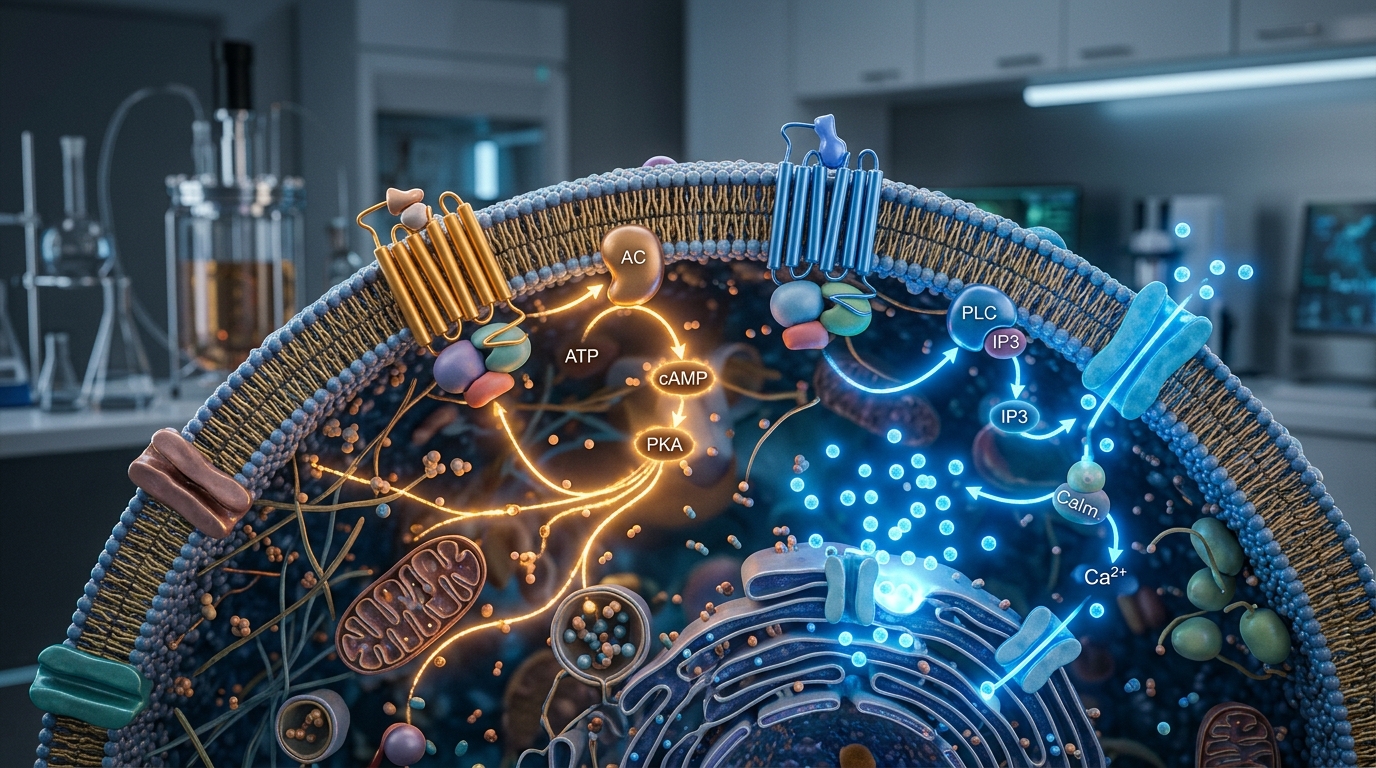
- Intracellular signaling: Sermorelin primarily couples to the Gαs protein subunit, activating adenylyl cyclase and raising cyclic adenosine monophosphate (cAMP). Ghrelin mimetics predominantly couple to Gαq/11, activating phospholipase C (PLC) and mobilizing intracellular calcium.
- Endocrine selectivity: Sermorelin stimulates growth hormone release with strict somatotroph selectivity. In contrast, certain ghrelin mimetics can cross-activate other pituitary pathways, leading to collateral elevations in prolactin or adrenocorticotropic hormone (ACTH).
- Feedback preservation: Sermorelin remains fully sensitive to inhibitory somatostatin tone and peripheral insulin-like growth factor-1 (IGF-1) negative feedback, limiting supra-physiological hormone accumulation.
- Research synergy: Because cAMP and calcium signaling pathways converge downstream, co-stimulation of GHRHR and GHS-R1a in preclinical models produces synergistic, supra-additive growth hormone secretion.
The Somatotropic Axis: Dual Pathways of Growth Hormone Release
In evaluating sermorelin vs ghrelin mimetics, researchers encounter two distinct pharmacodynamic approaches to stimulating endogenous growth hormone (GH) secretion. The hypothalamic-pituitary-somatotropic axis relies on coordinated inputs to govern the production and episodic pulsatility of GH. Endogenous GHRH, secreted by the arcuate and ventromedial nuclei of the hypothalamus, provides the primary stimulus for GH synthesis and baseline release. Concurrently, ghrelin—an acylated peptide primarily synthesized in gastric oxyntic glands—acts centrally and peripherally to amplify secretory pulse amplitude.
Exogenous GH replacement delivers recombinant hormone directly, which overrides hypothalamic feedback and suppresses native somatotroph activity. In contrast, secretagogues aim to provoke pituitary output from within the endocrine network. Sermorelin represents the standard pharmacological model for direct GHRH receptor agonism, while ghrelin receptor agonists (often termed growth hormone secretagogues, or GHSs) emulate the metabolic hormone ghrelin. Although both classes achieve elevated serum GH and subsequent hepatic production of IGF-1, their underlying pharmacology, second-messenger dynamics, and regulatory checkpoints diverge fundamentally.
Sermorelin Receptor Pharmacology: GHRHR and cAMP Cascades
Sermorelin is a synthetic peptide comprising the first 29 amino acids of the native 44-amino-acid human GHRH peptide. Early structure-activity relationship studies demonstrated that this amino-terminal fragment (GHRH 1-29) retains complete receptor affinity and biological potency relative to the full-length hormone. Sermorelin targets the growth hormone-releasing hormone receptor, a class B1 secretin-like G-protein-coupled receptor (GPCR) expressed almost exclusively on the plasma membrane of anterior pituitary somatotrophs.
Upon Sermorelin binding, GHRHR undergoes a conformational transition that couples primarily to the stimulatory heterotrimeric G protein (Gαs). The activated Gαs subunit stimulates adenylyl cyclase (predominantly isoforms AC-III and AC-IX in somatotrophs), catalyzing the conversion of adenosine triphosphate (ATP) to cyclic adenosine monophosphate (cAMP). This surge in intracellular cAMP initiates a well-defined molecular sequence:
- Protein Kinase A activation: Elevated cAMP binds to regulatory subunits of protein kinase A (PKA), releasing its active catalytic subunits.
- Transcriptional upregulation: Catalytic PKA translocates to the nucleus to phosphorylate cAMP response element-binding protein (CREB) at Ser133. Phosphorylated CREB recruits CREB-binding protein (CBP/p300) to transactivate the GH1 and POU1F1 (Pit-1) promoters, replenishing intracellular stores of growth hormone.
- Vesicle exocytosis: PKA phosphorylates and opens voltage-gated L-type calcium channels (Cav1.2 and Cav1.3), causing extracellular calcium influx that triggers the exocytosis of preformed GH secretory granules.
Because Sermorelin couples to adenylyl cyclase, its activity maintains both the synthesis of new hormone and the immediate exocytosis of stored peptide, ensuring that somatotroph granular reserves are preserved over repeated stimulation.
Ghrelin Mimetic Signaling: GHS-R1a and Calcium Mobilization
Ghrelin mimetics, which encompass both peptide compounds (such as ipamorelin, GHRP-2, and GHRP-6) and non-peptide molecules (such as MK-677/ibutamoren), act on a structurally and functionally distinct target: the growth hormone secretagogue receptor type 1a (GHS-R1a). GHS-R1a belongs to the class A rhodopsin-like GPCR superfamily and exhibits high constitutive basal signaling activity.
Unlike the Gαs-driven cascade of Sermorelin, canonical GHS-R1a activation proceeds primarily via the Gαq/11 protein pathway:
- Phospholipase C activation: Ligand binding to GHS-R1a activates phospholipase C beta (PLC-β), which hydrolyzes membrane phosphatidylinositol 4,5-bisphosphate (PIP2) into two second messengers: inositol 1,4,5-trisphosphate (IP3) and diacylglycerol (DAG).
- Endoplasmic reticulum calcium release: IP3 binds to IP3 receptor channels on the endoplasmic reticulum, stimulating the immediate mobilization of stored calcium into the cytoplasm.
- Protein Kinase C activation: Concurrent generation of DAG and elevated free calcium activates protein kinase C (PKC), which modulates membrane potassium channels, depolarizes the somatotroph membrane, and further facilitates calcium entry.
The primary outcome of this Gαq/11-PLC-IP3 cascade is a rapid, transient spike in cytosolic free calcium. While this mechanism potently drives vesicle exocytosis and generates prominent secretory spikes, it does not directly stimulate the cAMP-dependent CREB transcriptional machinery in the same manner as Sermorelin.
Endocrine Selectivity and Pituitary Spillover
A critical distinction between Sermorelin and ghrelin mimetics lies in their systemic endocrine selectivity. Because GHRH receptors are localized almost exclusively to somatotroph cells in the anterior pituitary, Sermorelin acts with narrow biological specificity. Extensive clinical data have established that Sermorelin administration does not induce significant elevations in circulating adrenocorticotropic hormone (ACTH), cortisol, prolactin, luteinizing hormone (LH), or thyroid-stimulating hormone (TSH).
In contrast, GHS-R1a is distributed widely across multiple hypothalamic nuclei, pituitary cell populations, the limbic system, and the gastrointestinal tract. Consequently, the endocrine profile of ghrelin mimetics varies significantly by molecule:
- First- and second-generation GHRPs: Peptides like GHRP-6 and GHRP-2 demonstrate noticeable receptor cross-talk, driving dose-dependent releases of prolactin and ACTH/cortisol alongside GH.
- Appetite and metabolic regulation: Ghrelin receptors in the hypothalamic arcuate nucleus stimulate neuropeptide Y (NPY) and agouti-related peptide (AgRP) neurons. While Sermorelin has no direct orexigenic effect, ghrelin agonists commonly stimulate acute hyperphagia and alterations in glucose utilization.
- Selective third-generation mimetics: Certain engineered peptides, such as ipamorelin, exhibit higher binding selectivity for somatotroph GH release without significant prolactin or ACTH elevations in animal models, though they retain GHS-R1a pharmacodynamics rather than GHRHR engagement.
Somatostatin Sensitivity and Negative Feedback
The endocrine safety of growth hormone secretagogues depends heavily on their interaction with somatostatin (growth hormone-inhibiting hormone, SST). Somatostatin acts through somatostatin receptors (chiefly SSTR2 and SSTR5 on somatotrophs) coupled to inhibitory Gαi proteins. When active, Gαi inhibits adenylyl cyclase, suppresses cAMP formation, and opens inward rectifying potassium channels to hyperpolarize the cell.
Sermorelin functions entirely downstream of hypothalamic rhythmicity and remains subordinate to somatostatinergic tone. When somatostatin levels are high, Gαi signaling directly counteracts Sermorelin-mediated Gαs adenylyl cyclase activation. Furthermore, circulating IGF-1 feeds back on the hypothalamus to elevate somatostatin output. This intact biological loop prevents Sermorelin from inducing uncontrolled, continuous GH spikes.
Ghrelin mimetics interact differently with somatostatinergic inhibition. Preclinical research indicates that GHS-R1a agonists can partially overcome or blunt somatostatin tone at the pituitary level. Because the Gαq/11-mediated IP3 calcium release pathway is independent of adenylyl cyclase, ghrelin mimetics can trigger GH exocytosis even when somatostatin is partially suppressing the cAMP pathway. Additionally, some ghrelin mimetics act within the hypothalamus to inhibit local somatostatin release, effectively disinhibiting the pituitary.
Signaling Convergence: Preclinical Evidence for Synergism
Because Sermorelin and ghrelin mimetics activate non-overlapping receptor families and distinct G-protein cascades, their simultaneous presence in laboratory models produces functional synergy. In vitro studies on isolated rodent and bovine somatotrophs demonstrated that co-administering a GHRH agonist with a GHS-R1a ligand yields a GH secretory burst substantially greater than the additive sum of each agent administered alone.
The molecular basis of this synergism involves cooperative intracellular cross-talk:
- cAMP-dependent PKA activation from Sermorelin sensitizes intracellular calcium channels and primes secretory vesicle docking proteins (such as SNAP-25 and syntaxin).
- Concurrently, IP3-driven calcium release from GHS-R1a activation triggers instantaneous membrane fusion of those primed vesicles.
- Some heterologous expression models suggest that GHRHR and GHS-R1a may physically heterodimerize, modulating receptor internalization rates and altering downstream arrestin recruitment.
While this synergy makes combination protocols an active subject of preclinical and observational study, it also complicates pharmacokinetic control and increases the risk of receptor desensitization if exposure is sustained.
Research Limitations and Clinical Evidence Gaps
Despite deep mechanistic insights, substantial limitations characterize the comparative literature on these compounds. A notable portion of comparative signaling data originates from in vitro cell lines, rodent pituitary fragments, or heterologous expression models that may not fully reflect human somatotroph physiology.
Direct head-to-head randomized controlled trials comparing Sermorelin monotherapy to ghrelin mimetics across uniform cohorts remain sparse. Most human clinical investigations of Sermorelin date back to its pediatric diagnostic and therapeutic development in the 1980s and 1990s, where short half-life profiles (approximately 10 to 20 minutes) necessitated daily subcutaneous dosing. In contrast, many synthetic ghrelin mimetics were evaluated primarily for catabolic wasting, frailty, or postoperative ileus, with differing primary endpoints. Long-term comparative data examining peripheral insulin sensitivity, cardiovascular parameters, and neoplastic risks under prolonged administration are currently lacking.
Regulatory and Development Status
The regulatory trajectories of Sermorelin and ghrelin mimetics reflect their separate eras of development. Sermorelin acetate received approval from the U.S. Food and Drug Administration (FDA) in 1997 under the proprietary name Geref for the evaluation and treatment of pediatric growth failure due to idiopathic growth hormone deficiency. In 2008, the commercial manufacturer withdrew the branded product from the U.S. market for business and commercial reasons, rather than safety or efficacy concerns. Outside of its historical branded approvals, Sermorelin is widely investigated as a research reagent and obtained in certain clinical settings via compounding pharmacies under specific medical regulations.
Conversely, most ghrelin mimetics have not achieved broad FDA approval for endocrine replacement. While certain analogs like anamorelin have received regulatory approvals internationally for cancer cachexia, compounds such as ipamorelin, GHRP-6, and ibutamoren (MK-677) remain investigational new drugs or unapproved research chemicals in most jurisdictions. Neither Sermorelin nor ghrelin mimetics are approved for general anti-aging, body composition optimization, or performance enhancement, and both classes remain strictly prohibited by the World Anti-Doping Agency (WADA) under the S2 category (Peptide Hormones, Growth Factors, and Related Substances).
Frequently Asked Questions
How does Sermorelin differ structurally from ghrelin mimetics?
Sermorelin is a 29-amino-acid peptide corresponding to the functional N-terminal fragment of endogenous GHRH. Ghrelin mimetics are structurally diverse: they include small synthetic oligopeptides (such as the pentapeptide ipamorelin or hexapeptide GHRP-6) as well as non-peptide, orally bioavailable small molecules (such as MK-677) that mimic the acylated peptide ghrelin.
Why does Sermorelin have a lower incidence of appetite stimulation?
Sermorelin acts selectively on GHRH receptors concentrated in the anterior pituitary somatotrophs and lacks binding affinity for the ghrelin receptor. Ghrelin mimetics bind GHS-R1a in the hypothalamus, where they directly activate orexigenic NPY and AgRP neurons, frequently provoking acute hunger sensations.
Can Sermorelin cause elevated cortisol or prolactin levels?
No. Controlled endocrinology studies demonstrate that Sermorelin does not activate pituitary corticotrophs or lactotrophs, preserving basal levels of ACTH, cortisol, and prolactin. Elevated cortisol and prolactin are occasional off-target effects observed with less selective ghrelin mimetics, such as GHRP-2 and GHRP-6.
Do Sermorelin and ghrelin mimetics produce the same GH pulse pattern?
Sermorelin preserves physiological pulse dynamics because its action requires permissive hypothalamic conditions and is blunted when somatostatin is active. Ghrelin mimetics can elicit rapid, pharmacological bursts of GH even during phases of high somatostatin tone, resulting in pulse profiles that deviate more substantially from endogenous circadian rhythms.
Research Summary
Current peer-reviewed evidence establishes that Sermorelin and ghrelin mimetics stimulate growth hormone secretion through parallel but distinct molecular architectures. Sermorelin engages pituitary GHRHR, activating Gαs-driven adenylyl cyclase, elevating cAMP, and stimulating CREB-mediated transcription alongside granule exocytosis while maintaining strict sensitivity to somatostatin feedback. Ghrelin mimetics engage GHS-R1a, operating via Gαq/11, phospholipase C, and intracellular calcium release, which can bypass somatostatinergic tone but carries potential for off-target endocrine activity depending on ligand selectivity.
While Sermorelin benefits from a historical clinical track record with past FDA approval for pediatric growth deficiency, most ghrelin mimetics remain investigational. Preclinical research confirms significant signaling synergy between these two pathways, but robust, long-term human comparative trials are needed to define comparative safety margins and metabolic outcomes.
References
- Mayo, K. E., et al. (1995). The growth-hormone-releasing hormone receptor: signal transduction and regulation of gene expression. Recent Progress in Hormone Research, 50, 35-73. PubMed PMID: 7740167
- Smith, R. G., et al. (1997). Growth hormone secretagogue receptor: translating biology to drug discovery. Endocrine Reviews, 18(5), 621-645. PubMed PMID: 9331545
- Kojima, M., et al. (1999). Ghrelin is a growth-hormone-releasing acylated peptide from stomach. Nature, 402(6762), 656-660. PubMed PMID: 10604470
- Thorner, M. O., et al. (1997). Once-daily subcutaneous growth hormone-releasing hormone (1-29) increases growth rate in growth hormone-deficient children. The Journal of Clinical Endocrinology & Metabolism, 82(2), 524-529. PubMed PMID: 9024248
- Raun, K., et al. (1998). Ipamorelin, the first selective growth hormone secretagogue. European Journal of Endocrinology, 139(5), 552-561. PubMed PMID: 9849822
- Sigalos, J. T., & Pastuszak, A. W. (2018). The safety and efficacy of growth hormone secretagogues. Sexual Medicine Reviews, 6(1), 45-53. PubMed PMID: 28400207