Key Takeaways
- Thymosin Alpha-1 (Tα1) is a synthetic 28-amino-acid peptide identical to an endogenous thymic peptide that modulates innate and adaptive immunity via Toll-like receptor signaling.
- Human clinical trials have evaluated Tα1 across chronic hepatitis B and C, sepsis, cancer immunotherapy, and severe viral infections.
- The compound is approved as a prescription drug (thymalfasin / Zadaxin) in more than 35 countries, primarily for chronic hepatitis B and as an immune adjuvant.
- In the United States, Tα1 has received orphan drug designations for specific rare indications but is not FDA-approved for general clinical use.
- A 2025 phase 3 multicenter trial in sepsis (TESTS) and a 2026 Cochrane review in hepatitis B underscore that while the peptide shows an exceptional safety profile, clinical efficacy varies significantly across patient subgroups.
What Is Thymosin Alpha-1?
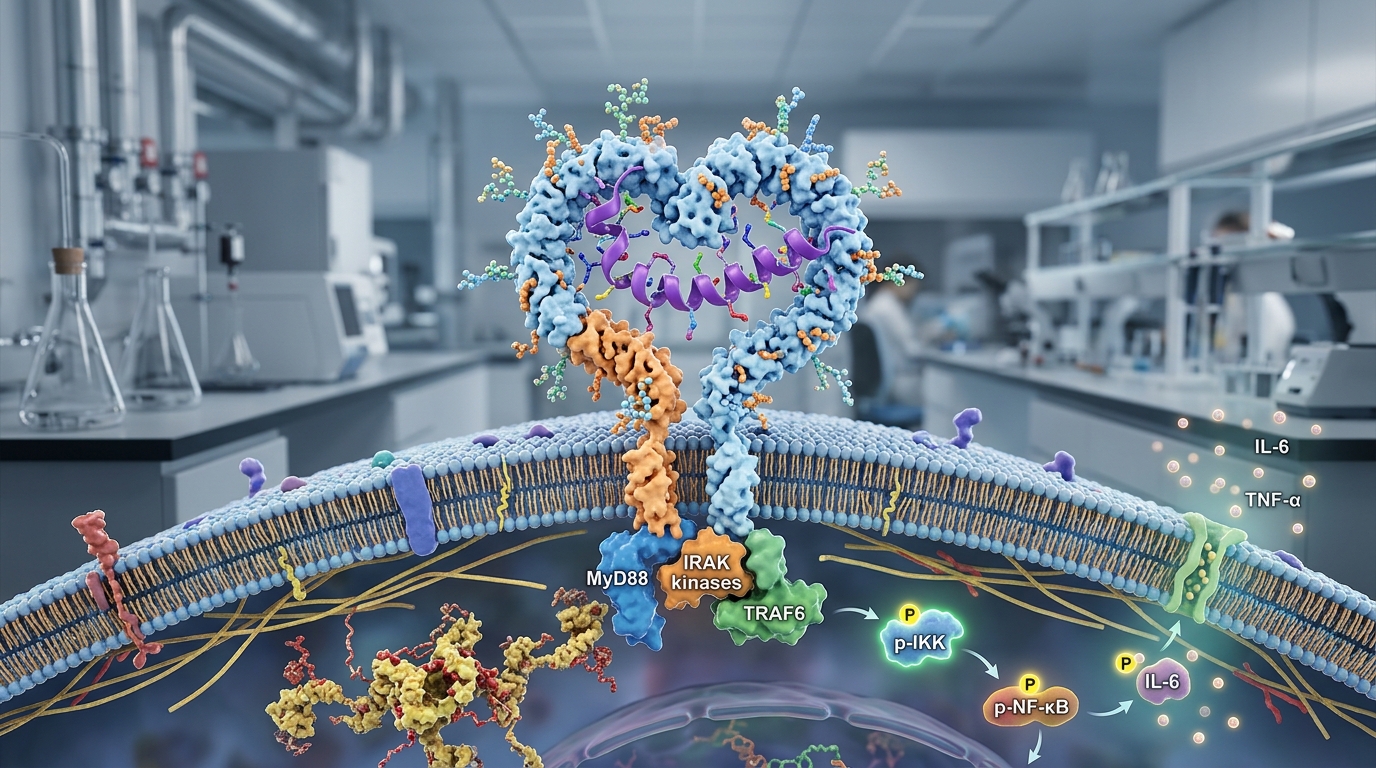
Thymosin Alpha-1 is an acetylated 28-amino-acid peptide originally isolated from bovine thymic tissue (thymosin fraction 5) in 1977. Synthesized commercially as thymalfasin, the peptide mimics the endogenous signaling molecule responsible for promoting T-cell differentiation, maturing dendritic cells, and enhancing cell-mediated immune responses. Rather than functioning as a non-specific immune stimulant, Tα1 acts as an immune modulator: it engages Toll-like receptors (notably TLR9 and TLR2), enhances major histocompatibility complex (MHC) Class I expression, and stimulates the production of Th1-type cytokines such as interferon-gamma and interleukin-2 while dampening excessive inflammatory cascades.
Because of this dual mechanism—bolstering anti-pathogen immunity while maintaining regulatory control—Thymosin Alpha-1 clinical trials have spanned more than four decades, generating one of the largest bodies of human clinical data available for any therapeutic peptide.
Thymosin Alpha-1 Clinical Trials in Chronic Viral Hepatitis
The earliest and most extensive randomized controlled trials (RCTs) of Tα1 focused on chronic hepatitis B virus (HBV) and hepatitis C virus (HCV) infections. In chronic HBV, the inability of the host immune system to clear the virus results in chronic inflammation, fibrosis, and increased risk of hepatocellular carcinoma.
Pivotal randomized trials demonstrated that monotherapy with Tα1 or combination therapy alongside interferon-alpha or direct-acting nucleoside analogs significantly improved sustained virological response rates and normalized serum alanine aminotransferase (ALT) levels. A 2026 Cochrane systematic review analyzing 10 randomized controlled trials with 1,349 HBV participants found evidence that Tα1 may reduce all-cause mortality and serious adverse events compared to control regimens, although the certainty of evidence for specific liver-related outcomes remained low to moderate due to methodological heterogeneity across older trials.
In chronic hepatitis C, trials evaluating Tα1 as an adjunct to pegylated interferon and ribavirin yielded more mixed results. While several smaller pilot trials suggested enhanced viral clearance in difficult-to-treat genotypes, larger confirmatory trials showed modest additions to sustained virological response (SVR), leading research in viral hepatitis to focus predominantly on HBV.
Sepsis and Critical Care Trials
Sepsis is characterized by an initial hyperinflammatory response followed rapidly by profound immunosuppression and T-cell exhaustion, which drives secondary infections and late mortality. Because Tα1 promotes T-lymphocyte survival and restores monocytic human leukocyte antigen-DR (mHLA-DR) expression, it emerged as a leading candidate for sepsis immunotherapy.
Early multi-center trials in China (such as the ETASS trial) and subsequent systematic reviews reported statistically significant reductions in 28-day all-cause mortality among severe sepsis patients treated with Tα1. However, the landscape was clarified in 2025 with the publication of the TESTS trial in The BMJ, a rigorous double-blind, randomized, placebo-controlled phase 3 trial involving over 1,000 adult sepsis patients.
The TESTS trial found no statistically significant difference in overall 28-day mortality between the Tα1 and placebo groups in the unselected intention-to-treat population. Secondary and subgroup analyses revealed that clinical benefits were concentrated primarily in older patients (aged 60 and older) and individuals with chronic comorbid conditions or pronounced baseline lymphopenia. These findings demonstrate that future research in critical care requires precision biomarker profiling to identify patients with distinct immune-exhaustion phenotypes rather than administering the peptide as an unselected monotherapy.
Oncology and Immunotherapy Adjunctive Evidence
In oncology, clinical trials have examined Tα1 primarily as an adjuvant therapy designed to mitigate chemotherapy-induced lymphopenia, enhance anti-tumor cytotoxic T-cell activity, and reduce opportunistic infection rates.
- Non-Small Cell Lung Cancer (NSCLC): Clinical trials combining Tα1 with platinum-based chemotherapies reported improved CD4+ and CD8+ T-cell counts, improved functional quality-of-life scores, and lowered rates of severe neutropenia.
- Malignant Melanoma: Tα1 was investigated in combination with dacarbazine and interleukin-2, demonstrating enhanced response rates and progression-free survival trends in early phase 2/3 protocols, leading to orphan drug designation.
- Hepatocellular Carcinoma (HCC): Trials in patients undergoing transcatheter arterial chemoembolization (TACE) or surgical resection showed that adjunctive Tα1 administration prolonged recurrence-free survival and supported postoperative immune recovery.
Vaccine Adjuvancy and Respiratory Viral Infections
Human trials have evaluated Tα1 as an immune adjuvant to enhance vaccine responsiveness in immunocompromised and elderly populations. Studies in hemodialysis patients receiving influenza vaccines (such as H1N1) showed higher seroconversion rates and longer-lasting antibody titers when co-administered with Tα1.
During the COVID-19 pandemic, observational cohort studies and interventional trials reported that Tα1 administration in patients with severe disease and severe T-cell lymphopenia (CD8+ count < 400/μL or CD4+ count < 650/μL) was associated with accelerated immune reconstitution and decreased mortality. Interventional trials continue to explore whether Tα1 enhances booster vaccine efficacy in immunosenescent populations.
Safety and Tolerability Profile
Across decades of clinical trials encompassing thousands of human participants, Thymosin Alpha-1 has demonstrated an exceptionally favorable safety profile. Adverse events recorded in controlled trials are typically mild, self-limiting, and occur at rates comparable to placebo. The most common documented side effects include:
- Mild erythema, discomfort, or transient swelling at the subcutaneous injection site.
- Low-grade fever or transient flu-like symptoms.
- Transient, asymptomatic elevations in ALT levels during hepatitis B therapy, which typically correlate with immune-mediated clearance of infected hepatocytes rather than direct drug toxicity.
Importantly, large phase 3 trials have confirmed that Tα1 does not induce hyperinflammatory cytokine storms, autoimmune flare-ups, or excess serious adverse events compared to placebo.
Regulatory Status and Access
The regulatory status of Thymosin Alpha-1 varies significantly by geographic territory.
- International Approvals: Approved under the generic name thymalfasin and brand name Zadaxin in over 35 countries across Asia, Europe, and Latin America for chronic hepatitis B, severe infections, and immune deficiency disorders.
- United States (FDA): Tα1 is not FDA-approved as a finished prescription drug. While the FDA has granted orphan drug designations for specific indications (e.g., malignant melanoma, DiGeorge syndrome, hepatocellular carcinoma), these designations do not equate to marketing approval. In compounding, regulatory policies under sections 503A and 503B of the FD&C Act have restricted general compounding availability.
- United Kingdom & Europe: The peptide is regulated under strict medicinal licensing frameworks; unauthorized marketing for wellness or non-approved therapeutic use is prohibited.
Frequently Asked Questions
Is Thymosin Alpha-1 approved by the FDA?
No, Thymosin Alpha-1 is not FDA-approved for commercial marketing in the United States. Although the FDA has granted it orphan drug designation for certain rare conditions, it has not received standard marketing authorization.
What did the 2025 TESTS sepsis trial conclude about Thymosin Alpha-1?
The phase 3 TESTS trial published in The BMJ found that while Tα1 had an excellent safety profile, it did not produce a statistically significant reduction in 28-day mortality across an unselected broad population of sepsis patients. However, exploratory analyses suggested potential benefits in older adults and patients with underlying chronic illness.
How does Thymosin Alpha-1 differ from non-specific immune boosters?
Thymosin Alpha-1 acts as an immune modulator rather than a simple immune stimulant. It signals through Toll-like receptors (TLR2 and TLR9) to enhance T-cell maturation and antigen presentation when the immune system is suppressed, while supporting regulatory pathways that prevent uncontrolled inflammatory tissue damage.
Does human clinical evidence support Thymosin Alpha-1 for general wellness?
No. Robust clinical trials of Tα1 have focused exclusively on clinical pathologies such as viral hepatitis, severe sepsis, chemotherapy-induced immunosuppression, and vaccine non-responsiveness. There are no controlled clinical trials supporting its use in healthy individuals for anti-aging or general wellness.
References
- The BMJ: The Efficacy and Safety of Thymosin α1 for Sepsis (TESTS) — Multicentre, Double-Blind, Randomised, Placebo-Controlled, Phase 3 Trial (2025)
- Cochrane Database of Systematic Reviews: Thymosin-alpha 1 for Chronic Hepatitis B (2026)
- World Journal of Virology: Thymosin Alpha 1 — A Comprehensive Review of the Literature (PMC7747025)
- Frontiers in Immunology: Efficacy of Thymosin α1 for Sepsis — Systematic Review and Meta-Analysis of Randomized Controlled Trials
- Annals of the New York Academy of Sciences: Thymosin Alpha 1 for Treatment of Hepatitis C Virus — Promise and Proof
Research Summary
Thymosin Alpha-1 possesses one of the deepest clinical trial literature bases among synthetic peptide compounds, supported by decades of human randomized controlled trials, systematic reviews, and meta-analyses. The strongest human evidence supports its role as an adjunct therapy in chronic hepatitis B and specific oncology settings, where it demonstrates consistent immunomodulatory effects and a clean safety profile. However, recent large-scale phase 3 data in sepsis demonstrate that therapeutic efficacy is highly dependent on patient stratification and baseline immune status rather than universal application. Internationally approved in more than 35 countries, Tα1 remains unapproved by the US FDA for standard clinical use. Future clinical trials continue to focus on biomarker-guided immunotherapy protocols and vaccine adjuvancy in vulnerable populations.