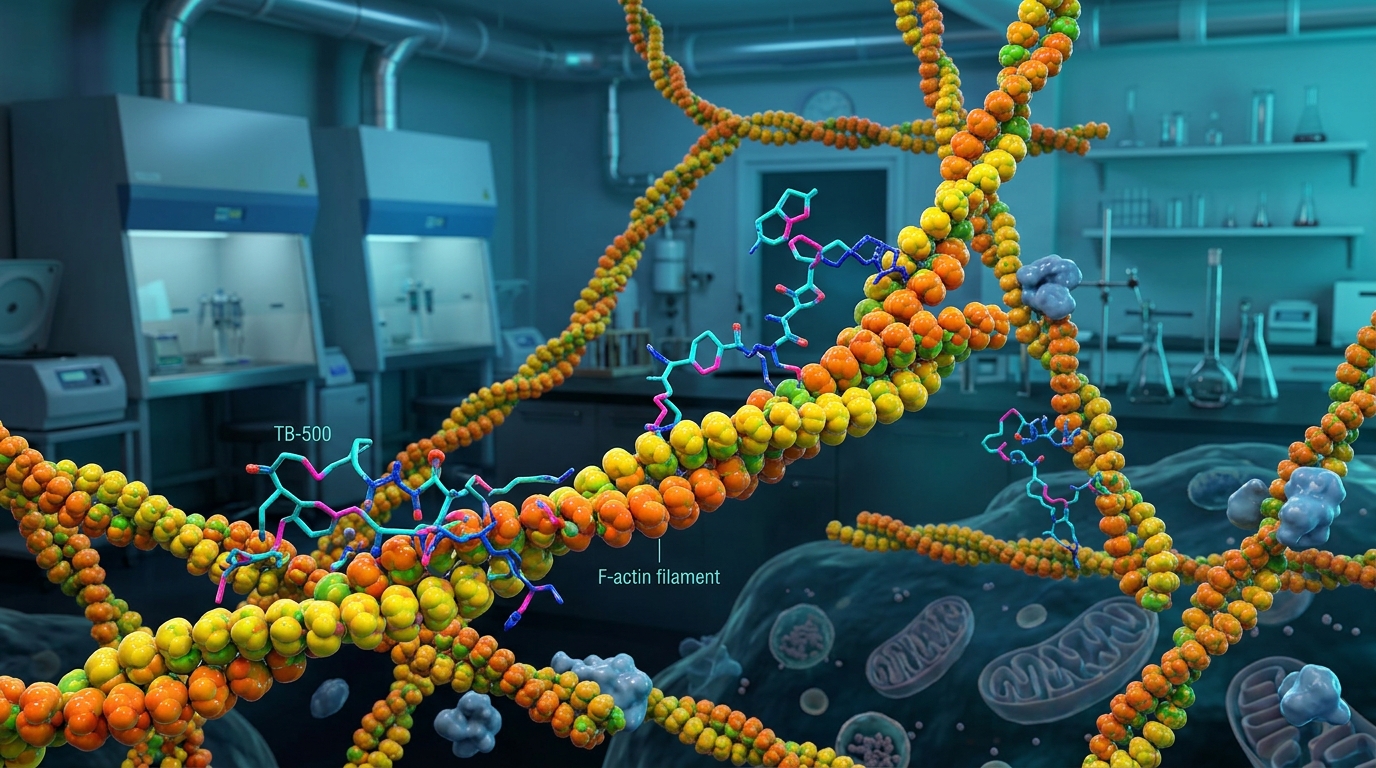
Main Conclusion: While TB-500—a synthetic peptide fragment representing the active domain of Thymosin Beta-4—exhibits pronounced tissue repair, angiogenic, and cellular migration properties in preclinical models, it remains an unapproved investigational research compound that lacks verified human clinical trial evidence for systemic musculoskeletal repair or athletic recovery.
This conclusion is supported by three primary foundations:
- Preclinical and in-vitro investigations demonstrate clear molecular mechanisms centering on actin sequestering, angiogenesis, and cell motility that promote wound and tissue remodeling.
- A substantial translation gap exists in human clinical data, as published clinical trials evaluate the full-length parent peptide (Thymosin Beta-4) rather than isolated TB-500 fragments, leaving human efficacy and systemic dosing unproven.
- Safety, pharmacokinetics, and regulatory classifications restrict TB-500 strictly to laboratory research due to uncharacterized long-term toxicity risks, potential oncogenic interactions, and universal bans by anti-doping authorities.
Reason 1: Preclinical & In-Vitro Mechanisms of Tissue Remodeling
Preclinical evaluations illustrate that the active sequence of TB-500 interacts directly with the cellular cytoskeleton and vascular mediators to stimulate repair pathways.
In-Vitro Evidence
- Actin Regulation and Sequestration: Cell culture studies demonstrate that the core LKKTETQ peptide sequence binds monomeric G-actin, preventing premature polymerization into F-actin. This creates a mobile pool of actin monomers essential for rapid cytoskeletal reorganization, lamellipodia formation, and targeted cell migration.
- Endothelial Cell Differentiation: Laboratory assays show that exposure to Thymosin Beta-4 fragments stimulates human umbilical vein endothelial cells (HUVECs) to form capillary-like tube structures, upregulating vascular endothelial growth factor (VEGF) transcription.
- Anti-Inflammatory Signaling: In-vitro assays on macrophage and fibroblast cultures demonstrate down-regulation of nuclear factor kappa B (NF-κB) and reduced production of pro-inflammatory cytokines such as TNF-α, IL-1β, and IL-6.
Animal Evidence
- Dermal and Corneal Healing: Rodent models of full-thickness dermal punch wounds and corneal debridement demonstrate accelerated re-epithelialization and collagen alignment following topical or local peptide administration.
- Cardiac Ischemia-Reperfusion: Murine models of myocardial infarction showed that administration of Tβ4/Tβ4 fragments promoted cardiomyocyte survival, attenuated post-infarction remodeling, and stimulated epicardial progenitor cell activation.
- Tendon and Muscle Regeneration: Rat models of Achilles tendon transection and skeletal muscle contusion exhibited enhanced tensile strength, increased myoblast proliferation, and reduced disorganized fibrotic scar tissue formation during early recovery phases.
Reason 2: Human Clinical Evidence Gap Between Parent Tβ4 and TB-500
A critical scientific distinction exists between full-length recombinant Thymosin Beta-4 (44 amino acids) and synthetic TB-500 (often sold as the 7-amino-acid actin-binding segment or synthetic Tβ4), resulting in an absence of clinical confirmation for TB-500.
Human Clinical Evidence
- Parent Peptide Localized Trials: Full-length Thymosin Beta-4 (TIMP/RGN-259) has undergone Phase II and Phase III human clinical trials for localized applications, specifically ophthalmic solutions for neurotrophic keratitis and dry eye syndrome, as well as topical hydrogels for venous stasis ulcers and epidermolysis bullosa.
- Absence of Systemic TB-500 Trials: There are zero randomized, double-blind, placebo-controlled human clinical trials evaluating TB-500 administered via subcutaneous, intramuscular, or intravenous routes for soft tissue injuries, tendonitis, or musculoskeletal recovery.
Hypotheses
- Systemic Bioavailability & Target Delivery: Researchers hypothesize that synthetic fragments like LKKTETQ might mirror the full-length protein’s reparative actions with higher stability, but whether sufficient tissue concentrations reach injured connective tissues in humans remains unverified.
Anecdotal Claims
- Athletic and Biohacking Communities: Widespread non-scientific claims in body-building and athletic forums report rapid resolution of chronic tendinopathies, accelerated muscle repair, and reduced post-operative downtime; however, these self-reported experiences lack control groups, objective biomarker tracking, and protection from placebo bias.
Reason 3: Safety, Toxicology, and Regulatory Constraints
Due to the lack of formal pharmacokinetic and Phase I safety profiling for TB-500 in humans, regulatory agencies and sports integrity bodies impose strict controls.
In-Vitro & Animal Evidence on Safety Risks
- Angiogenesis and Oncogenic Potential: While angiogenesis accelerates wound healing, elevated Tβ4 expression is documented in various human malignancies (e.g., colorectal, breast, and non-small cell lung carcinomas), where it correlates with tumor vascularization and metastatic cell motility. Although the peptide itself is not proven to be an initiator of oncogenesis in rodent studies, it is hypothesized that systemic angiogenic peptides could accelerate pre-existing occult tumor growth.
- Immunogenicity and Purity Variations: Research assessing unregulated synthetic peptides identified significant batch-to-batch variations, truncation artifacts, and endotoxin contamination, posing risks of immunogenic reactions and sterile abscesses in laboratory subjects.
Regulatory and Anti-Doping Status
- World Anti-Doping Agency (WADA): TB-500 and all Thymosin Beta-4 derivatives are categorized under Section S2 (Peptide Hormones, Growth Factors, Related Substances, and Mimetics) of the WADA Prohibited List, strictly banned at all times (in-competition and out-of-competition).
- FDA and Global Health Authorities: TB-500 is not approved by the U.S. Food and Drug Administration (FDA) or the European Medicines Agency (EMA) for human or veterinary medical use, maintaining an explicit classification as an investigational research chemical labeled solely for in-vitro and laboratory animal research.