Executive Summary
KPV (Lysine-Proline-Valine) is an active, non-pigmenting C-terminal tripeptide derived from alpha-melanocyte-stimulating hormone (α-MSH) that exerts targeted anti-inflammatory, mucosal-reparative, and antimicrobial actions in preclinical systems, though it lacks robust phase-stage human clinical trials to establish formal clinical efficacy.
Core Supporting Reasons
- Selective Intracellular Anti-Inflammatory Signaling: KPV inhibits NF-κB activation and downstream inflammatory cytokine expression without activating melanocortin 1 receptors (MC1R) responsible for skin pigmentation.
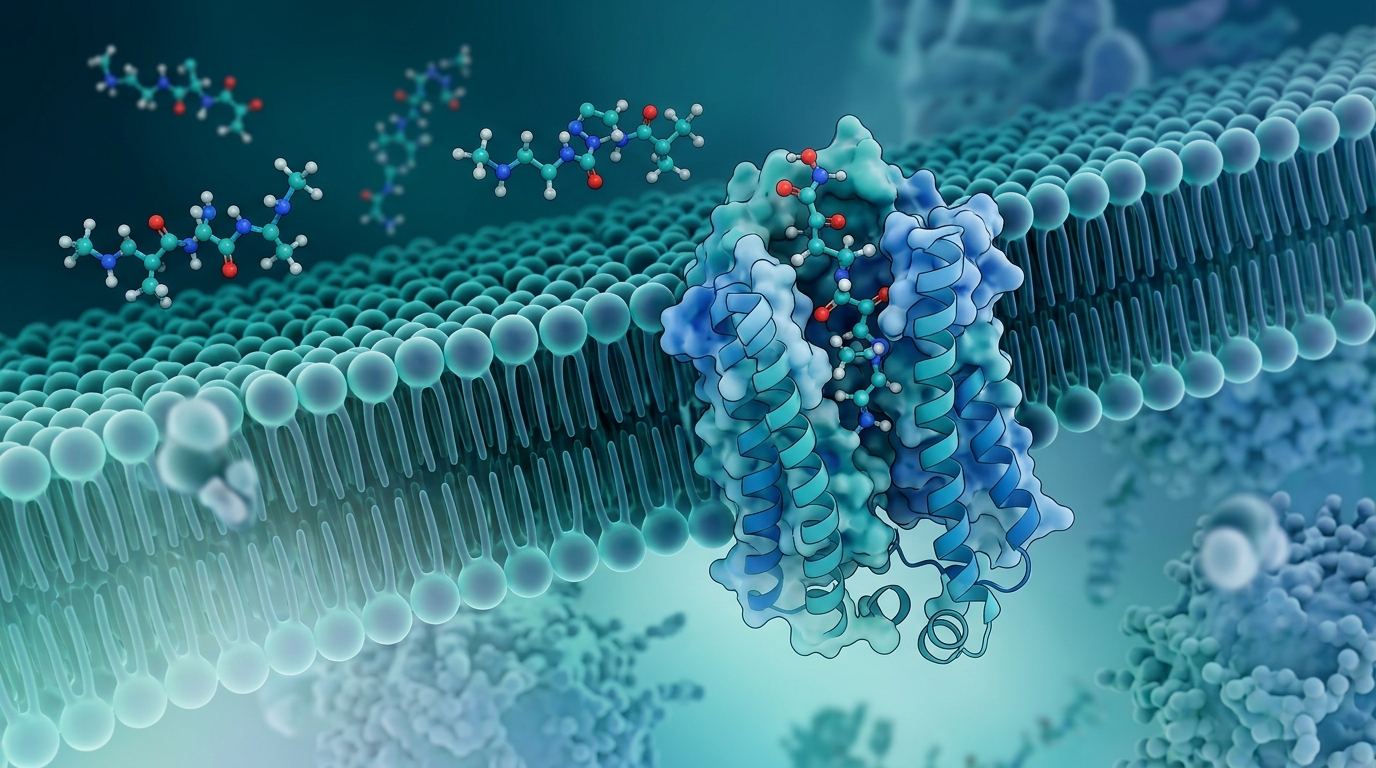
- PepT1-Mediated Mucosal Protection and Epithelial Restitution: Transported into intestinal epithelial and immune cells via the oligopeptide transporter PepT1 (SLC15A1), KPV attenuates experimental colitis and accelerates barrier repair.
- Direct Antimicrobial Action and Collagen Modulation: KPV disrupts pathogenic microbial membranes and downregulates fibrotic pathways in in-vitro wound and dermal models.
Reason 1: Selective Intracellular Anti-Inflammatory Signaling
Full-length α-MSH is a tridecapeptide with potent anti-inflammatory properties, but its therapeutic development has been limited by systemic melanogenesis via MC1R activation. KPV represents the C-terminal residues (positions 11–13) of α-MSH and retains anti-inflammatory efficacy while circumventing pigmentary effects.
In-Vitro Evidence
Cellular studies demonstrate that KPV enters cells to block the translocation of the p65 subunit of nuclear factor-kappa B (NF-κB) into the cell nucleus. In cultured human monocytic (THP-1) and intestinal epithelial cells (Caco-2/HT-29), KPV administration significantly reduces tumor necrosis factor-alpha (TNF-α), interleukin-1 beta (IL-1β), interleukin-6 (IL-6), and interleukin-8 (IL-8) mRNA expression following lipopolysaccharide (LPS) stimulation.
Animal Evidence
In murine models of acute inflammatory challenge (systemic LPS-induced endotoxemia and paw edema), intravenous or intraperitoneal KPV administration reduced leukocyte infiltration and circulating inflammatory cytokine titers at microgram-per-kilogram concentrations.
Human Clinical Status
There are no randomized controlled trials (RCTs) evaluating isolated KPV as a systemic prescription pharmaceutical for inflammatory disorders. A related dimerized α-MSH analog, AP214 (now designated AP1189/resomelagon), has entered Phase II trials for acute kidney injury and rheumatoid arthritis, but isolated monomeric KPV remains classified strictly as a research chemical compound.
Reason 2: PepT1-Mediated Mucosal Protection in Inflammatory Bowel Models
The therapeutic interest in KPV is concentrated in gastrointestinal pathology due to the functional role of the human peptide transporter 1 (PepT1/SLC15A1).
Mechanistic and In-Vitro Evidence
PepT1 is an electrogenic, proton-coupled di/tripeptide transporter predominantly expressed on the apical membrane of small intestinal enterocytes. During chronic inflammatory states (such as Ulcerative Colitis and Crohn’s Disease), PepT1 expression is abnormally upregulated in the colonic epithelium and immune cells. In-vitro assays confirm that KPV is transported directly via PepT1, providing selective intracellular drug delivery into inflamed colonic tissue.
Animal Evidence
In rodent models of chemically induced colitis (dextran sulfate sodium [DSS] and 2,4,6-trinitrobenzenesulfonic acid [TNBS]):
- Oral or transgenic delivery of KPV significantly attenuated body weight loss, reduced the disease activity index (DAI), and lowered histologic mucosal damage scores.
- KPV reduced colonic myeloperoxidase (MPO) activity, an established biomarker of neutrophil infiltration.
- Nanoparticle-encapsulated KPV (hyaluronic acid-functionalized PLGA nanoparticles) demonstrated targeted accumulation in inflamed colonic mucosa, rescuing mice from lethal colitis at lower dosages than free peptide.
Hypotheses vs. Anecdotal Claims
Hypothesis: Oral KPV acts as a localized, non-immunosuppressive therapeutic agent for mucosal healing in human inflammatory bowel disease (IBD).
Anecdotal Claims: Research community reports claim rapid resolution of gut permeability (“leaky gut”) and food sensitivities; however, these self-reported outcomes are uncontrolled and unverified by clinical endoscopy or biomarker quantification.
Reason 3: Direct Antimicrobial Activity and Fibrotic Regulation
Beyond cytokine inhibition, research has highlighted KPV’s antimicrobial and anti-fibrotic properties across experimental cutaneous models.
In-Vitro Antimicrobial Evidence
Laboratory assays demonstrate that KPV exerts microbicidal effects against major pathogens, including Candida albicans and Staphylococcus aureus. Mechanistic studies indicate that KPV enters fungal cells through specific peptide transport pathways and accumulates intracellularly, leading to membrane depolarization and cell death at micromolar concentrations (e.g., 10–100 μM).
In-Vitro and Animal Wound-Healing Evidence
In dermal fibroblast cultures, KPV suppresses interleukin-8 and modulates transforming growth factor-beta (TGF-β) pathways, decreasing excessive collagen type I deposition. In preclinical rodent excisional wound models, topical KPV formulations demonstrated accelerated re-epithelialization, reduced scar formation, and attenuated local erythema.
Evidence Hierarchy Summary
Evidence TypeDocumented FindingsPrimary LimitationsIn-VitroInhibition of NF-κB translocation, suppression of IL-1β/IL-6/TNF-α, PepT1 uptake, fungicidal activity against C. albicans.Does not account for in-vivo proteolytic degradation, bioavailability, or renal clearance.Animal ModelsSignificant reduction in DSS/TNBS-induced colitis severity, decreased MPO activity, improved dermal wound closure.Rodent pharmacokinetic profiles and transporter densities differ from human gastrointestinal physiology.Human ClinicalLimited to ancestral peptide derivatives (α-MSH analogues); no definitive Phase II/III trial data for pure KPV.Therapeutic dosing, long-term safety, human bioavailability, and contraindications remain uncharacterized.Anecdotal / UnverifiedRapid systemic recovery from chronic auto-inflammatory syndromes, immediate gut barrier restoration.Lacks standardized controls, placebos, lab biomarker tracking, and safety monitoring.
Conclusion for Researchers
Preclinical data substantiate KPV as a targeted, biologically active peptide with anti-inflammatory and mucosal restorative mechanisms mediated by NF-κB suppression and PepT1 transport. However, because its safety and efficacy profiles have not been verified in large-scale human clinical trials, KPV remains designated for laboratory research purposes only.