Key Takeaways
- Structural relationship: PE-22-28 is a synthetic 7-amino-acid peptide (GVSWGLR) derived directly from the C-terminal sequence of spadin, a 17-amino-acid endogenous propeptide fragment.
- Target selectivity: Both peptides selectively inhibit TWIK-related potassium channel 1 (TREK-1), a two-pore domain potassium (K2P) channel involved in neuronal resting membrane potential and excitability.
- In vitro potency: In patch-clamp studies, PE-22-28 exhibits a half-maximal inhibitory concentration (IC50) of approximately 0.12 nM against human TREK-1 channels, compared to 40–60 nM for full-length spadin.
- Metabolic stability: PE-22-28 displays an extended duration of action in vivo (up to 23–24 hours) compared to spadin (approximately 7 hours) due to resistance to blood peptidase degradation.
- Preclinical status: All published data on both compounds originate from in vitro assays and rodent models; neither peptide is approved by the U.S. Food and Drug Administration (FDA) or evaluated in human clinical trials.
Understanding the TREK-1 Potassium Channel
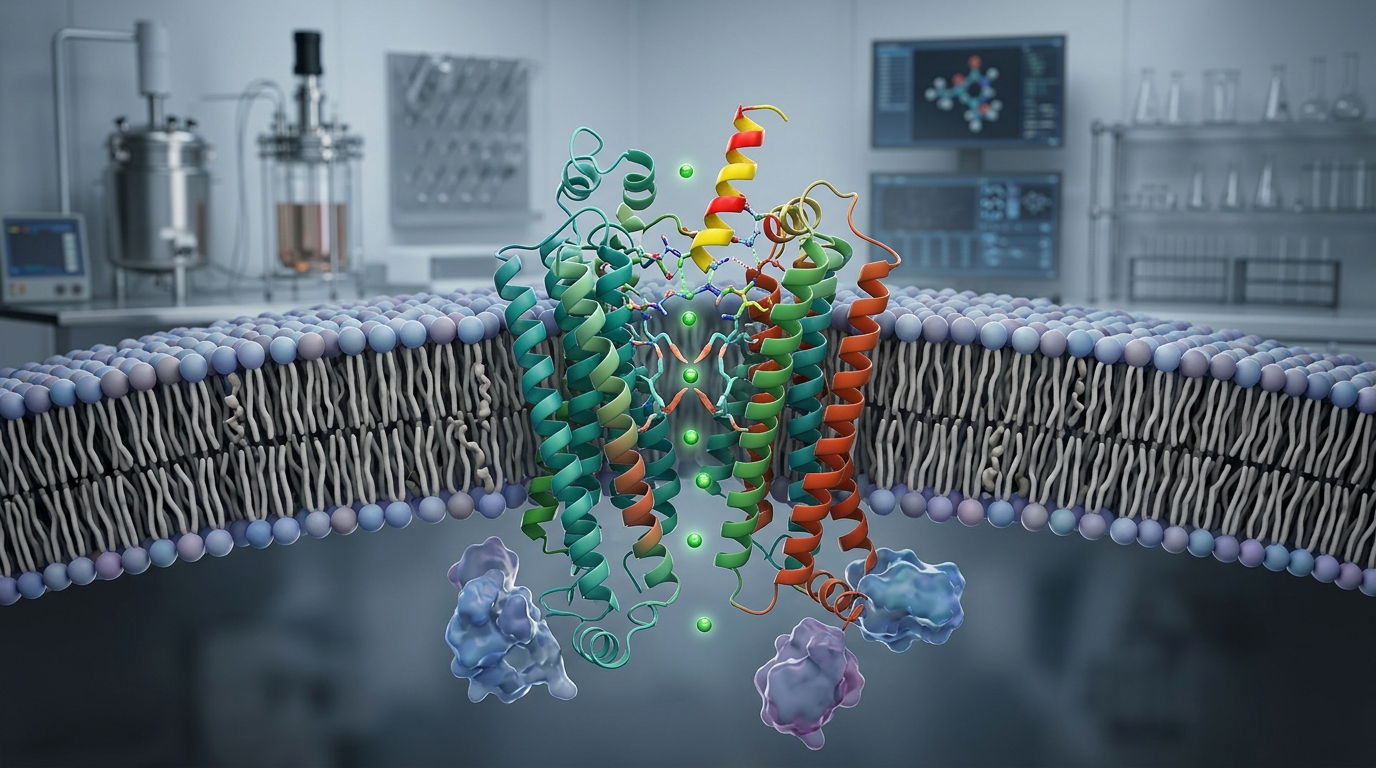
Two-pore domain potassium (K2P) channels regulate the background leak of potassium ions across neuronal membranes, establishing the resting membrane potential and shaping cellular excitability. Among these channels, TWIK-related potassium channel 1 (TREK-1, encoded by KCNK2) is densely distributed throughout the central nervous system, particularly in the hippocampus, prefrontal cortex, and dorsal raphe nucleus.
Early genetic studies revealed that mice lacking the KCNK2 gene exhibit a depression-resistant phenotype characterized by heightened neuronal firing in serotonergic pathways, elevated neurogenesis, and resilience to chronic stress. This discovery spurred pharmacological investigations into TREK-1 antagonists as potential rapid-acting neuroactive tools.
From Sortilin and Spadin to PE-22-28: Structural Origins
The discovery of peptide-based TREK-1 antagonists originated from the biology of sortilin, a sorting receptor synthesized with an N-terminal propeptide (PE 1–44). Cleavage of this propeptide by the endoprotease furin generates smaller fragments. Researchers identified a 17-amino-acid segment corresponding to residues 12–28 of the propeptide, termed spadin. Spadin acted as an endogenous TREK-1 blocker and demonstrated rapid antidepressant-like activity in animal models.
Despite its biological activity, native spadin exhibited practical limitations in laboratory settings, notably rapid degradation by serum peptidases and a functional duration of action limited to approximately seven hours in vivo. To engineer more stable analogs, pharmacologists analyzed the degradation metabolites of spadin in rodent serum. This screening led to the synthesis of PE-22-28 (sequence: Gly-Val-Ser-Trp-Gly-Leu-Arg or GVSWGLR), a truncated heptapeptide spanning residues 22 through 28 of the spadin backbone.
Comparative Pharmacology: Affinity, Potency, and Selectivity
When evaluated in cell lines expressing human TREK-1 (hTREK-1), PE-22-28 demonstrated marked differences in receptor pharmacology compared to parent spadin:
- Inhibitory Potency: Whole-cell patch-clamp electrophysiology showed that PE-22-28 inhibits TREK-1 currents with an IC50 of ~0.12 nM, representing a roughly 300- to 500-fold increase in potency compared to spadin (IC50 ~40–60 nM).
- Subtype Selectivity: Both compounds show high selectivity for TREK-1 over closely related K2P family members, including TREK-2 and TRAAK. Neither compound significantly blocks voltage-gated potassium channels (Kv) or inward-rectifying channels at concentrations that fully inhibit TREK-1.
- Binding Interactions: Mutational and structural studies indicate that the C-terminal arginine residue in PE-22-28 plays a critical role in interacting with extracellular loops of the TREK-1 pore domain, preserving blocking capability despite the truncated sequence.
Pharmacokinetics and In Vivo Stability: PE-22-28 vs. Spadin
The principal structural rationale for developing PE-22-28 was overcoming the rapid clearance of spadin. Truncating the peptide sequence removed several cleavage sites vulnerable to circulating endopeptidases while maintaining the core pharmacophore.
Comparative in vivo investigations demonstrated the following pharmacokinetic distinctions:
- Duration of Biological Effect: In rodent behavioral tests, a single administration of spadin lost efficacy after roughly 7 hours. In contrast, PE-22-28 maintained measurable TREK-1 inhibition and behavioral effects up to 23–24 hours post-injection.
- Bioavailability and Delivery: Both molecules, as peptide structures, exhibit negligible oral bioavailability and require parenteral (intravenous, intraperitoneal, or subcutaneous) or intranasal delivery in experimental protocols.
- Dose Response Characteristics: Certain preclinical models of cerebral ischemia observed a biphasic or dose-dependent response with PE-22-28, where extremely low nanomolar doses differed in physiological outcome compared to standard blocking concentrations.
Behavioral and Neurogenic Findings in Preclinical Models
Both spadin and PE-22-28 have been examined in standard rodent behavioral and histological assays designed to evaluate mood-related circuitry and synaptic plasticity:
- Onset of Action: In the forced swimming test and the novelty suppressed feeding paradigm, both spadin and PE-22-28 elicited behavioral shifts after 4 days of sub-chronic administration. This contrasts with conventional monoaminergic agents, such as selective serotonin reuptake inhibitors (SSRIs), which generally require 3 to 4 weeks in comparable rodent regimens.
- Hippocampal Neurogenesis: Sub-chronic treatment with either peptide stimulated cell proliferation in the subgranular zone of the dentate gyrus, verified via bromodeoxyuridine (BrdU) incorporation assays. PE-22-28 and its derivatives generated equivalent or greater increases in BrdU-positive cells relative to parent spadin over identical time frames.
- Synaptogenesis Markers: In primary cortical neuron cultures, PE-22-28 exposure increased the expression of postsynaptic density protein 95 (PSD-95) and brain-derived neurotrophic factor (BDNF) downstream pathways, supporting structural neuroplasticity.
Research Limitations and Gaps
Despite promising electrophysiological and behavioral data in laboratory settings, significant limitations characterize the current body of literature:
- Lack of Human Clinical Evidence: Neither PE-22-28 nor spadin has been evaluated in published human clinical trials. Data regarding human safety, efficacy, tolerability, and pharmacokinetics do not exist.
- Narrow Literature Base: Almost all published primary investigations on PE-22-28 originate from a limited number of academic research teams, with few independent replications published to date.
- Unclear Long-Term Toxicity: Comprehensive preclinical toxicology, cardiovascular safety margins, and chronic administration data remain absent from the literature.
- Target Complexity: Because TREK-1 is expressed in peripheral tissues such as the heart, lungs, and bladder, selective CNS action versus peripheral off-target effects remains an unresolved question in systemic peptide delivery.
Frequently Asked Questions
Is PE-22-28 simply a stronger version of spadin?
PE-22-28 is a truncated heptapeptide analog derived from the spadin sequence. In vitro electrophysiological studies show that it has significantly higher potency against TREK-1 channels (IC50 of ~0.12 nM vs. 40–60 nM) and longer stability in vivo, but both compounds operate through the same core pharmacological mechanism.
Are spadin or PE-22-28 FDA-approved?
No. Neither PE-22-28 nor spadin is approved by the FDA or any other global drug regulatory authority for medical use. Both compounds remain strictly experimental research reagents.
How do TREK-1 blockers differ from SSRIs?
SSRIs work by inhibiting the serotonin transporter (SERT) to reduce serotonin reuptake in the synaptic cleft. In contrast, TREK-1 blockers act directly on two-pore domain potassium channels, modifying resting membrane potential and cellular excitability in serotonergic neurons and hippocampal networks. In rodent models, this mechanism demonstrates behavioral changes in days rather than weeks.
Can PE-22-28 be administered orally in research models?
No. Like most small linear peptides, PE-22-28 is subject to rapid gastric and enzymatic breakdown in the gastrointestinal tract. Animal research exclusively utilizes parenteral routes (such as intraperitoneal injection) or intranasal formulations.
Research Summary
The comparative scientific evidence establishes PE-22-28 as a second-generation, shortened analog of the endogenous propeptide fragment spadin. By focusing on residues 22–28 of the sortilin propeptide, researchers developed a 7-amino-acid peptide that exhibits over 300-fold greater in vitro potency at human TREK-1 potassium channels and an extended biological half-life compared to its parent compound. In preclinical rodent models, both compounds trigger rapid antidepressant-like behavioral markers and stimulate adult hippocampal neurogenesis within a four-day testing window. However, the entire body of evidence remains confined to laboratory assays and animal models. Neither compound has been tested in human clinical trials, and neither is approved for therapeutic applications.
References
- Djillani A, Pietri M, Moreno S, et al. Shortened Spadin Analogs Display Better TREK-1 Inhibition, In Vivo Stability and Antidepressant Activity. Neuropharmacology. 2017;126:157-164. doi:10.1016/j.neuropharm.2017.09.006
- Mazella J, Pétrault O, Lucas G, et al. Spadin, a sortilin-derived peptide, targeting TREK-1 channels: a new concept in the antidepressant drug design. PLoS Biology. 2010;8(4):e1000355. doi:10.1371/journal.pbio.1000355
- Borsotto M, Veyssiere J, Moha ou Maati H, et al. Targeting the TREK-1 potassium channel for the development of new treatments for depression. British Journal of Pharmacology. 2015;172(3):771-784. doi:10.1111/bph.13012
- Heurteaux C, Lucas G, Guy N, et al. Deletion of the TREK-1 potassium channel results in a depression-resistant phenotype. Nature Neuroscience. 2006;9(9):1134-1141. doi:10.1038/nn1749