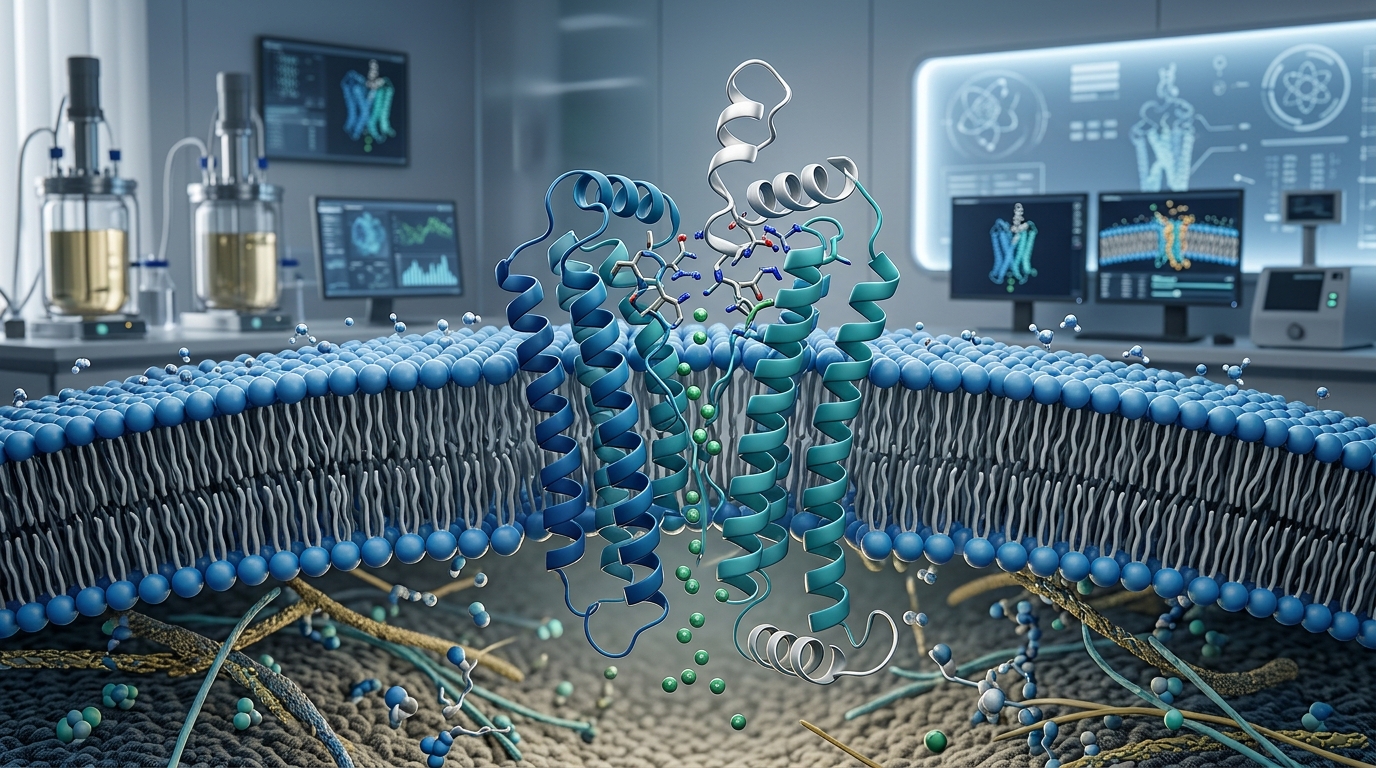
PE-22-28 is a potent, shortened synthetic peptide derivative of spadin that functions as a selective TREK-1 two-pore domain potassium channel inhibitor, demonstrating rapid-onset neurogenic and antidepressant-like responses strictly within preclinical research models.
This distinct profile is established across three fundamental pillars of preclinical investigation:
- Selective TREK-1 Channel Antagonism: PE-22-28 binds directly to and inhibits TREK-1 (K2P2.1) potassium channels with higher nanomolar affinity and specificity than native sortilin-derived peptides.
- Accelerated Neurogenesis and Preclinical Behavioral Modulation: In vivo rodent studies show that TREK-1 inhibition by PE-22-28 triggers rapid synaptogenesis and hippocampal neurogenesis, producing behavioral changes within 4 to 7 days rather than the multiple weeks required by traditional monoamine reuptake inhibitors.
- Optimized Heptapeptide Architecture and Preclinical Pharmacokinetics: The shortened 7-amino-acid structure (PE-22-28) provides superior in vitro stability, bio-distribution, and formulation potential compared to full-length spadin, though human clinical trial data remains completely absent.
1. Selective TREK-1 Channel Antagonism
The core pharmacological mechanism of PE-22-28 (amino acid sequence: Gln-Pro-Leu-Arg-Pro-Arg-Tyr / QPLRPRY) is its targeted blockade of the TREK-1 background potassium channel (encoded by the KCNK2 gene).
In-Vitro Evidence
- Binding Affinity: In patch-clamp and radioligand binding assays, PE-22-28 demonstrated sub-micromolar to nanomolar affinity (IC50 ~ 0.12 nM in specific heterologous expression assays) for the human and rodent TREK-1 channels, effectively blocking potassium efflux.
- Selectivity Assays: In-vitro testing against related two-pore domain potassium channels (such as TREK-2 and TRAAK) confirms marked selectivity for TREK-1, mitigating off-target ion channel disturbances in cellular models.
Hypothesized Mechanism
- Cellular Depolarization and Signaling: Inhibition of TREK-1 leads to membrane depolarization in targeted neurons, hypothesized to augment downstream neurotrophic signaling cascades, including CREB phosphorylation and brain-derived neurotrophic factor (BDNF) transcription.
2. Accelerated Neurogenesis and Preclinical Behavioral Modulation
Unlike standard selective serotonin reuptake inhibitors (SSRIs) that take 3–6 weeks to demonstrate neuroplastic adaptations, PE-22-28 drives rapid neurogenesis in laboratory animals.
Animal Evidence
- Forced Swim and Tail Suspension Tests: In acute and sub-chronic rodent models of depression, PE-22-28 administration (intraperitoneal, intravenous, and intranasal) significantly reduced immobility time within 2 to 4 days of initiation.
- Novelty-Suppressed Feeding and Learned Helplessness: Chronic administration in stressed mice reversed depressive-like phenotypes and restored normal latency to feed within 4 days.
- Hippocampal Neurogenesis: Histological analysis using BrdU labeling in mice demonstrated a significant increase in the proliferation of progenitor cells in the subgranular zone of the dentate gyrus within 4–7 days of daily administration.
- Neuroplastic Markers: Western blot and PCR assays in rodent brain tissue revealed elevated levels of mature BDNF and phosphorylated TrkB receptors in the hippocampus following short-term administration.
Human Clinical Evidence
- Status: Non-Existent. There are currently no completed or active human clinical trials evaluating PE-22-28 for major depressive disorder, cognition, or any other therapeutic indication. All efficacy claims are strictly derived from preclinical animal and cell culture models.
3. Optimized Heptapeptide Architecture and Pharmacokinetics
PE-22-28 was engineered to resolve the metabolic instability and delivery limitations observed in its parent peptide, spadin (a 17-amino-acid sortilin-derived peptide).
In-Vitro and Preclinical Pharmacokinetic Evidence
- Enzymatic Resistance: Truncation of spadin (PE 12-28) to the 7-amino-acid segment (PE-22-28) yielded greater half-life in rodent plasma, resisting rapid peptidase cleavage while retaining channel-blocking affinity.
- Intranasal Delivery: Rodent pharmacokinetic evaluations demonstrated that intranasal delivery of PE-22-28 bypasses systemic degradation, crossing the blood-brain barrier via olfactory pathways to achieve therapeutic central nervous system concentrations without systemic toxicity.
Anecdotal Claims vs. Scientific Reality
- Anecdotal Claims: Online biohacking communities and gray-market peptide vendors often claim PE-22-28 acts as an immediate “rapid-acting nootropic” or mood enhancer in humans.
- Scientific Assessment: These claims remain completely unsubstantiated by peer-reviewed human research. PE-22-28 remains an experimental research chemical restricted to laboratory investigation.