Key Takeaways
- Tuftsin Lineage: Selank (Thr-Lys-Pro-Arg-Pro-Gly-Pro) is a synthetic derivative of tuftsin, an endogenous tetrapeptide cleaved from immunoglobulin G (IgG) that naturally regulates phagocytic and immune cell activity.
- Transcriptomic Modulation: Preclinical research demonstrates that Selank alters the expression of dozens of inflammation-associated genes in both splenic and neural tissues rather than acting as a simple immunosuppressant.
- Cytokine Signaling: In vitro and small clinical evaluations suggest Selank influences interleukin-6 (IL-6) dynamics, interferon-alpha (IFN-α) transcription, and the balance between Th1 and Th2 immune profiles.
- Neuroimmune Interface: The peptide is hypothesized to buffer stress-induced immune dysregulation by modulating central neurotransmission and stabilizing endogenous enkephalins.
- Regulatory Context: While registered in Russia for specific psychiatric indications, Selank is not approved by the U.S. Food and Drug Administration (FDA) or the European Medicines Agency (EMA) and remains restricted to laboratory research.
Tuftsin Heritage: The Structural Origin of Selank
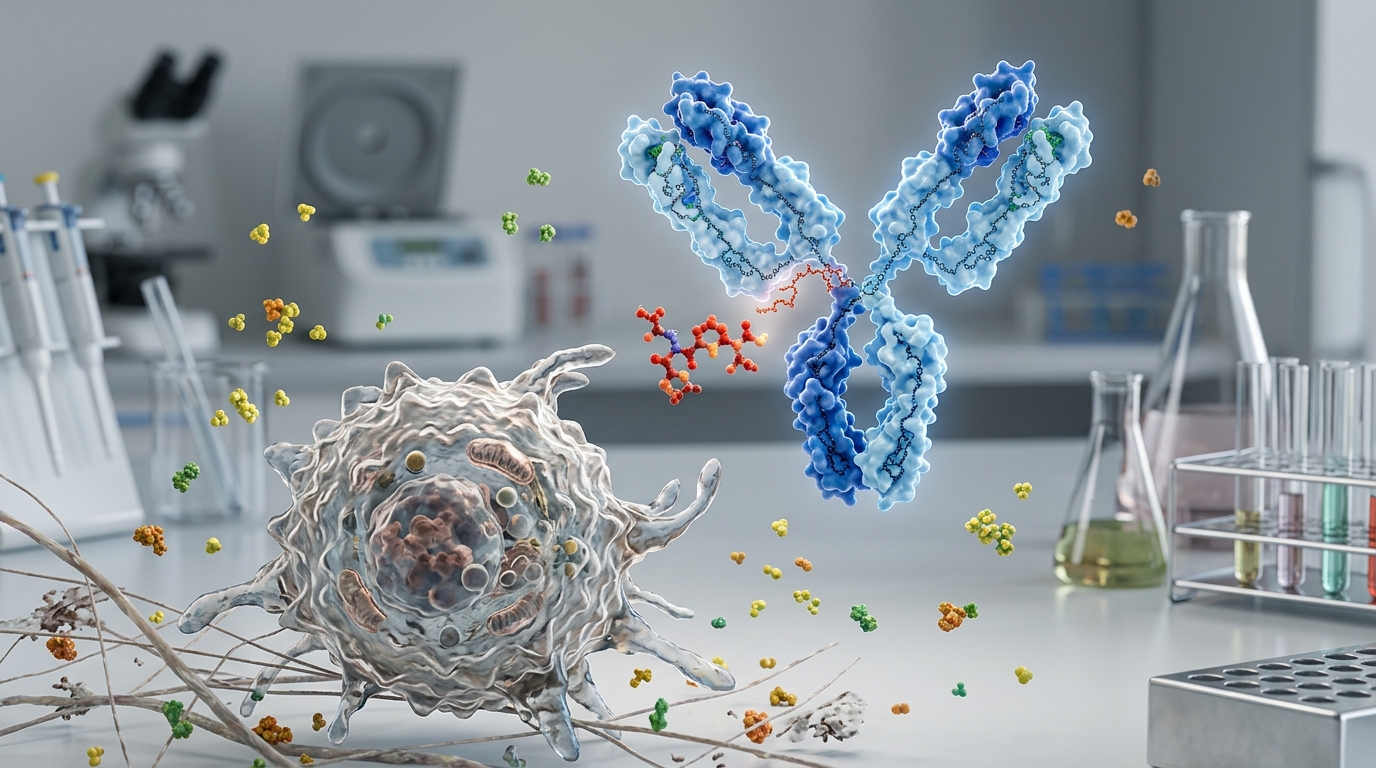
To understand the immunological profile of the Selank immune system literature, one must examine its parent molecule, tuftsin. Discovered in 1970 at Tufts University, tuftsin is a naturally occurring tetrapeptide sequence—Threonine-Lysine-Proline-Arginine (TKPR)—located within the Fc domain of the heavy chain of immunoglobulin G. Released physiologically via a two-step enzymatic cleavage by splenic endocarboxypeptidase and circulating leukokininase, native tuftsin binds to specific receptors on macrophages, monocytes, polymorphonuclear leukocytes, and microglia. Through these interactions, tuftsin enhances phagocytosis, pinocytosis, cellular motility, and antigen presentation.
Despite its potent bioactivity, natural tuftsin possesses a plasma half-life of only several minutes due to rapid enzymatic degradation by aminopeptidases and carboxypeptidases. To overcome this pharmacological limitation, researchers at the Institute of Molecular Genetics of the Russian Academy of Sciences synthesized Selank by appending a C-terminal tripeptide motif: Proline-Glycine-Proline (Pro-Gly-Pro, or PGP). This structural modification significantly enhances metabolic resistance against serum and tissue peptidases, extending biological activity while conferring enhanced tissue penetration across the blood-brain barrier.
Gene Expression Profiles: Spleen, Hippocampus, and Inflammatory Pathways
Unlike conventional pharmacological agents that directly antagonize single cytokine receptors or broadly suppress leukocyte activity, Selank appears to function primarily as a transcriptional modulator. Genome-wide transcriptomic profiling has provided significant insight into how the heptapeptide influences immune pathways at the mRNA level.
In murine studies published in Molecular Immunology, researchers investigated the impact of a single intraperitoneal dose of Selank (100 µg/kg) on the expression of 84 inflammation-related genes in splenic tissue. The researchers documented significant transcriptional alterations in 34 of the 84 genes examined. These included genes coding for chemokines (such as Cxcl1 and Ccl2), chemokine receptors, interleukins, and intracellular signaling factors.
A key observation from these temporal dynamics studies was the non-linear, homeostatic nature of the response:
- Complement System: Complement component 3 (C3) mRNA expression declined approximately threefold within 30 minutes of administration before gradually stabilizing.
- Apoptosis and Inflammasomes: Caspase-1 (Casp1) gene expression displayed a wave-like profile over several hours, indicating complex transcriptional regulation rather than continuous suppression.
- Transcriptional Regulators: The B-cell lymphoma 6 protein (Bcl6), an essential transcription factor involved in B-cell maturation and the regulation of inflammatory cytokine production, emerged as a central regulatory node in the spleen’s transcriptional response.
Parallel transcriptomic work identified similar gene-modulatory effects in neural tissue, specifically within the hippocampus. In rodent models, Selank administration influenced the transcription of chemokine receptors such as Cx3cr1 (the fractalkine receptor), which plays a critical role in microglial-neuronal communication and the maintenance of synaptic plasticity during inflammatory states.
Cytokine Regulation: IL-6, Th1/Th2 Equilibrium, and Interferons
The downstream consequences of Selank’s transcriptional effects have been examined across several cell-culture and clinical models, with particular focus on cytokine secretion profiles.
Interleukin-6 Dynamics
Interleukin-6 (IL-6) is a pleiotropic cytokine that serves both pro-inflammatory and anti-inflammatory functions depending on its signaling context and tissue localization. In chronic psychological stress and neurodegenerative conditions, elevated IL-6 levels are frequently implicated in systemic low-grade inflammation.
In studies evaluating human peripheral blood mononuclear cells (PBMCs) isolated from patients with major depressive disorder, in vitro exposure to Selank at concentrations of 10-7 M completely suppressed the gene expression of IL-6. Interestingly, protein quantification in these same cultures revealed a concurrent elevation in soluble IL-6 protein release, suggesting that Selank influences both transcriptional repression and translational or secretory dynamics. In healthy control cells, this suppression was not observed, indicating that Selank’s modulatory effects may depend heavily on the baseline activation state of the immune system.
Th1/Th2 and Antiviral Signaling
Research has also evaluated Selank’s capacity to adjust T-helper cell balance. In an open clinical trial involving patients diagnosed with generalized anxiety disorder and neurasthenia, a 14-day administration course of Selank was associated with shifts in the ratio of T-helper 1 (Th1) to T-helper 2 (Th2) cytokines in peripheral serum. The observed changes demonstrated an inverse correlation depending on the baseline cytokine profile: participants with elevated pro-inflammatory markers exhibited down-regulation, whereas those with suppressed markers showed normalization.
Furthermore, preclinical investigation into viral resistance models demonstrated that Selank stimulated the gene expression of interferon-alpha (IFN-α) without inducing a generalized surge in classical pro-inflammatory cytokines like tumor necrosis factor-alpha (TNF-α) or interleukin-4 (IL-4). This selective activation of endogenous antiviral pathways mirrors the behavior of native tuftsin in innate immune defense.
The Neuroimmune Axis: Stress, Enkephalins, and Immune Resilience
A central hypothesis in Selank research is that its immunomodulatory actions are inextricably linked to its central nervous system activity. Severe or chronic psychological stress activates the hypothalamic-pituitary-adrenal (HPA) axis and the sympathetic nervous system, leading to sustained glucocorticoid release, thymic involution, and suppressed cell-mediated immunity.
Selank is reported to act as a positive allosteric modulator of GABA-A receptors and an inhibitor of enkephalin-degrading enzymes (such as neutral endopeptidase and dipeptidyl peptidase IV). By preventing the breakdown of endogenous enkephalins—which possess intrinsic stress-protective and immunomodulatory properties—Selank may shield peripheral immunocompetent cells from the immunosuppressive consequences of prolonged neuroendocrine stress.
In rodent social-stress paradigms, administration of Selank prevented the marked fluctuations in circulating cytokines typically induced by chronic agonistic confrontations, suggesting a buffer effect against stress-mediated immune collapse.
Limitations of the Evidence Base and Regulatory Status
While the molecular framework connecting tuftsin biology to Selank is biologically plausible, several significant limitations characterize the current literature:
- Geographic Concentration: The overwhelming majority of published research on Selank originates from Russian research institutes, with limited independent international replication.
- Preclinical Dominance: High-resolution data regarding specific gene arrays, caspase pathways, and chemokine kinetics derive almost entirely from rodent splenocytes and cell lines.
- Clinical Trial Design: Available human studies generally feature small cohorts, lack double-blind placebo controls, or use active comparators (such as benzodiazepines) without rigorous contemporary trial methodology.
- Pharmacokinetics: The exact signaling cascade connecting nasal administration, central enkephalin stabilization, and splenic mRNA modulation remains incompletely mapped.
From a regulatory standpoint, Selank is registered in the Russian Federation as a nasal drop formulation for generalized anxiety disorder and asthenic-neurotic conditions. However, the U.S. FDA, the EMA, and other major international regulatory bodies have not approved Selank for any medical indication. In the United States and across international scientific communities, Selank is classified strictly as an unapproved investigational compound intended exclusively for in vitro and laboratory research.
Frequently Asked Questions
What is the biological difference between Tuftsin and Selank?
Tuftsin is a natural tetrapeptide (Thr-Lys-Pro-Arg) derived from the Fc fragment of IgG that stimulates macrophage and neutrophil activity but degrades in minutes. Selank is a synthetic heptapeptide containing the full tuftsin sequence extended by a Pro-Gly-Pro tripeptide, which grants enzymatic stability, prolongs systemic half-life, and improves blood-brain barrier permeation.
Does Selank suppress or stimulate the immune system?
The published literature characterizes Selank as an immunomodulator rather than a strict stimulant or immunosuppressant. In preclinical and PBMC models, it alters gene expression biphasically, selectively upregulates interferon-alpha, and normalizes cytokine balances (such as IL-6 and Th1/Th2 ratios) in a state-dependent manner.
Can preclinical rodent gene-expression data be applied directly to human health?
No. Findings from rodent spleen and hippocampal transcriptomic arrays demonstrate biological mechanisms in controlled laboratory environments. They do not establish therapeutic efficacy, clinical safety, or predictable physiological outcomes in humans.
Is Selank FDA-approved for immune or psychiatric disorders?
No. Selank has not received approval from the FDA or the EMA for any clinical application. It remains an investigational peptide restricted to scientific and laboratory research.
Research Summary
The body of evidence on Selank outlines a unique dual mechanism bridging neuroactive signaling and immune modulation. Built upon the core biology of tuftsin, Selank influences the transcriptional activity of numerous inflammation-related genes, modulates IL-6 and interferon pathways, and appears to mitigate stress-induced immune changes in animal models. Nevertheless, the human clinical evidence remains preliminary, small-scale, and regionally confined. Selank is not FDA-approved, and further rigorous, placebo-controlled trials are required to determine its therapeutic profile.
References
- Kolomin, T. A., et al. (2014). The temporary dynamics of inflammation-related genes expression under tuftsin analog Selank action. Molecular Immunology, 58(1), 50–55. https://doi.org/10.1016/j.molimm.2013.11.002
- Uchakina, O. N., et al. (2008). [Immunomodulatory effects of selank in patients with anxiety-asthenic disorders]. Zhurnal Nevrologii i Psikhiatrii Imeni S.S. Korsakova, 108(5), 71–75. https://pubmed.ncbi.nlm.nih.gov/18577961/
- Ershov, F. I., et al. (2009). [Antiviral activity of immunomodulator Selank in experimental influenza infection]. Voprosy Virusologii, 54(5), 19–24. https://pubmed.ncbi.nlm.nih.gov/19882894/
- Myasoedov, N. F., et al. (2018). Peptide-based Anxiolytics: The Molecular Aspects of Heptapeptide Selank Biological Activity. Protein & Peptide Letters, 25(10), 914–923. https://doi.org/10.2174/0929866525666181008160456
- Najjar, V. A., & Nishioka, K. (1970). ‘Tuftsin’: a natural phagocytosis stimulating peptide. Nature, 228(5272), 672–673. https://doi.org/10.1038/228672a0