Key Takeaways
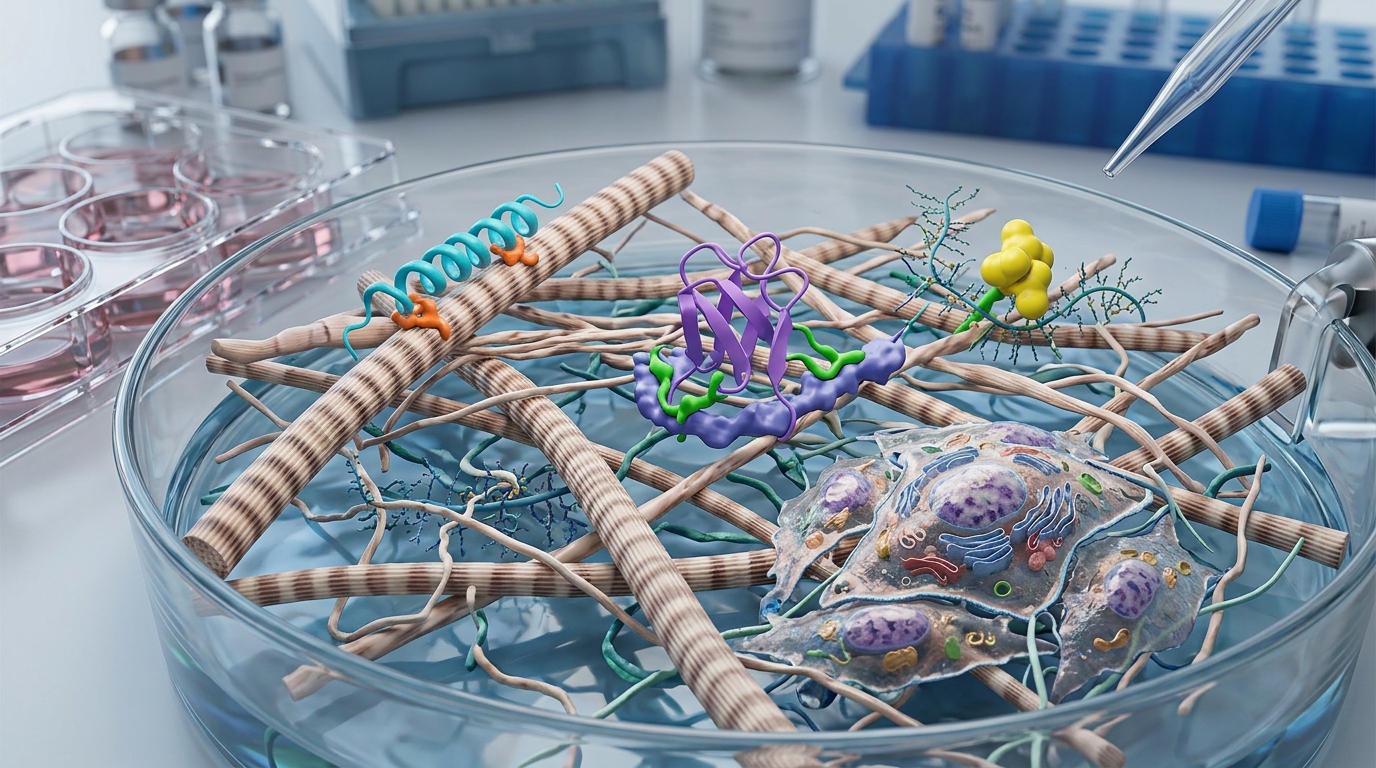
- The GLOW peptide stack is a laboratory research grouping consisting of three distinct synthetic and naturally derived peptides: BPC-157, TB-500 (a synthetic fragment associated with Thymosin Beta-4), and GHK-Cu (glycyl-L-histidyl-L-lysine copper complex).
- The combination is hypothesized to support multi-phase tissue regeneration by concurrently targeting vascularization, cell motility, and extracellular matrix remodeling.
- Most available evidence exists exclusively at the preclinical, in vitro, and animal model levels for the individual components; controlled clinical trials evaluating the combined three-peptide formulation in humans do not currently exist.
- Regulatory bodies, including the U.S. Food and Drug Administration (FDA), have not approved these peptides for regenerative therapy, compounding, or systemic wellness applications.
What Is the GLOW Peptide Stack?
The GLOW peptide stack is an experimental triad of regenerative compounds frequently investigated in preclinical models of wound healing and tissue architecture repair . The acronym “GLOW” reflects its frequent association with skin rejuvenation, dermal remodeling, and structural recovery, primarily anchored by the cosmetic and tissue-remodeling history of the copper tripeptide GHK-Cu.
Rather than functioning as a single chemical entity, the stack consists of three distinct molecules:
- BPC-157: A 15-amino-acid synthetic pentadecapeptide derived from human gastric juice protein sequences .
- TB-500: A synthetic peptide derivative corresponding to the active actin-binding domain (amino acids 17–23, LKKTETQ) of the endogenous 43-amino-acid peptide Thymosin Beta-4 (Tβ4) .
- GHK-Cu: A naturally occurring tripeptide (glycyl-L-histidyl-L-lysine) chelated with a divalent copper ion (Cu²⁺) .
In research settings, these compounds are investigated individually or in combination to analyze their cumulative influence on cellular proliferation, extracellular matrix (ECM) synthesis, and tissue repair pathways .
Individual Components and Proposed Mechanisms
Each component of the GLOW peptide stack acts via distinct biochemical pathways. Understanding the stack requires analyzing how each molecule behaves in experimental models.
BPC-157: Angiogenesis and Growth Factor Modulation
Body Protection Compound-157 (BPC-157) has been investigated primarily in rodent models of soft tissue, tendon, ligament, and gastrointestinal damage . Preclinical studies suggest that BPC-157 stimulates the expression of vascular endothelial growth factor (VEGF), activates the extracellular signal-regulated kinase (ERK1/2) signaling pathway, and modulates nitric oxide (NO) synthesis . Through these pathways, BPC-157 promotes early granulation tissue formation, improves microvascular perfusion, and upregulates growth hormone receptor expression on local fibroblasts .
TB-500: Actin Dynamics and Cellular Migration
TB-500 represents the central bioactive sequence of Thymosin Beta-4, a major intracellular G-actin-sequestering peptide . In wound-healing cascades, rapid migration of keratinocytes, endothelial cells, and fibroblasts to the site of injury is essential. By modulating actin polymerization, TB-500 facilitates cell motility and cytoskeletal restructuring . Preclinical literature also attributes down-regulation of pro-inflammatory cytokines, decreased myofibroblast differentiation, and reduced fibrotic scarring to Thymosin Beta-4 signaling .
GHK-Cu: Copper Chelation and Matrix Remodeling
GHK-Cu is an endogenous copper complex identified in human plasma that declines significantly with age . In cellular models, GHK-Cu regulates gene expression across thousands of human genes, notably upregulating collagen type I, collagen type III, elastin, and glycosaminoglycans . Concurrently, it modulates matrix metalloproteinases (MMPs) and their tissue inhibitors (TIMPs), facilitating balanced extracellular matrix turnover rather than unchecked accumulation of dense fibrotic tissue .
The Synergy Hypothesis: Why Group These Peptides?
Wound repair proceeds through sequential, overlapping phases: hemostasis, inflammation, proliferation (angiogenesis and granulation), and tissue remodeling . The theoretical premise behind combining BPC-157, TB-500, and GHK-Cu rests on the hypothesis of complementary physiological coverage across these phases :
- Vascular Perfusion & Survival: BPC-157 initiates early angiogenic signaling, supporting the oxygenation and nutrient delivery necessary for ischemic tissue survival .
- Cellular Recruitment: TB-500 accelerates the physical migration of repair cells into the newly vascularized matrix via actin cytoskeleton regulation .
- Structural Maturation: GHK-Cu directs the synthesis and structural organization of collagen, elastin, and proteoglycans, balancing deposition against enzymatic degradation .
While this multi-target framework provides a logical biochemical rationale, experimental proof demonstrating true additive or synergistic pharmacodynamics in co-administered protocols remains largely absent in peer-reviewed literature .
Preclinical Evidence vs. Human Research Reality
A substantial evidence gap exists between laboratory discoveries and established clinical practice for the components of the GLOW stack.
BPC-157: Almost all published efficacy data come from rodent surgical models examining transected tendons, crushed muscle, and intestinal anastomoses . Human evidence is restricted to small observational cohorts and unregistered pilot trials, none of which provide sufficient power or blinding to determine definitive clinical efficacy or long-term safety .
TB-500 / Thymosin Beta-4: While full-length Thymosin Beta-4 has been assessed in human Phase II clinical trials for ophthalmic indications (neurotrophic keratitis) and dermal venous ulcers , the synthetic fragment TB-500 itself has virtually no independent human clinical trial data . Extrapolating parent-molecule trial results to short synthetic fragments introduces significant pharmacological uncertainty.
GHK-Cu: GHK-Cu possesses the strongest human evidence profile among the three, primarily from dermatological trials evaluating topical formulations for skin elasticity, fine line reduction, and barrier repair . However, evidence evaluating systemic or injectable administration of GHK-Cu in human clinical cohorts is severely limited .
Crucially, no randomized controlled clinical trials exist that assess the co-administration of all three peptides simultaneously. Hypothesized synergies remain unverified in human subjects .
Safety Considerations and Research Limitations
Investigating multi-peptide combinations introduces complex pharmacokinetic and toxicological questions that single-compound studies do not address:
- Angiogenesis and Oncogenic Risk: Both BPC-157 and Thymosin Beta-4 stimulate VEGF pathways and neoangiogenesis , . While beneficial in acute wound environments, sustained upregulation of angiogenic factors creates theoretical concerns regarding occult tumor vascularization or progression in uncontrolled settings.
- Systemic Copper Bioavailability: Systemic delivery of copper-complexed peptides like GHK-Cu may alter baseline copper-to-zinc ratios or influence hepatic and renal copper elimination pathways, particularly at uncharacterized research doses.
- Pharmacokinetic Interactions: Co-administering three distinct peptide molecules simultaneously can alter enzymatic degradation rates, plasma half-lives, and renal clearance profiles in ways that have not been mapped in controlled pharmacokinetic models.
- Reagent Quality: Synthetic peptides produced for laboratory research often exhibit batch-to-batch variation, incomplete sequence purity, or endotoxin contamination, presenting major confounding variables in experimental findings.
Regulatory and Research Status
None of the peptides in the GLOW stack are approved by the U.S. Food and Drug Administration (FDA) or European Medicines Agency (EMA) for clinical therapy, regenerative medicine, or general wellness. In the United States, the FDA has placed compounds including BPC-157 and Thymosin Beta-4 under Category 2 of the compounding bulk drug substances list due to safety risks and insufficient clinical trial validation. Furthermore, major anti-doping bodies, including the World Anti-Doping Agency (WADA), explicitly prohibit BPC-157 and related growth factor-modulating peptides under section S2 of their Prohibited List . These substances remain restricted strictly to non-clinical laboratory research.
Frequently Asked Questions
Is the GLOW peptide stack FDA-approved?
No. Neither the combined GLOW stack nor its individual components (BPC-157, TB-500, or GHK-Cu) have received FDA approval for medical treatment, injury recovery, or anti-aging therapies.
Has the combination of BPC-157, TB-500, and GHK-Cu been tested in clinical trials?
No. While individual molecules have undergone varying degrees of preclinical testing and limited single-agent trials (such as topical GHK-Cu or parent Thymosin Beta-4), no peer-reviewed human clinical trials have evaluated the combined triad.
Why is GHK-Cu blue when dissolved in solution?
The distinct blue color of GHK-Cu is caused by the coordination complex formed between the glycyl-L-histidyl-L-lysine tripeptide and divalent copper (Cu²⁺) ions, which absorb light in the red-orange spectrum.
How does TB-500 differ from full-length Thymosin Beta-4?
Thymosin Beta-4 is an endogenous 43-amino-acid peptide. TB-500 refers specifically to a synthetic peptide fragment representing its primary actin-binding domain (amino acids 17 to 23). The two molecules are related but distinct in molecular size and pharmacological profiles .
References
- Konieczny, M. et al. (2026). From Regeneration to Analgesia: The Role of BPC-157 in Tissue Repair and Pain Management. International Journal of Molecular Sciences, 27(6), 2876.
- Emerging Use of BPC-157 in Orthopaedic Sports Medicine: A Systematic Review (2025). The American Journal of Sports Medicine.
- Sikiric, P. et al. (2021). Stable Gastric Pentadecapeptide BPC 157 and Wound Healing. Frontiers in Pharmacology, 12, 627533.
- Huang, T. et al. (2015). Body protective compound-157 enhances alkali-burn wound healing in vivo and promotes proliferation, migration, and angiogenesis in vitro. Drug Design, Development and Therapy, 9, 2485–2499.
- Thymosin Beta-4 and TB-500 in Tissue Healing, Regeneration, and Musculoskeletal Repair: A Scoping Review (2026). Applied Sciences, 16(12), 6202.
- Philp, D., & Kleinman, H. K. (2012). Thymosin β4: a multi-functional regenerative peptide. Expert Opinion on Biological Therapy, 12(1), 37–43.
- Pickart, L., & Margolina, A. (2018). Regenerative and Protective Actions of the GHK-Cu Peptide in the Light of the New Gene Data. International Journal of Molecular Sciences, 19(7), 1987.
- Pickart, L. (2008). The human tri-peptide GHK and tissue remodeling. Journal of Biomaterials Science, Polymer Edition, 19(8), 969–988.
Research Summary
The GLOW peptide stack combines three biologically active peptides—BPC-157, TB-500, and GHK-Cu—each characterized by distinct mechanisms related to angiogenesis, cellular motility, and extracellular matrix organization. While preclinical animal and in vitro investigations provide biological rationale for investigating these pathways in tandem, rigorous human clinical trials evaluating their simultaneous co-administration do not exist. Consequently, claims of clinical efficacy, synergistic healing acceleration, or systemic safety remain unverified hypotheses. Neither the individual components nor the combination are approved by regulatory agencies for therapeutic or clinical application.