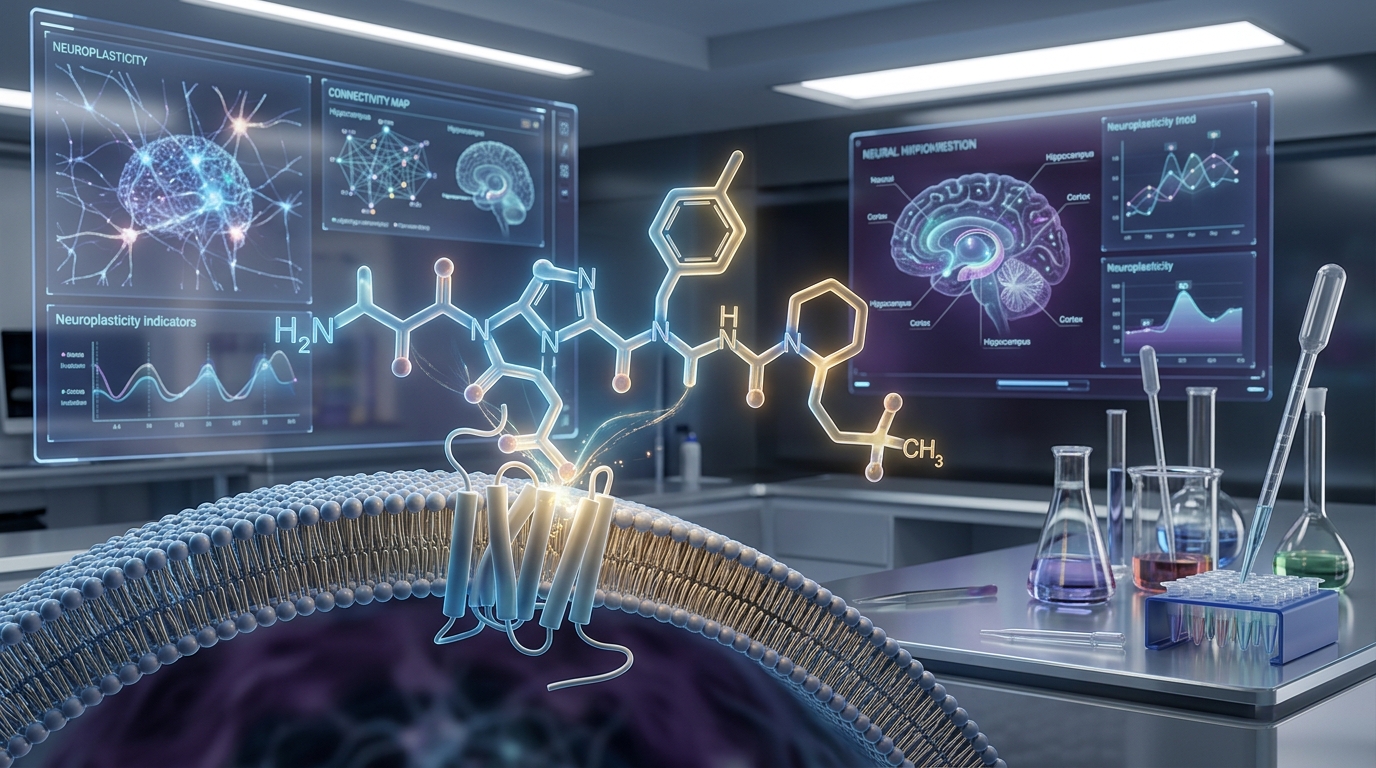
Semax is a synthetic regulatory heptapeptide derived from adrenocorticotropic hormone (ACTH 4-10) that significantly enhances neuroprotection, neuroplasticity, and cognitive performance without exerting hormonal or adrenocortical side effects.
This central conclusion is substantiated by three primary pharmacological and clinical pillars: its direct stimulation of endogenous neurotrophin signaling cascades (BDNF and NGF), its proven neuroprotective efficacy against acute ischemic stroke and neuroinflammation, and its ability to modulate central monoaminergic and cholinergic neurotransmitter systems.
1. Upregulation of Central Neurotrophins and Synaptic Plasticity
Semax significantly elevates the expression of key neurotrophic factors and their corresponding receptor networks, driving neuroplastic adaptation, synaptogenesis, and neuronal survival.
Evidence Base:
- In-Vitro Evidence: In rat cortical and hippocampal cell cultures, Semax application produces a rapid, dose-dependent upregulation of Bdnf and Ngf gene expression, accompanied by sustained activation of the high-affinity tyrosine kinase receptor TrkB. Cultured neurons demonstrate enhanced axonal branching and resistance to serum deprivation.
- Animal Evidence: Rodent models receiving intranasal Semax show significant increases in BDNF protein concentrations across the hippocampus and frontal cortex within 1.5 to 3 hours post-administration, correlating with improved spatial acquisition and memory retention in radial arm maze protocols.
- Human Clinical Evidence: Proteomic and transcriptional analyses in human patients during rehabilitation show elevated systemic markers of neurotrophic activity and neuroplastic recovery following structured Semax therapeutic regimens.
- Hypothesis: Researchers hypothesize that Semax acts as a functional neuromodulator at the neurotrophin-receptor interface, prolonging TrkB receptor phosphorylation and downstream MAPK/ERK signaling cascades.
2. Neuroprotection in Ischemic Injury and Neuroinflammation
Semax preserves neurological function and reduces tissue infarction during cerebrovascular events by mitigating oxidative stress, preventing excitotoxicity, and suppressing inflammatory gene cascades.
Evidence Base:
- Human Clinical Evidence: Large-scale clinical trials conducted in Eastern Europe demonstrate that intranasal Semax administered within the acute window of ischemic stroke significantly decreases neurological deficit scores (NIHSS), accelerates motor and speech recovery, and reduces overall disability compared to standard care controls. It is officially included in the Russian List of Vital and Essential Drugs for acute stroke and optic nerve disease.
- Animal Evidence: In transient middle cerebral artery occlusion (tMCAO) models in rats, Semax reduces infarct volume by up to 35-50%, suppresses pro-inflammatory cytokine expression (TNF-α, IL-1β, IL-6), and attenuates blood-brain barrier permeability.
- In-Vitro Evidence: Neuronal cultures subjected to oxygen-glucose deprivation (OGD) and excessive glutamate concentrations demonstrate significantly higher cell viability and reduced apoptotic markers (cleaved caspase-3) when pre-treated with Semax.
- Hypothesis: Semax is proposed to exert its cytoprotective actions through rapid suppression of vascular inflammation and upregulation of anti-apoptotic Bcl-2 family proteins.
3. Modulation of Monoaminergic Tone and Cognitive Processing
Semax enhances executive function, attention, and mental stamina through selective modulation of dopamine, serotonin, and acetylcholine turnover in critical brain regions.
Evidence Base:
- Human Clinical Evidence: Clinical evaluations in healthy operators and patients suffering from astheno-neurotic disorders demonstrate that intranasal Semax improves short-term memory, sustained visual attention, and task-switching under acute stress or sleep deprivation without producing psychostimulant crash or physical dependence.
- Animal Evidence: Microdialysis studies in freely moving rats reveal that Semax administration selectively increases striatal dopamine synthesis and enhances 5-HT (serotonin) turnover, while simultaneously increasing high-affinity choline uptake in the hippocampus.
- In-Vitro Evidence: Receptor binding assays show that Semax does not directly bind to classical dopamine D1/D2 or serotonin 5-HT2 receptors, confirming its regulatory modulatory role rather than direct agonist/antagonist pharmacology.
- Anecdotal Claims: Research community self-reports consistently cite rapid-onset improvements in mental clarity, executive drive, and reduced subjective brain fog; however, these uncontrolled reports lack standardized placebo-controlled validation and remain supplementary to the formal clinical literature.