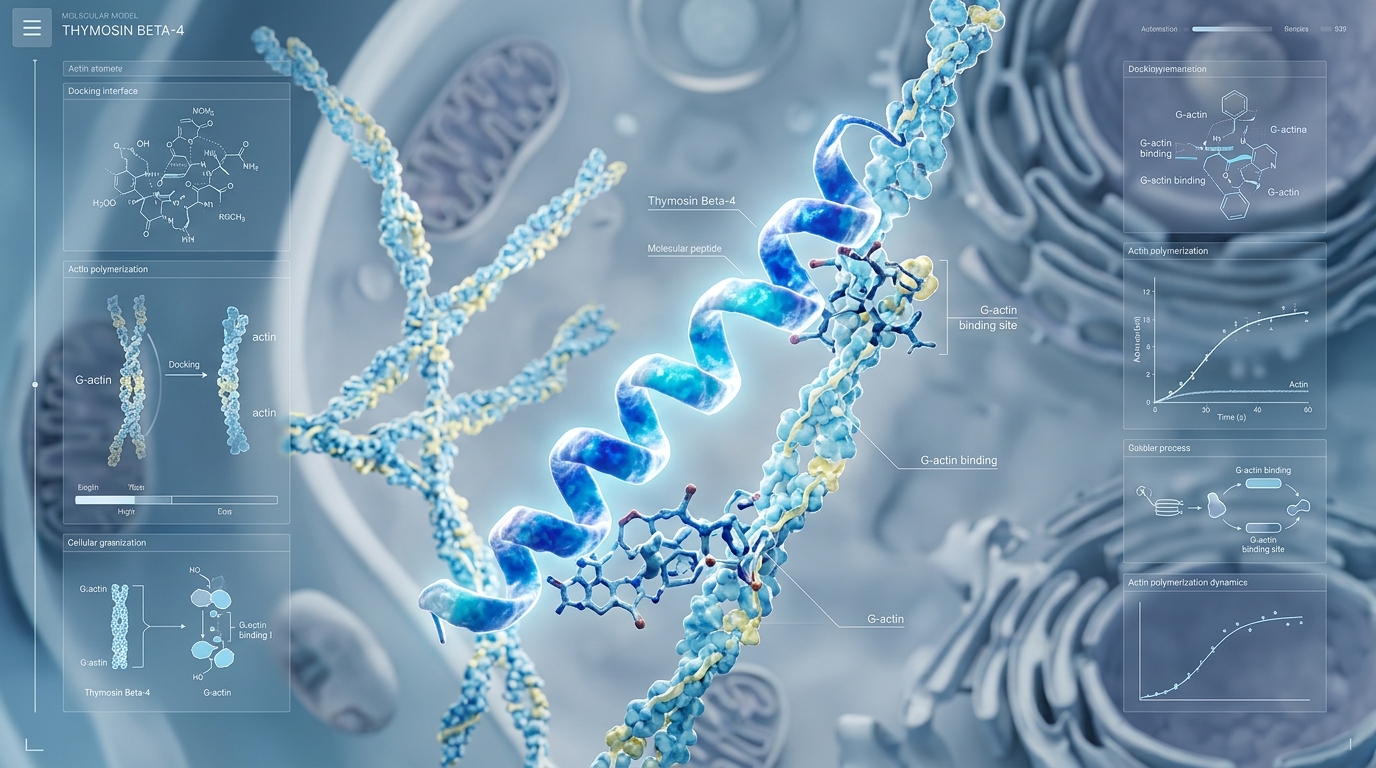
Main Conclusion: While TB-500—a synthetic derivative corresponding to the active actin-binding domain of the naturally occurring peptide Thymosin Beta-4 (Tβ4)—demonstrates profound regenerative, angiogenic, and anti-inflammatory properties in preclinical cellular and animal models, it remains an unapproved investigational peptide lacking standardized human clinical trial data to substantiate clinical efficacy or long-term safety.
Three Primary Pillars of TB-500 Research
- Actin Cytoskeleton Modulation: TB-500 promotes cellular migration and survival at the molecular level by sequestering monomeric G-actin and preventing cellular apoptosis.
- Preclinical Tissue Repair and Neovascularization: In animal models, the compound accelerates dermal repair, reduces cardiac fibrosis post-infarction, and upregulates angiogenic signaling pathways.
- Translational and Regulatory Divergence: A substantial gap persists between human trials conducted on full-length Thymosin Beta-4 and grey-market synthetic TB-500 fragments, leaving critical questions regarding human pharmacokinetics, long-term oncogenic risk, and regulatory classification.
1. Cellular Mechanisms and Actin Cytoskeleton Modulation
At the biochemical level, TB-500 functions primarily as a mimetic of the biologically active central sequence (LKKTETQ) of Thymosin Beta-4, a major intracellular actin-sequestering protein.
In Vitro and Biochemical Evidence
- G-Actin Sequestering: In vitro biochemical assays confirm that the peptide binds monomeric G-actin in a 1:1 complex, inhibiting spontaneous actin polymerization while maintaining a dynamic actin pool necessary for cell motility, lamellipodia formation, and directional migration.
- Anti-Apoptotic and Anti-Inflammatory Signaling: Cell culture studies utilizing endothelial cells, dermal fibroblasts, and cardiomyocytes show that Tβ4/TB-500 downregulates pro-inflammatory cytokines (such as TNF-α and IL-6) through the suppression of the NF-κB pathway, while simultaneously activating the Akt/PI3K survival signaling pathway.
- Extracellular Matrix Remodeling: In vitro fibroblast assays indicate that the peptide modulates matrix metalloproteinases (MMPs), thereby preventing excessive collagen cross-linking and reducing pathological myofibroblast differentiation.
2. Preclinical Evidence in Animal Tissue Repair and Angiogenesis
Most published therapeutic claims for TB-500 derive from controlled in vivo animal experiments evaluating tissue regeneration across various organ systems.
In Vivo Animal Evidence
- Dermal Wound Healing: Murine and rat models of full-thickness dermal excision demonstrate that topical or systemic administration of Tβ4 and its active fragments increases re-epithelialization rates by 40–50%, accelerating keratinocyte and endothelial cell migration into the wound bed.
- Myocardial Ischemia and Fibrosis: In murine models of acute myocardial infarction (MI), synthetic Tβ4/TB-500 administration has been shown to reduce infarct size, attenuate left ventricular remodeling, and promote the activation of dormant epicardial progenitor cells.
- Corneal and Musculoskeletal Repair: Rodent models of corneal debridement and rat Achilles tendon injury show enhanced collagen alignment, accelerated tenocyte proliferation, and reduced granulation tissue formation following localized peptide administration.
3. Translational Discrepancies, Human Data, and Safety Profiles
Despite promising animal literature, extrapolating TB-500 data to human therapeutics requires a clear distinction between peer-reviewed clinical research and unverified commercial claims.
Human Clinical Trial Evidence (Full-Length Thymosin Beta-4 vs. TB-500)
- Ophthalmic and Wound Trials (Tβ4): Human Phase II clinical trials (e.g., using RGN-259/Timbetasin, a recombinant full-length Tβ4) have demonstrated safety and clinical efficacy for ophthalmic conditions like dry eye syndrome and neurotrophic keratitis, as well as Phase II data for chronic stasis ulcers.
- Absence of Human Trials for TB-500 Fragment: There are currently zero randomized, placebo-controlled human clinical trials specifically evaluating the short synthetic peptide fragment sold as “TB-500” (Ac-LKKTETQ or related truncated sequences) for systemic athletic recovery, tendon healing, or longevity.
Scientific Hypotheses, Risks, and Anecdotal Context
- Theoretical Oncogenic Risk (Hypothesis): Because TB-500 strongly stimulates VEGF, cell migration, and endothelial tube formation, theoretical concerns persist regarding whether prolonged systemic exposure could accelerate occult tumor angiogenesis or promote metastatic dissemination.
- Anecdotal Athletic Use: Widespread reports in bodybuilding and athletic communities assert rapid recovery from muscular and tendinous tears; however, these self-reported accounts are confounded by polypharmacy, unstandardized dosing, variable peptide purity, and severe reporting bias.
- Regulatory and Anti-Doping Status: TB-500 and all Thymosin Beta-4 derivatives are classified as S2 (Peptide Hormones, Growth Factors, Related Substances, and Mimetics) prohibited substances by the World Anti-Doping Agency (WADA) and are not approved for human medical use by the FDA or EMA.