Oxytocin is a naturally occurring nonapeptide hormone and neuropeptide synthesized primarily in the paraventricular and supraoptic nuclei of the hypothalamus. While its peripheral functions in labor induction and lactation management are universally established and supported by regulatory approvals worldwide, researchers have spent recent decades evaluating its central nervous system (CNS) actions. Clinical trials have explored intranasal oxytocin across various behavioral and psychiatric contexts, including autism spectrum disorder (ASD), schizophrenia, social anxiety, and post-traumatic stress disorder (PTSD).
This article reviews the current human clinical evidence for oxytocin, contrasting its established obstetric applications with experimental neuropsychiatric research, examining delivery challenges across the blood-brain barrier, and evaluating major clinical trial findings.
Key Takeaways
- Established Medical Use: Intravenous and intramuscular oxytocin (Pitocin, Syntocinon) are approved by the U.S. Food and Drug Administration (FDA) and global health authorities for labor induction, labor augmentation, and the prevention and treatment of postpartum hemorrhage.
- Investigational Neuropsychiatric Research: Intranasal oxytocin is under active investigation for social cognition, anxiety, and neurodevelopmental conditions; however, human evidence from large-scale randomized controlled trials (RCTs) remains mixed or inconclusive.
- The SOARS Trial: The largest multi-center randomized clinical trial evaluating intranasal oxytocin in children and adolescents with autism spectrum disorder (published in The New England Journal of Medicine in 2021) demonstrated no significant improvement over placebo in social interaction measures.
- Pharmacokinetic Barriers: Oxytocin exhibits poor systemic blood-brain barrier permeability (estimated at less than 0.1%), leading to ongoing scientific debate regarding the exact dosing and CNS penetrance achieved via intranasal delivery pathways.
What Is Oxytocin?
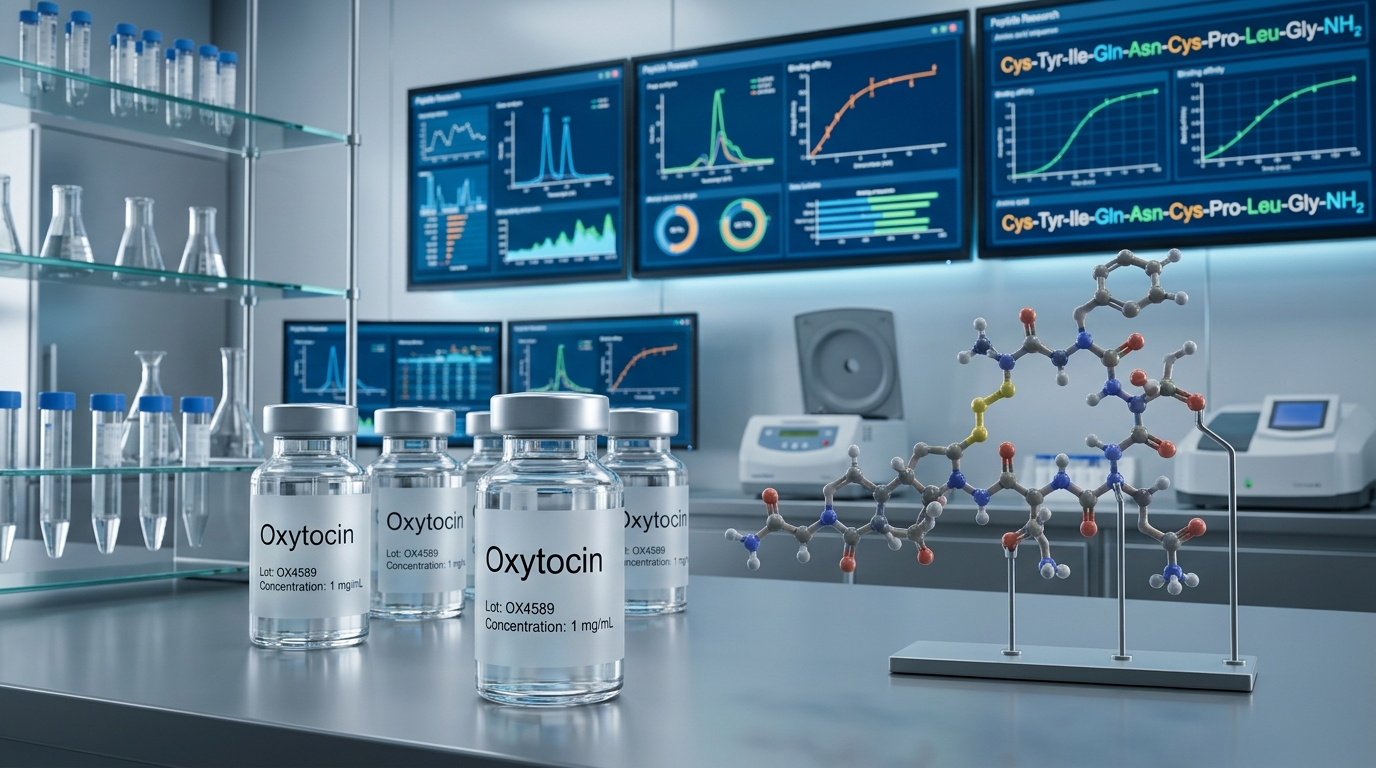
Oxytocin is composed of nine amino acids (Cys-Tyr-Ile-Gln-Asn-Cys-Pro-Leu-Gly-NH2) with a disulfide bridge between positions 1 and 6. Discovered in 1906 by Sir Henry Dale and biochemically synthesized by Vincent du Vigneaud in 1953, oxytocin functions both as a systemic endocrine hormone and as a central neurotransmitter.
In the periphery, oxytocin is transported through the posterior pituitary gland and released into systemic circulation. Centrally, oxytocinergic neurons project to widespread brain regions, including the amygdala, nucleus accumbens, hippocampus, and prefrontal cortex, where the peptide binds to G-protein coupled oxytocin receptors (OXTR) to modulate neural circuits governing trust, fear attenuation, and affiliation.
Established Human Clinical Pharmacology
The distinction between regulatory-approved indications and experimental CNS applications is fundamental when evaluating oxytocin literature.
Obstetric Indications (FDA Approved)
In human medicine, synthetic oxytocin is administered parenterally for:
- Induction and Augmentation of Labor: Stimulating uterine myometrial contractions by activating Gq-protein coupled receptors, increasing intracellular calcium.
- Postpartum Hemorrhage (PPH) Management: First-line uterotonic therapy to control uterine atony following delivery.
- Incomplete Abortion: Adjunctive management under direct medical supervision.
For these indications, pharmacokinetic and pharmacodynamic profiles are well-documented. Intravenous administration produces an immediate uterine response with a short plasma half-life of 3 to 5 minutes, metabolized predominantly by the liver, kidneys, and circulating oxytocinase enzymes.
Investigational Neuropsychiatric Research
Given the density of oxytocin receptors in limbic and reward-processing circuits, investigators have conducted numerous clinical trials to assess whether exogenous oxytocin can modify socio-behavioral deficits.
1. Autism Spectrum Disorder (ASD)
Early small-scale crossover trials suggested that acute intranasal oxytocin might improve emotion recognition and eye gaze in individuals with ASD. However, larger and more rigorous longitudinal trials have produced null or modest results.
The pivotal Study of Oxytocin in Autism to Improve Reciprocal Social Behaviors (SOARS), a 24-week randomized, double-blind, placebo-controlled trial across 290 children and adolescents (ages 3 to 17), found no statistically significant difference between intranasal oxytocin and placebo on the Aberrant Behavior Checklist Social Withdrawal subscale (least-squares mean change: -3.7 with oxytocin vs. -3.5 with placebo; p = 0.61).
2. Schizophrenia and Social Cognition
Clinical studies investigating intranasal oxytocin as an adjunctive treatment for negative symptoms and social cognitive deficits in schizophrenia have shown inconsistent findings. Meta-analyses of randomized trials indicate small effect sizes that often fail to reach statistical significance across diverse patient sub-populations, emphasizing the need for biomarker-guided stratification.
3. Social Anxiety and Post-Traumatic Stress Disorder
Laboratory-based human studies indicate that acute oxytocin administration dampens amygdala reactivity to fearful or threatening stimuli on functional MRI (fMRI). However, clinical translation into sustained anxiety reduction in therapeutic settings remains variable, with some trials showing paradoxically increased vigilance or context-dependent effects.
Pharmacological and Methodological Limitations
Several methodological and physiological challenges explain why preclinical success has not consistently translated into human clinical efficacy:
- Blood-Brain Barrier Permeability: Systemic peptides face tight junction restrictions. Intranasal administration aims to utilize the olfactory and trigeminal nerve pathways to bypass the blood-brain barrier, but the precise fraction of peptide reaching target cerebral spinal fluid (CSF) compartments in humans remains contentious.
- Receptor Desensitization: Chronic or high-dose administration of oxytocin may lead to rapid internalization and desensitization of oxytocin receptors, potentially reversing beneficial responses (an inverted U-shaped dose-response curve).
- Inter-Individual Heterogeneity: Genetic polymorphisms in the OXTR gene (e.g., rs53576, rs2254298), baseline endogenous oxytocin concentrations, sex differences, and psychological context substantially alter individual response profiles.
Regulatory Status
Synthetic oxytocin for injection is approved by the FDA, European Medicines Agency (EMA), and other global authorities strictly for prescribed obstetric indications. There are currently no regulatory approvals for intranasal oxytocin formulations to treat autism spectrum disorder, psychiatric conditions, or behavioral modulation in any jurisdiction.
Frequently Asked Questions
Is oxytocin approved for treating social anxiety or autism?
No. Oxytocin is not approved by the FDA or other regulatory bodies for the treatment of social anxiety, autism spectrum disorder, or any psychiatric condition. Its clinical use in these areas remains strictly experimental.
How does intranasal oxytocin reach the brain?
Intranasal delivery is hypothesized to transport peptide molecules directly along the perineural spaces of olfactory and trigeminal nerves into the cerebrospinal fluid and brain parenchyma, bypassing first-pass hepatic metabolism and the blood-brain barrier. However, absolute central delivery percentages in humans are low.
What are the documented adverse effects of oxytocin?
In approved obstetric intravenous administration, adverse effects can include maternal hypotension, uterine hyperstimulation, cardiac arrhythmias, and water intoxication (due to antidiuretic hormone-like effects at high doses). In experimental intranasal studies, reported adverse events are typically mild and include nasal irritation, headache, and transient emotional fluctuations.
Research Summary
Current scientific evidence clearly validates oxytocin as a life-saving, FDA-approved uterotonic agent in obstetrics. In contrast, while mechanistic preclinical and early laboratory studies highlight potent modulatory effects on social neurocircuitry, rigorous phase II and phase III human clinical trials have yielded largely inconsistent or null therapeutic outcomes for neurodevelopmental and psychiatric disorders. Future research requires standardized delivery methodologies, validated central biomarkers, and clearer patient stratification to determine if targeted CNS applications are clinically viable.